
Since its debut in the summer of 1979, the Alien franchise has steadily evolved, with its most last feature film in the installment, Alien Resurrection, bringing the series close to the fifty-year mark. A television series was hardly something anyone anticipated. Yet, on July 25th, fans of this enduring saga were given Alien: Earth. The thing about unexpected and unsolicited gifts is that they often come with tempered expectations. That was precisely the mindset I brought with me as I approached Alien: Earth.
Space as the Ultimate Hunter: The Subversion of Human Dominance

The logline for the very first Alien film was deceptively simple:
“After investigating a mysterious transmission of unknown origin, the crew of a commercial spacecraft encounters a deadly lifeform.”
While the premise might have sounded unremarkable at first glance, the film itself became a defining moment in cinema. As Screenage Wasteland aptly notes,
“The original will always be the gold standard to which all other works of sci-fi horror are measured.”
The 1979 feature tapped into a fear as old as humanity itself—one rooted in the unknown, the inexplicable, and the utterly foreign. Set in a distant future, Alien managed to be both unsettling and strangely comforting; the terror felt safely out of reach, yet it gnawed at something primal. The film stripped back the veneer of human dominance, suggesting that, in the vastness of space, we are not the hunters but the hunted. Alien scratched at the surface of xenophobia—not just the fear of the foreign, but the dread of what cannot be named or understood. Space, then as now, remained a largely uncharted territory, and with the unknown comes the inability to assert control. That, ultimately, is what made the film so unnerving. Its distant setting offered some relief—allowing audiences to convince themselves it was mere imaginative soil—but the chills lingered long after the credits rolled. Ridley Scott’s masterful vision of an alien encounter was so impactful, it instantly established him as a director to watch.
From One Plot to Another
As one passionate film connoisseur and author of Screenage Wasteland points out about the original film,
“The plot isn’t dependent on them doing the wrong thing because the script is well written. The writers even went the extra mile and explained why they can’t just shoot the damn thing because of its acid blood. It just works. And how f****** great is the design of the Xenomorph? It’s probably the greatest monster design ever.”
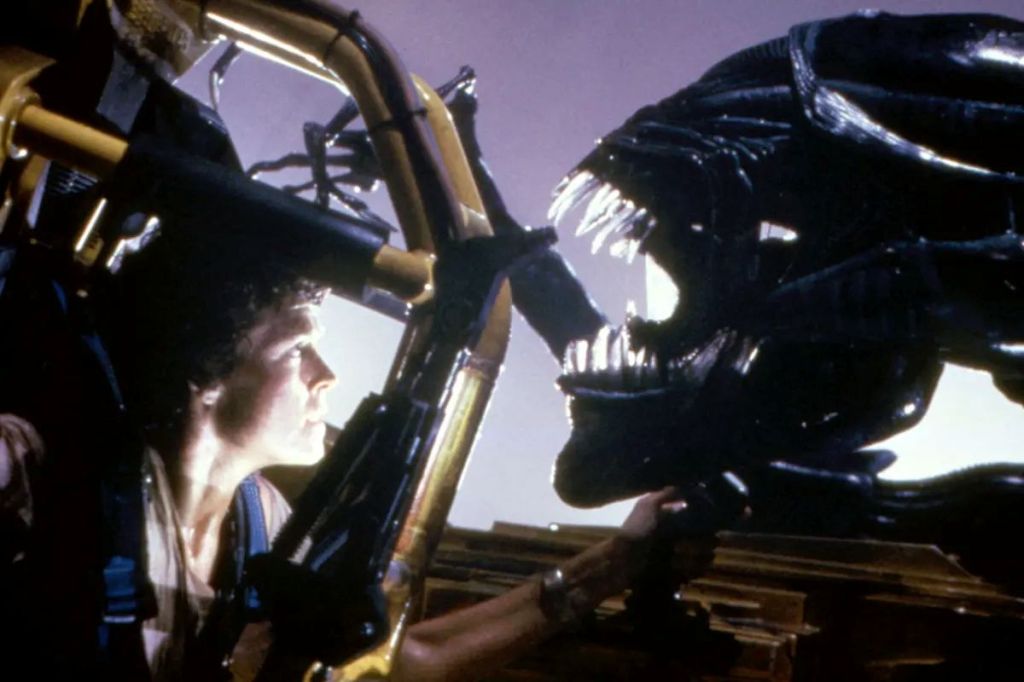
That sentiment is likely echoed by many. It also helps explain the longevity of this intellectual property—when something becomes an exemplar, there’s always a need to recreate, expand upon, or simply outperform it.
Alien Earth is set in the year 2120. It is a most unrecognizable Earth, an alien one. The grounding of the concept plays off current societal shifts and projected trajectories that could likely render a typological environment like the one that exists in this series. As the New York Times notes,
“it’s a vision of Earth in 2120, when corporations have replaced governments and climate change has made the planet hospitable for all sorts of alien parasites.”
Competing corporations are driven by the same age-old motivators: dominance, market control, and profitability—measured by the level of their dominance. Reportedly, the mind behind this project, Hawley, drew inspiration from the first two “Alien” films, Ridley Scott’s “Alien” and James Cameron’s “Aliens”—melding elements of horror and action to craft this new vision. As the New York Times notes,
“Trying to make something grounded and, quote, realistic in the way that the first film is, that also has some of the playfulness of the second film, which is one of the great action movies of all time. And so somewhere in there lies a form of pure entertainment.”
That was what Hawley aimed to give audiences. But the question remains: did it live up to what he envisioned?
Moments of Impact
It can’t really be said that the series isn’t entertaining. What’s considered entertaining is highly subjective. But at its core, entertainment is about grabbing a viewer’s attention and holding it long enough for them to see a project through to the end. One of the reasons “Alien Earth” works is its divergence from previous franchise entries, especially in elements like the narrative arc. This difference sparks a desire to invest attention and time—to explore the new blueprint and see where the story is taking us. Are we in good hands? Is the narrative still recognizable as part of the property, or just a one-off deviation? Whether people enjoy the outcome, however, is a whole other matter—one that can either heighten or diminish just how entertaining the work ultimately is
Aside from some shifting narrative links, the environmental elements—those that create an authentic setting for the story to believably unfold—are critical. Choosing a shooting location that aligns with the creator’s vision and goals is a definite plus, and this series has excelled in that area. There’s also something to be said about the intense moments designed to underscore the nature of what’s being dealt with—the stakes. In science fiction, it’s almost a major faux pas to ignore the importance of believable environments and stakes, but that’s not the case here in “Alien Earth.” There are some high-stake moments that don’t just sit with you—they pull at your skin, tug at it, and ultimately evoke the most gutturally, shockingreactions. I writhed in my seat on several occasions
The Challenges of Alien Earth
The series has its strengths, but the weaknesses can’t be ignored. The story pace seems somewhat disjointed—some narrative descriptors are stretched out too long, while others aren’t explored enough. The overemphasis on the development of the synths, with parallels to Wendy and the Lost Boys of Neverland, feels a bit forced. Meanwhile, the earlier introductory moments of the narrative unfold too quickly, creating noticeable gaps that seem designed to do as much as possible in as little time as necessary. The prevailing sentiment, “Let’s just get there.”
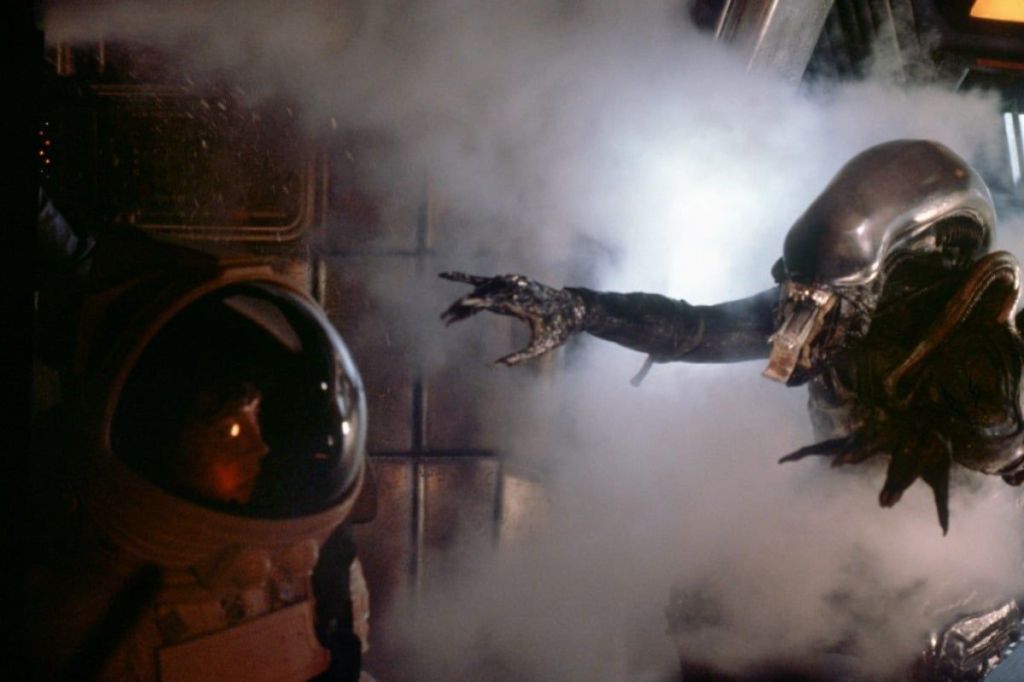
And the CGI? Horrid—that was the first impression that flashed through my mind as the Xenomorph crept through the ship’s corridors, its movements awkward, its presence strangely hollow. But my assumption was misplaced. As Mashable revealed, the real surprise is that what I thought was weak CGI was in fact practical effects. And yet, that revelation does not make the outcome any more appealing. The Xenomorph, once a symbol of organic terror, comes across as a mechanical shell that moves but never breathes. Monsters that look like machinery fail to deliver that primal bite. They don’t infect the imagination or burrow under the skin the way something that feels raw, alive, and unpredictable should.
When Ambition Outpaces Execution: The Organic Void in Alien Earth
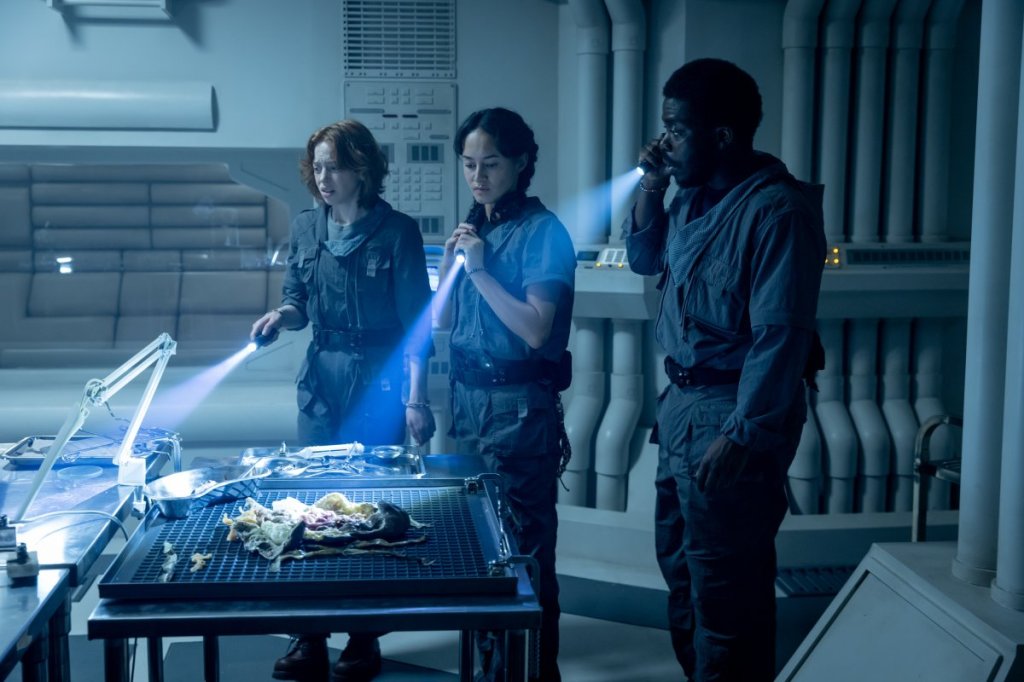
This lifelessness extends beyond the creature to the characters themselves. Many are framed as higher-level creations, beings stripped of human emotionalism, and while that may be conceptually sound, in practice it starves the film of its nuance. Without those essential pulses of fear, empathy, or longing, what’s left are figures moving through space—present but not resonant, functional but not gripping. Just like the Xenomorph’s mechanical shell, these characterizations feel manufactured, calculated, and ultimately detached.
Taken together, both creature and character reflect the same absence: the lack of organic presence. The film leans into the idea of evolution and creation, yet ironically undermines itself by presenting life without vitality. What should inspire dread instead elicits disappointment, and what should anchor the story instead drains it of weight. The result is a lesson in how execution matters: without that spark of believability, even the most fearsome monsters and ambitious ideas fall flat, leaving behind echoes where there should have been impact.
Exploring Humanity’s Future Through Alien Earth
Alien Earth is an interesting addition. It brings something fresh to the canon that probably wasn’t even on the radar in earlier installments. By moving the spotlight away from the Xenomorph as the centerpiece, it opens the door for some charged speculation. The story leans more heavily into commentary about societal evolution and the part technology plays in keeping humanity going. That message comes through loud and clear: working with what we create rather than against it is where the better outcomes lie. It makes you stop and wonder—what do these repeated messages say about us? If art imitates life, are we staring down trouble ahead? Maybe we’ve taken on more than we can realistically handle. Is this art ultimately a preparatory guide, a warning hidden in a story?
At the end of the day, “Alien Earth” feels middle of the road—some standout moments balanced by parts that don’t quite hit. But it meets just the standard to still bear classification as a solidly watchable sci-fi series. If time is the most valuable thing we’ve got, then spending some on this film isn’t a miserable trade.
It may not be absolutely fantastic, but it’s far from a waste.
 Uncut Diamonds