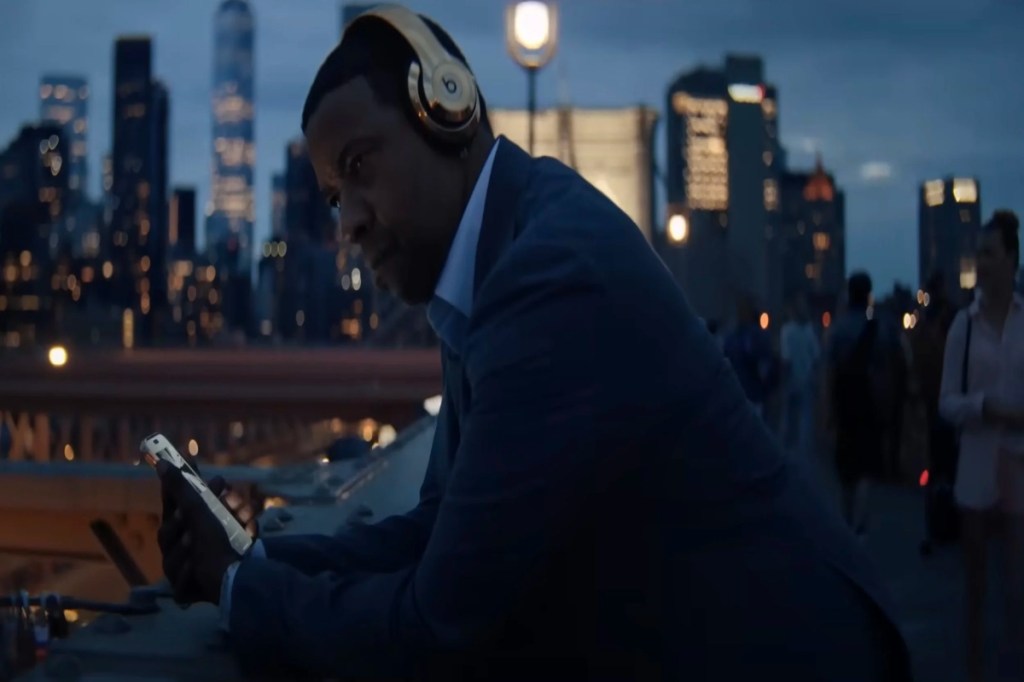
When Spike Lee and Denzel Washington collaborate, the film industry is abuzz with anticipation. And thus it was no surprise that the news of their fifth project together, “Highest 2 Lowest,” sparked widespread anticipation among movie enthusiasts. This is a common response when iconic figures collaborate. But the real question becomes, did it live up to the expectation?
A Synergistic Pairing
Since their initial collaboration, the creative alliance between Spike Lee and Denzel Washington has consistently produced cinematic masterpieces. One would be amiss to not recognize the unique chemistry that is created when Lee directs Washington. Their artistic visions seem to seamlessly align. They are like seasoned artisans who require no guidance. Their previous collaborations—”Malcolm X,” “Mo’ Betta Blues,” “He Got Game,” and “Inside Man”—demonstrate this remarkable synergy. Given their impressive history, audiences naturally anticipated nothing short of brilliance from “Highest 2 Lowest.”
Lee’s ‘Highest to Lowest’: Navigating the Clash of Art and Commerce”
“Highest 2 Lowest” plunges viewers into the cutthroat world of the music industry, where art and commerce clash in an unforgiving arena. At its center stands David King, once revered as “The Ear” for his uncanny ability to predict hit songs, now a fading legend desperate to reclaim his throne. As Essence magazine aptly describes it,
“Lee’s A24 production “explores how a veteran music mogul confronts an industry where artificial intelligence threatens to replace human intuition, with King leveraging his legendary ‘ears’ in a last-ditch effort to preserve authentic Black musical expression and the community it sustains.”
The Cracks in an Actor’s Armor
Midway through King’s industry negotiations, a kidnapping derails his plans. Yet the bungled abduction becomes the crucible that truly tests his mettle. At its core, “Highest 2 Lowest” anchors itself in moral questions, delivering its thesis with unwavering conviction. Washington typically excels at embodying characters with profound ethical dimensions—his performances in “Malcolm X,” “John Q.,” “Macbeth,” “Fences,” and “American Gangster” all showcase his ability to channel emotional authenticity.
In this film, however, Washington’s portrayal lacks his characteristic fire. The disconnect feels palpable, perhaps reflecting his own waning enthusiasm for the craft. In a recent GQ interview reprinted by the New York Post, Washington admitted,
“I’m just being honest with you! I don’t watch movies! I don’t go to the movies… I’m tired of movies. Yeah.”
This fatigue seems to have seeped into his performance, creating a character who never fully ignites on screen.
A Crossroads Moment Without Consequence
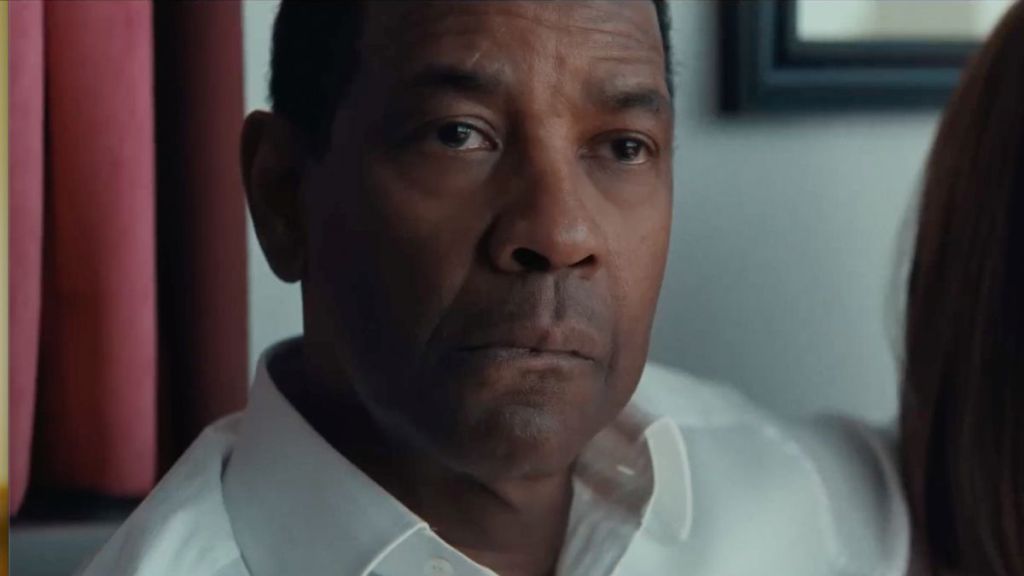
The film falters in reaching the intensity in tone by failing to build a strong foundation through deeper character development. In taking a small referential note from Script,
“Backstory makes your character real. It breathes life into them, giving them depth and dimension.”
“Highest 2 Lowest” never fully captures King’s former dominance in the music industry or the devastating depths of his retreat from his first love. Without showing his past passion, his moral dilemma—choosing between a human life and the resurrection of his dreams—lacks the gravity it demands.
We’re told he’s risking everything, but the story never makes us feel what that sacrifice truly costs him. When his son’s desperate pleas penetrates his conscience, it should shatter us. We should feel the weight of the choice. Instead, knowing King believes he’s guaranteed to recover his investment (by consistently asking for assurance from the investigators), coupled with his actions post ransom, the stakes are cheapened and there is minimal emotional punch and thus low buy-in.
King’s supposed spiritual redemption, while thematically rich, rings hollow when the real danger feels almost nonexistent. Did his critical crossroads moment carry enough weight when, in truth, he stood to lose so little? Summarily, the message hits hard, but the mechanics behind it crumble under scrutiny.
Climactic Moments and Emotional Resonance
While Washington struggles to find his footing, the supporting cast elevates the material considerably. Jeffrey Wright inhabits his role with the quiet authority that has become his trademark—never overplaying his hand as the streetwise mentor who has walked through fire and emerged with hard-won wisdom.

Likewise, Aubrey Joseph flexes his acting chops and is quite measured in how he approaches his work. In the pivotal confrontation between Trey and David King, Aubrey Joseph delivers the film’s most affecting moment. His raw plea cuts deeper than the later standoff between King and Young Felon, which seems to be positioned as the climactic showdown. However, that moment lacks the emotional resonance. However, the moment the words
“David King: My father, the man with the best ears in the business but the coldest heart,” are uttered at the end of the discourse; the subtle shift is felt.
King comes to a realization. And viewers get the intensity, not so much through the dialogue, but through the delivery.
Music as Narrative
The accompanying score is a potent part of a story. A score can serve to elevate a work or sink it. In the case of “Highest 2 Lowest,” some have argued that the soundtrack is a bit imbalanced and essentially overpowers the narrative. But conversely, there is room to argue to the contrary. One can look at the structural design (how the soundtrack is laid out) and observe that the song selection has been carefully curated to function as a narrative device in itself, with tracks like “Da Low Down,” “We Got This,” “All Money and Good Money,” “King David,” “Both Eyes Closed,” and “Highest 2 Lowest” charting King’s emotional journey through their titles alone. Thus, in this case it can be said that the soundtrack serves as its sonic backbone, reinforcing thematic elements while providing rhythmic punctuation to pivotal scenes.
Building on a Classic
While “Highest 2 Lowest” draws inspiration from Akira Kurosawa’s “High and Low,” Lee’s adaptation is anything but derivative. This is a point that Spike Lee has made clear. He has an overwhelming respect for the former cinematic jewel and its director. Lee has vocalized his admiration for the Japanese master in a published medium. As News 18 notes, in response to questions regarding the adaptation of the film, Lee responded with characteristic directness:
” A great is great. This is not a remake but a cultural reimagining set in present-day New York,” and thus he invites viewers to approach the film on its own terms.
Lee doesn’t subtract from Kurosawa’s vision—he builds upon it, transforming the framework into something distinctly his own while honoring its origins.
A Film of Soul and Shifts
“Highest 2 Lowest” is a story with soul. No, It does not reach the level of critical acclaim we’ve come to expect from the Lee-Washington partnership, but it speaks of intentionality in storytelling. The film is purposed to relay a specific message and that message is heard loud and clear. Unfortunately, another flaw in the piece is directed toward the performance of the irreplicable Denzel Washington. Sadly, this is not his best performance. But that is to be expected as his mentality toward the industry and his career shifts. Nevertheless, when he shines, he shines. And for however brief the viewer does get glimpses of that old magic. This is particularly evident in the closing scene, which, according to an interview, also visibly inspired Spike Lee significantly.
To sum it all up, “Highest 2 Lowest” is worth the watch, even if just for the simple pleasure of seeing two cinematic greats come together one more time to deliver an impactful story to the masses.
 Uncut Diamonds