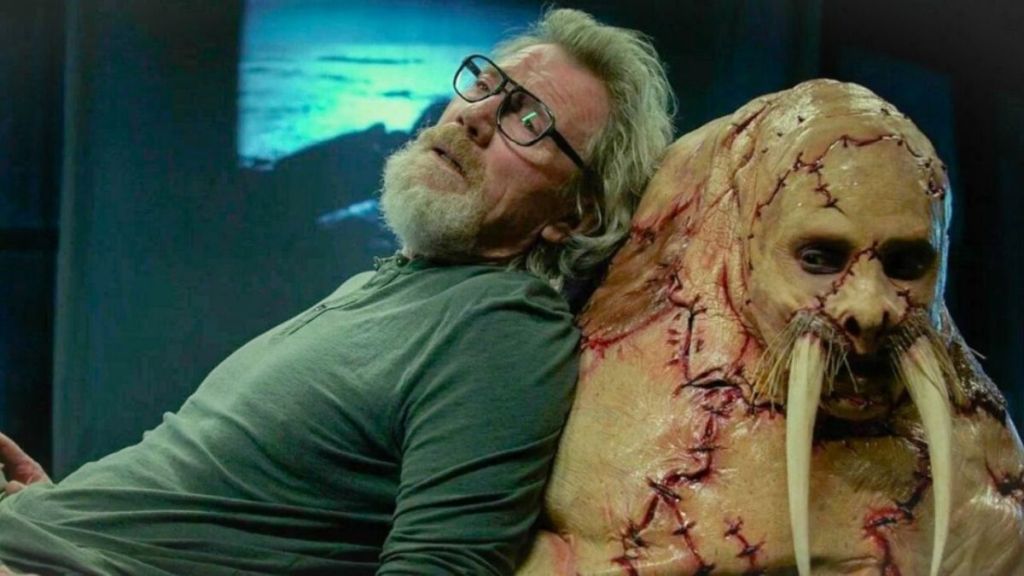
I’ve reviewed quite a few horror-themed works this season, but my most recent watch took me back to the early-mid 2000s—a film that’s often spoken of in horror circles as one of the most grotesque and unsettling experiences out there. Naturally, I had to see for myself. As a longtime fan of horror, both on screen and in literature, I was eager to finally experience “Tusk.”
A Prelude to a Watch
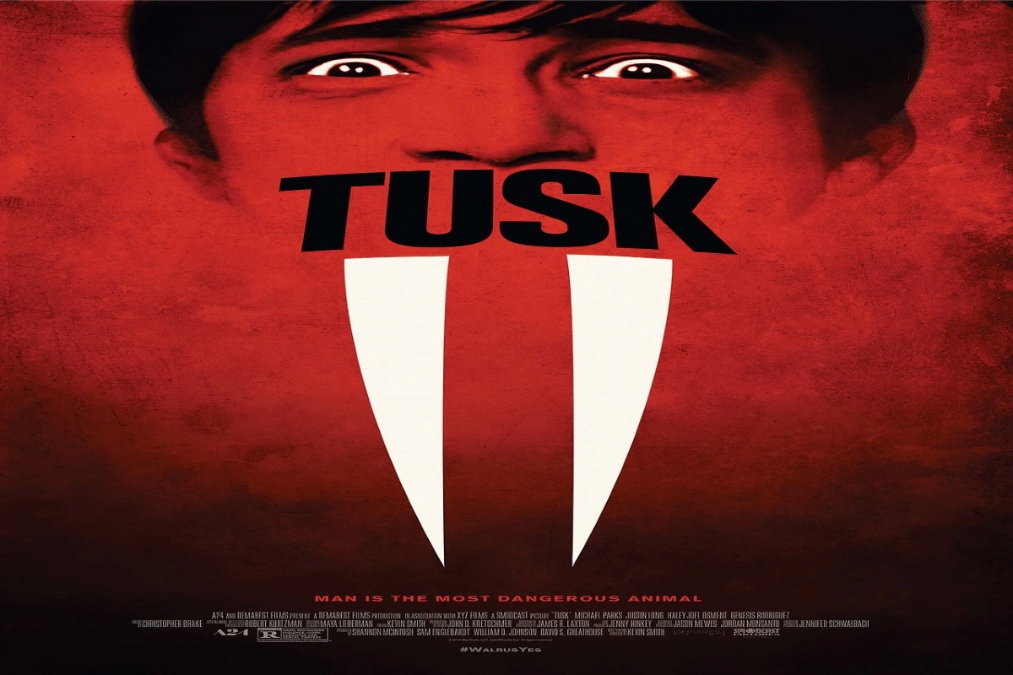
Back in the days when Blockbuster reigned, one of the biggest draws for any film was its cover art. The same principle applied to movie posters—imagery that could spark curiosity or unease at a single glance. But times have changed. Today, the decision to watch something leans more on word of mouth, teasers, or trailers. What immediately stood out to me about “Tusk” was its simplicity in that regard. Its poster wasn’t flashy or exaggerated; instead, it delivered a stark, almost unnervingly direct preview of what was to come.
Unexpected Beginnings
The film opens with an almost comedic tone—hardly what one might expect from a work so often described as profoundly disturbing. At first, it doesn’t seem like the type of story to capture a true horror aficionado’s attention. We’re introduced to a crude, self-serving podcaster eager to profit from other people’s absurd or tragic experiences. He believes he’s found his next big subject and sets out to exploit it for fame and fortune. Despite warnings from his co-host and girlfriend, his ambition drowns out reason. But upon arrival, he discovers that the person he intended to interview has died. What should have prompted a rational decision to turn back instead becomes the catalyst for his downfall—one poor choice leading him straight into nightmare territory.
Tusk
“Tusk” is more than a horror film—it’s a twisted moral fable. The pacing begins deliberately slow, a simmer rather than a sprint. It’s not the kind of horror that clutches you from the start; instead, it creeps in, exploring ideas of vanity, greed, and consequence. The midpoint marks a chilling revelation as Wallace learns the horrifying fate that awaits him. From there, the film plunges into some of the most grotesque and unsettling imagery ever captured on screen. His transformation is hideous, harrowing, and deeply disturbing—the very embodiment of the film’s central horror and a haunting reminder of how easily curiosity and arrogance can mutate into catastrophe.
The True Face of Monstrosity
As with most entries in the horror genre, “Tusk” hinges on the presence of a monster. But in this case, the creature is no supernatural being—it’s human. A man stripped of empathy and consumed by madness, shaped by isolation and psychological decay, becomes the true face of terror. The horror here is rooted not in fangs or claws, but in the complete disregard for human life. Yet the terror, though sharp, is fleeting.
Once Wallace’s transformation is complete, there’s nowhere else to go. The inevitable confrontation—Wallace versus his deranged captor—unfolds, but the tension falters slightly. There’s no resolution that feels redemptive, no victory that could possibly satisfy. What remains is a grim truth: this is a lose-lose situation. For anyone who empathizes with Wallace, the “triumph” that follows lands as a cruel and hollow mercy.
Wallace’s Nightmare: Victim, Monster, and Prisoner of His Own Flesh

Still, the most chilling layer of “Tusk” isn’t found in its physical horror but in its psychological one. The true monstrosity lies in the stripping away of Wallace’s autonomy—his transformation into something pitiable and grotesque, robbed of dignity and freedom. The horror isn’t only in what he becomes but in what he’s forced to endure: a living spectacle, an object of revulsion, with no escape except through death or the fleeting grace of another’s compassion. It’s a fate that transcends body horror—it’s existential. A man turned entirely into an abomination, both victim and monster, forever trapped in the nightmare of his own making.
The Role of Character Flaws in the Horror Experience
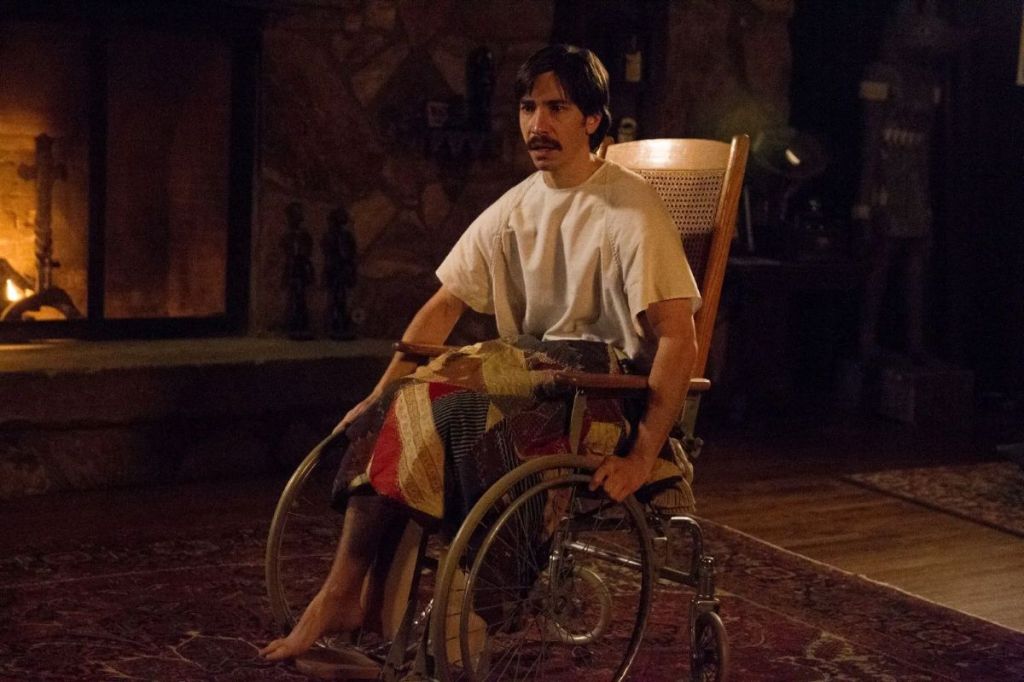
This film certainly doesn’t shy away from body horror—its grotesque imagery easily rivals that of “The Human Centipede” and “The Substance.” The transformation sequences are deeply unsettling, pushing viewers into the realm of the unthinkable. Yet even before Wallace becomes his captor’s plaything, he’s already disarmed—emotionally, mentally, and physically. His lack of awareness, his dulled instincts, and his almost absent sense of self-preservation make him difficult to fully invest in. Wallace is, at his core, a feckless character—his complacency and arrogance making him the perfect prey for a sadist. In that regard, it works; his flaws become the very mechanisms that propel the story forward. Still, I found myself shaking my head at his sheer ineptitude. Then again, perhaps that’s a product of the viewer’s bias—the comfortable distance that allows us to assume we’d fare better in the same horrific circumstances.
Another for the Books
While I can appreciate why “Tusk” has been recommended by horror aficionados, I can’t quite place it among the greats. It’s certainly macabre and visually striking, with moments of creative, disturbing artistry. However, the performances at times lack conviction, and the film doesn’t maintain the sustained tension that defines truly exceptional horror. It’s a film I’m glad to have finally experienced—memorable for its audacity—but it lands in that category of “watched once, remembered always,” rather than one I’d ever feel compelled to revisit. For those who seek to experience “Tusk” for themselves, the film is currently streaming on Pluto.
 Uncut Diamonds