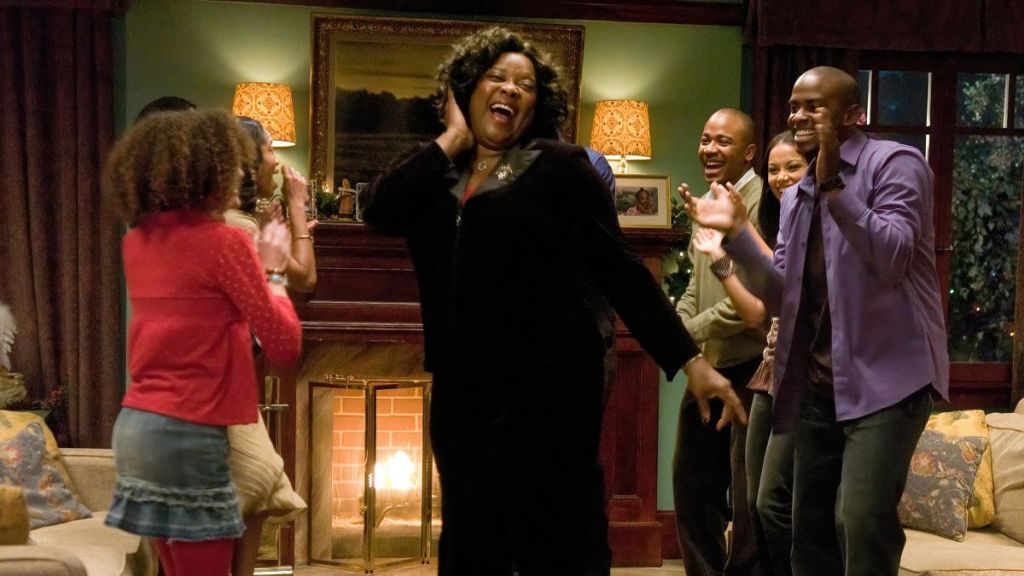
This film remains one of my all-time favorites—a 2007 holiday release that’s still a staple in the seasonal rotation. Written and directed by Preston A. Whitmore II, its heart and humor continue to hold strong in 2025, pulling on heartstrings and delivering the kind of smiles that feel timeless.
Introductions Matter
The opening scene welcomes us into the world with effortless charm. We’re introduced to central figures like Ma Dear, her new love interest, and her estranged son—sax in hand, emotions running through every note. The iconic anthem made famous by Eartha Kitt provides the soulful backbone of this introduction, layering nostalgia over a story that’s just getting started. We may not know the sax-playing character by name yet, but we do know he carries trouble in stride—the heavy, life-altering kind, not the small stuff.
Canvasing The World
Before long, the film opens its arms even wider, ushering us into the larger family—Ma Dear’s spirited, deeply-connected brood and their significant others. Their personalities unfold not through exposition, but through the rhythm of real interaction. It doesn’t take much dialogue to catch their essence—you feel who they are in the laughter, the tension, the banter, and the way they show up for each other.
That, right there, is storytelling done right: inviting us in without overexplaining, letting the family dynamics do the talking, and making you care from the very start. The introduction isn’t loud—it’s organic. And it leaves a mark.
Meet the Whitfields
Then comes the setup. The Whitfields gather for the holidays, but this particular Christmas isn’t quite like the others. The family dynamic is shifting. New faces are being welcomed in, familiar ones are stepping into more prominent roles, some members are beginning to truly grasp the weight of the relationships they’ve been entrusted with, and others are simply growing up. One of the most unsettling changes on the horizon is the possibility that the family home may not always be there.
The Pang of Change
In many cultures, the family home is more than just a building—it’s an anchor. The idea of selling or letting it go isn’t just a practical decision; it’s a moment of profound redefinition. Whatever happens, this Christmas feels like a turning point, a quiet marker that life from here on out won’t look quite the same. It’s bittersweet, but it also signals growth.
Ensemble Magic
The film is stacked with star power, often rightly described as an ensemble piece. The tricky thing about ensembles, though, is that they don’t always gel. It takes a special kind of chemistry to make that many strong personalities work together on screen. “This Christmas” absolutely thrives in that area.
Loretta Devine, Idris Elba, Regina King, Delroy Lindo, Chris Brown, Lauren London, Mekhi Phifer, David Banner, Sharon Leal, Keith Robinson, Laz Alonso, and Columbus Short all bring something vital. The energy between them feels warm, lived-in, and genuine. That authenticity—that sense of real connection—is the backbone of the film’s success. Each actor makes their screen time count, and together they turn a holiday story into something that feels like home.
This Christmas: The Strength of the Emotional Core
The emotional core of this film runs deep. Its redemptive arcs are exactly what you hope for in this kind of story. As Creative Screenwriting notes,
“The interior of characters is what we’re talking about when we work with emotional core. What really drives them?”
“This Christmas” answers that through several of its key players.
Ma Dear wants her family whole, yet she’s struggling to accept how those family dynamics are evolving. She’s also trying to protect her children from the emotional debris of her last relationship. Michael “Baby” Whitfield longs to pursue his own path—a path that just happens to mirror the one Ma Dear fears most. He’s torn between following his calling and not rocking the boat or disappointing his mother. Then there’s the eldest, Quentin Whitfield, who’s been running for years, searching for his place in the world after losing a piece of it when his father left. He carries the weight of feeling like a reflection of everything Ma Dear despises.
These internal drives are powerful and relatable. They tap into desires most viewers understand: to be seen, accepted, and freed from the expectations and wounds of the past—all in pursuit of joy and happiness.
No Skimping On The Christmas

And because this is a Christmas film, it honors the tone of the season beautifully. There are countless heartwarming moments and a phenomenal score packed with holiday classics and refreshed arrangements. It’s the kind of soundtrack that makes it hard not to hum, sing, or dance along. By the time the movie reaches its conclusion, it delivers exactly what you want from a festive, escapist holiday film: warmth, magic, and the comforting feeling that, despite everything, love and family still win.
 Uncut Diamonds