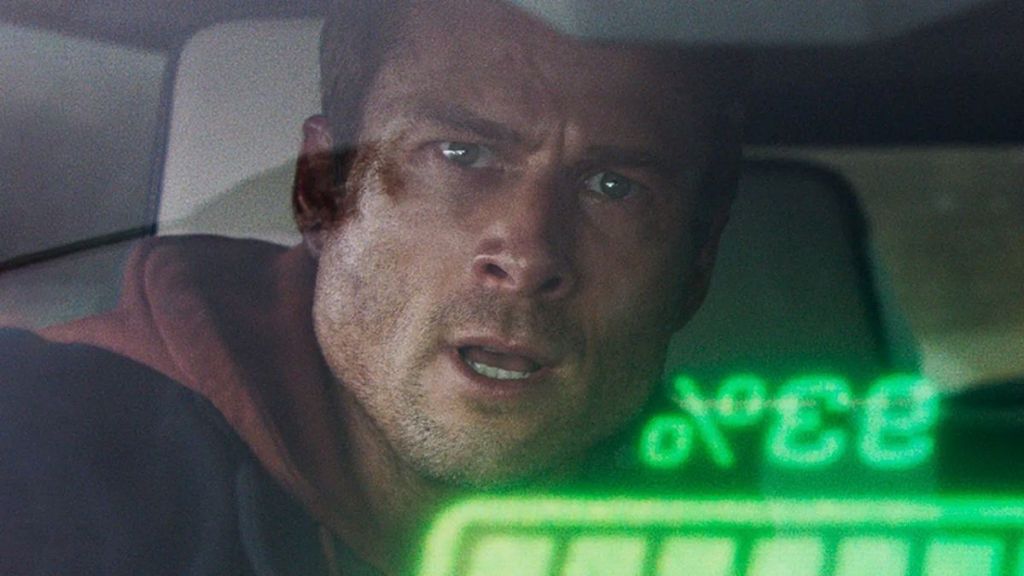
Not every feature deemed a creative misfire by a cluster of critics is inherently irredeemable. Some works must be assessed on an individual basis and weighed in balance between audience response and critical perspective. “The Running Man” is one such film.
I approached “The Running Man” with a healthy degree of skepticism, and for several reasons. Primarily, it ranks among my least favorite Stephen King works. Secondarily, the early presentation of the film failed to appeal to me. Finally, much of the criticism I encountered did little to inspire confidence. However, as an open-minded reviewer and film analyst—and at the urging of someone within my inner circle—I decided to give it a fair viewing. I am glad that I did.
Dissection From the Framework
“The Running Man” is firmly dystopian in nature. It presents a society that systematically oppresses its citizenry while simultaneously portraying itself as benevolent—offering those it exploits a supposed means of rising above their station. That opportunity, however, is illusory, tethered to conditions that ultimately reinforce control rather than liberation.

The film centers on a man whose family is beholden to this system, their future hanging precariously in the balance. As the patriarch, his driving motivation is to protect and secure the safety of the woman he loves and the life they have brought into the world together. Desperate circumstances often demand desperate measures, and it is precisely these conditions that compel him to enter “The Running Man”—a competition that promises salvation for his family should he succeed. Ultimately, it is a trap, engineered for failure. Realizing this, he must devise a strategy not only to escape the quagmire he has entered but to warn others before they suffer the same fate.
The Diagnosis
The film is both resonant and reflective. The themes it engages are weighty yet familiar, and its ability to sustain audience engagement is undeniable. Establishing an emotional connection with viewers is the holy grail of cinematic storytelling, and this narrative achieves that early. The protagonist earns immediate buy-in; we root for him from the outset because the stakes are made unmistakably clear. The threat to an innocent—placed in a system that neither values nor prioritizes their survival—deepens that investment. For those versed in narrative theory, this is a strong example of “Save the Cat.” We know what failure means. As the story progresses, we are equally compelled by the question of what victory might cost. What happens if he wins? What happens if he complies and falls in line? The film smartly invites the audience to wrestle with those possibilities.
This approach reflects a thoughtful understanding of craft, bolstered by solid performances across the board. The acting grounds the narrative and lends credibility to its emotional and thematic ambitions—an undeniable asset to the film.
The Running Man: A Worthy Watch
“The Running Man” (2025) will resonate most with fans of dystopian fiction, students of cinematic arts, and viewers drawn to explorations of willpower, societal oppression, sacrifice, and the enduring conflicts of society versus the individual—and the individual versus himself.
 Uncut Diamonds