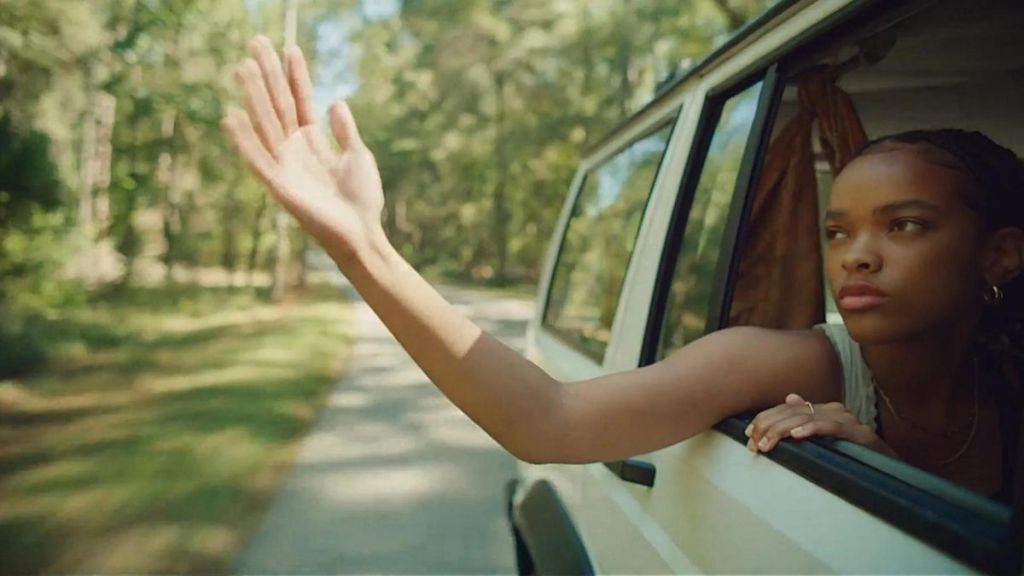
Not all films adhere to conventional storytelling or move at a familiar pace. Some deliberately reject formulas, choosing instead to linger in ambiguity. These films resonate not because of a tightly constructed plot, but because they provoke emotion and thought that hold our attention long after the screen goes dark. “It Ends” (2025), a horror, fantasy, and thriller, is one such film.
The title itself signals the film’s narrative restraint. A small group of friends find themselves traveling on an endless road with no clear destination. There is no sprawling cast, no grand spectacle. Much of the story unfolds within the confined space of a Jeep Cherokee, driven almost entirely by dialogue and exposition as the characters confront an inexplicable mystery.
Narrative Nothingness
It soon becomes clear that answers are not forthcoming. There are no solutions, no revelations, only the present moment and the questions it raises. On paper, “It Ends” seems destined to fail. At times, it feels directionless, even dull. Brief jump scares punctuate the journey, offering momentary jolts and a thin layer of horror-thriller tension. Still, there are no major set pieces or action-driven sequences to propel the narrative forward.
And yet, the film works.
The Strength of Connection
Its success lies in something more elemental: the human need for connection and meaning. “It Ends” taps into our collective fear of the unknown. The endless road becomes a metaphor for life itself—uncertain, repetitive, and resistant to explanation. As Arc Studio observes,
Many films hinge on a central question the audience is invited to share.
Viewers inevitably fall into camps: those who abandon the journey before it truly begins, those who push forward out of fear of emptiness, and those who accept that some questions may never have answers.
An End with an End

Although “It Ends” does reach a conclusion, it remains deliberately unresolved. Even moments that hint at explanation fail to satisfy our desire for closure. For some viewers, this proves a frustrating narrative tease that feels incomplete, leaving them dissatisfied and longing for a cleaner, more logical ending.
For others, that very refusal to resolve becomes the film’s greatest strength. By confronting deeply existential questions—Why do we continue? Is there meaning in persistence? What if the end is simply the end? The film challenges us to examine our own beliefs and motivations. It asks us to sit with discomfort rather than escape it. In doing so, It Ends embodies what cinema can achieve at its most daring and introspective.
It Ends: A Final Look
That said, this is not a film for everyone. Those seeking a neatly packaged story with clear answers may find themselves alienated. But for viewers willing to engage with uncertainty and reflection, “It Ends” offers an experience that lingers—quietly unsettling, deeply human, and intentionally unfinished.
 Uncut Diamonds