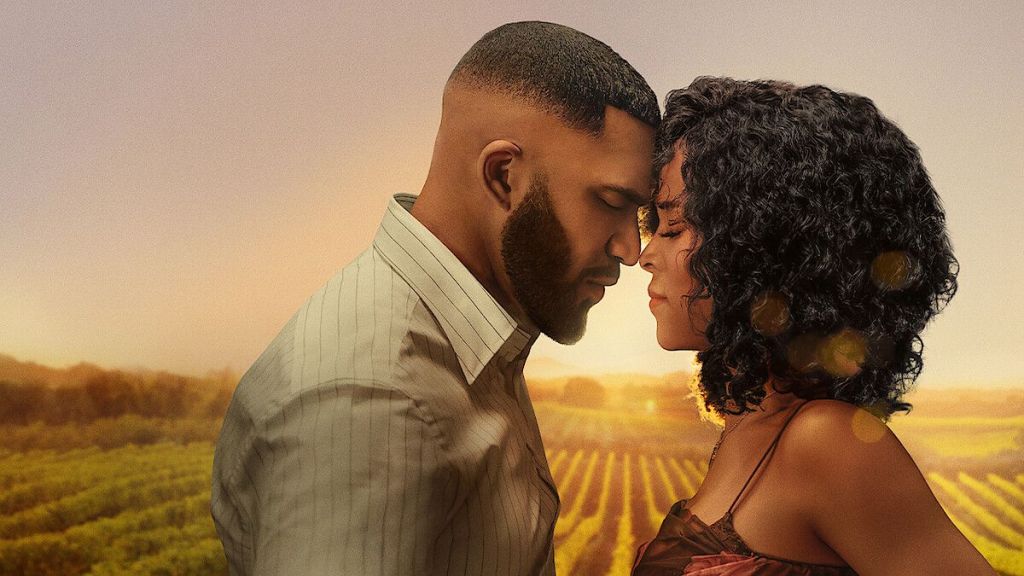
February is widely recognized as a month dedicated to celebrating Black excellence and love—an observance often marked by cultural features that bring both into sharp focus. “Ruth and Boaz (2026),” produced by Tyler Perry and Devon Franklin, positions itself squarely within that tradition. Drawing inspiration from the biblical story of Ruth, the film offers a love story rooted in faith, devotion, and endurance—one that has resonated across generations.
Ruth and Boaz
At its core, the story of Ruth and Boaz explores love on multiple levels. It is not solely a romantic narrative but one deeply concerned with familial loyalty and spiritual devotion. Ruth, a young woman, suffers the loss of her husband—a grief compounded by that of her mother-in-law, Naomi, who loses both her son and her husband. Overwhelmed by sorrow, Naomi decides to return home, releasing Ruth from any obligation to remain with her. Ruth’s defining act of devotion comes when she refuses to leave Naomi’s side, choosing instead a future of uncertainty over comfort. In time, Ruth finds herself noticed by Boaz, a vineyard owner whose interest grows into a bond that would become one of the most enduring love stories ever told.
Tyler Perry and Devon Franklin’s Ruth and Boaz
This modern adaptation transposes the biblical narrative into a contemporary setting while preserving its essential elements: Ruth, Naomi, Boaz, the vineyard, and the redemptive arc born of humility and faith. In concept, it is an admirable creative choice—one that recalls values largely absent from modern romance films, particularly notions of patience, restraint, and reverence. Yet the question remains: does it fully succeed?
While the intention behind “Ruth and Boaz” is commendable, the execution leaves much to be desired. From a foundational standpoint, the film’s reverence for its source material is evident. However, its presentation feels rigid. The setting, pacing, and performances often come across as wooden and overly prescriptive, stripping the story of the emotional intimacy needed to draw viewers into belief. Rather than feeling lived-in, the film frequently feels staged.
Deeper Dive Into the Well-Intentioned
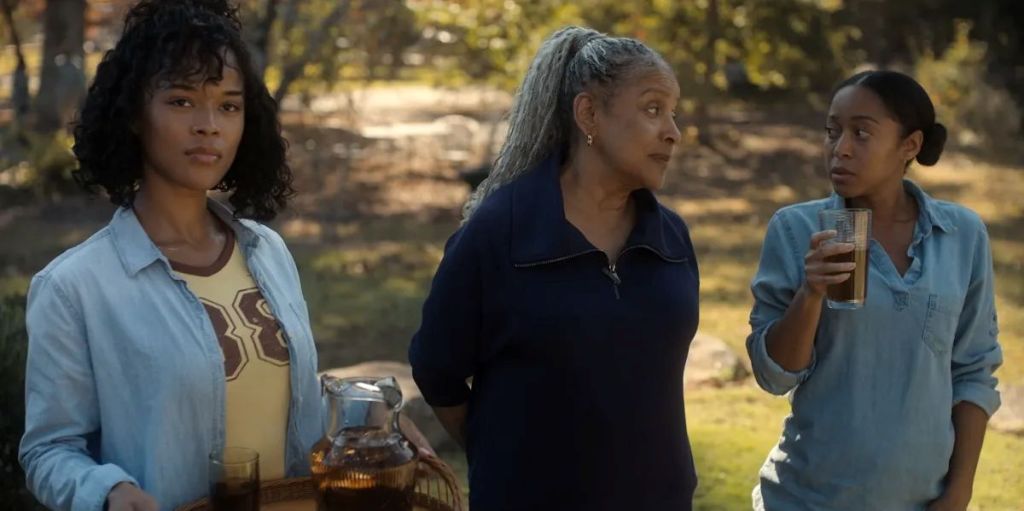
Serayah’s Ruth is reimagined as a musician, a creative choice meant to establish her values and moral grounding early on. Unfortunately, these traits are more implied than convincingly demonstrated, and the performance lacks the emotional weight needed to make Ruth’s journey compelling. Phylicia Rashad, an actress of undeniable gravitas, appears underutilized as Naomi. Her portrayal feels restrained to the point of emotional distance; the grief suggested in her voice and eyes rarely translates into physical or relational depth, creating a disconnect that weakens the central bond between Naomi and Ruth.
Tyler Lepley, cast as Boaz, similarly struggles to reach the emotional core of his character. Though his collaboration with Tyler Perry is well established, here he seems unable to access the depth required to embody Boaz’s compassion, devotion, and quiet strength. The result is a performance that conveys the outline of a story rather than its soul. Across the board, the film often feels less like an immersive experience and more like actors delivering a well-rehearsed stage performance.
The Redemption in This Redemptive Narrative
For viewers looking to expand their watchlist with films centered on love and relationships, “Ruth and Boaz” is a reasonable addition. It is unlikely, however, to inspire swooning, spirited film-club debates, or repeated viewings. Its greatest strength lies in its willingness to bring one of the most beautiful and enduring love stories ever told to a global audience.
Looking Forward
As reported by TUDUM,
“Ruth and Boaz” is directed by Alanna Brown (“Trees of Peace”) and written by Michael Elliott (“Brown Sugar”) and Cory Tynan (“Play’d”). The film is part of Franklin and Tyler Perry Studios’ multi-year, multi-picture first-look deal with Netflix to produce faith-based films.
With this partnership continuing, one hopes future projects will strike a stronger balance between reverence and vitality—offering not just message, but magic.
“Ruth and Boaz” is currently streaming on Netflix.
 Uncut Diamonds