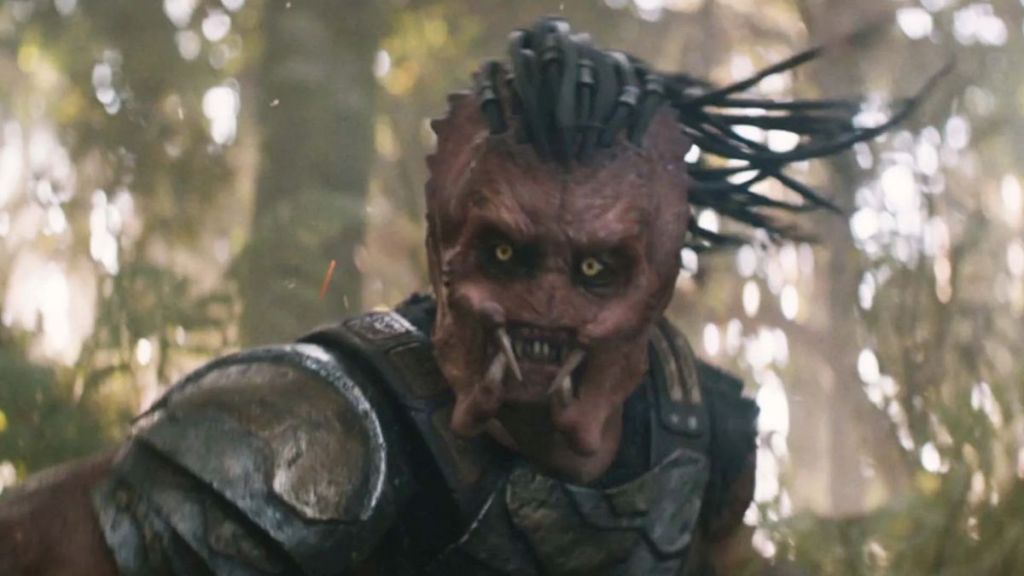
Solid setup. Predator: Badlands hits the structural beats where it needs to. Sometimes, first watches can be misleading and lend themselves to prescriptive bias, and such was the case with my initial viewing of Predator: Badlands. A second watch—with one singular element adjusted—redirected my perspective and opened my eyes to why a second or even third viewing can be necessary before fully dismissing a work.
Predator: Badlands is the ninth entry in the long-running franchise that began in the late 1980s. Audiences were first introduced to the Predator life form in 1987, when Predator starred Arnold Schwarzenegger in one of his defining roles. As noted by Slash Film:
“Since 1987, the ‘Predator’ franchise has made humanity realize that being our world’s apex predator doesn’t mean we’ll go unchallenged. The original film pits a mercenary team against a single guerrilla hunter, and the odds are in the hunter’s favor. Undeterred, this species—also known as the Yautja, as first identified in Steve Perry and Stephani Perry’s ‘Alien Vs. Predator: Prey, a novel—later arrived in Los Angeles to undertake a strange abduction mission.”
From that point forward, the Predator secured its place in creature-feature history, standing shoulder to shoulder with the Xenomorphs of the Aliens franchise. Across nine cumulative films—including two crossover entries—the mythology has expanded, though not all installments center exclusively on the Yautja.
Released in 2025, Predator: Badlands distinguishes itself by diving deeper into Yautja culture. Rather than focusing solely on the species’ instinctual drive to hunt, the film narrows its lens to a particular family within the warrior class.
Character Objective and Thematic Core
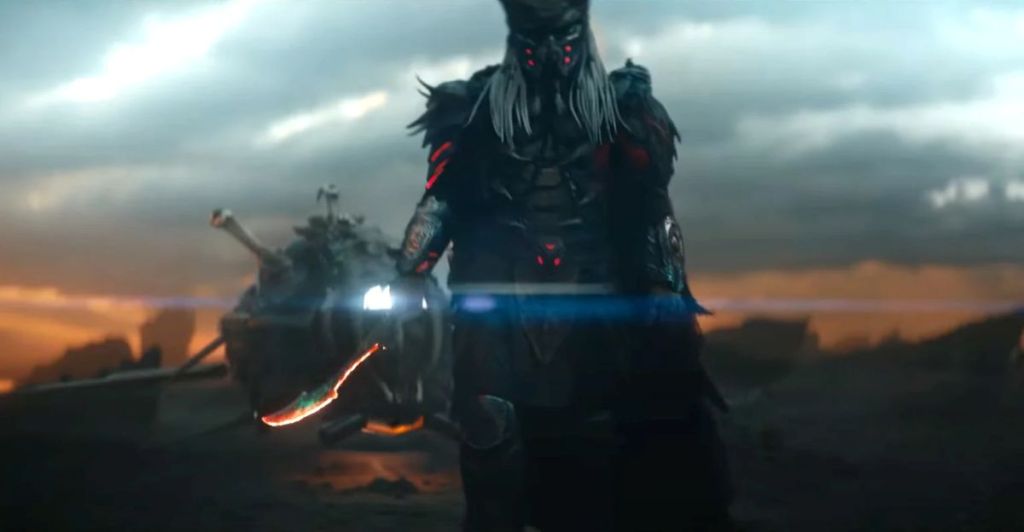
We meet Dek and his brother early in the film. Dek’s character objective is clearly established: he has something to prove. The smallest of his clan and burdened by diminished expectations, he is driven to validate his worth—not merely to his clan, but specifically to his father. He seeks belonging and acceptance in a culture where weakness is intolerable, and death is preferable to inadequacy.
Fundamentally, this is the story of a son searching for his place in a collective unit governed by brutality and honor. Dek does not want belonging handed to him; he wants it earned. His stated goal is to defeat the Kelisk—an adversary believed to be undefeatable—and return with proof of his strength.
The opposition in this film is multidimensional. Dek faces:
- The expectations of his clan
- The contempt and shadowed thinking of his father
- His own misconceptions about acceptance and identity
When his father orders Dek’s brother to kill him—and the brother refuses—the father executes the brother instead. The inciting incident is thus deeply personal: fratricide born from intolerance. Dek is now propelled not only by ambition but also by grief and defiance.
Structure and Narrative Progression
The film adheres closely to classical narrative structure:
- Introduction of the protagonist and his world
- Emotional immersion into his “normal.”
- Presentation of the objective
- Launch into the journey
The Kelisk becomes the tangible object of Dek’s pursuit.
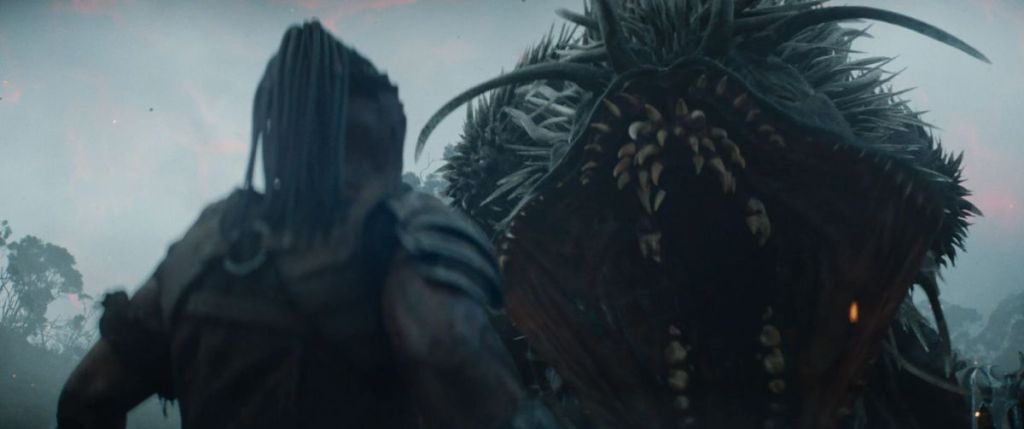
On his journey, he encounters relentless obstacles: hostile terrain, unfamiliar ecosystems, and creatures that threaten his survival. Though he is a Predator by nature, the environment destabilizes that certainty. At every turn, he must prove he is a hunter—not prey.
Around the midpoint (approximately sixty minutes in), the film expands into a broader exploratory odyssey. High-energy action sequences satisfy franchise expectations, while new worlds and creatures deepen the mythology.
Dek is accompanied by an artificial intelligence character whose own mission forms the B-story. Their alliance is transactional: mutual aid toward distinct objectives. While Dek seeks personal validation, she operates from a mission aligned with innovation and societal progression. Their goals parallel one another structurally but diverge philosophically.
Dek must ultimately decide whether to persist in a goal rooted in insecurity or reassess what the journey has revealed about his understanding of worth.
Revelation and Resolution
The film delivers an unexpected revelation near its conclusion. While audiences anticipate a traditional victory, with Dek returning triumphant with the Kelisk’s head, the outcome proves more nuanced and more satisfying.
Dek gains more than victory; he gains clarity.
His journey dismantles an erroneous life lesson: that worth is proven through domination alone. Instead, he learns that purpose driven by inherited ideology differs fundamentally from purpose shaped by lived experience and intentional reasoning.
The emotional payoff works because it reframes the objective. His growth—not the Kelisk—is the true prize.
Franchise Tension and Audience Reception
This humanizing portrayal of the Yautja may alienate some die-hard fans. Traditionally, the Predator species has been depicted as vicious and unyielding, defined by instinctual pursuit of the hunt. Introducing vulnerability and introspection softens that depiction. For some, that shift may feel like a dilution of what makes the Predator mythos compelling.
Yet this reframing is precisely what gives Predator: Badlands thematic depth.
The Rewatch Factor
On first viewing, I was distracted by the absence of captions during the Yautja language sequences. The rewatch—with captions—dramatically altered my experience. This underscores how critical world-building details are to narrative comprehension. Language is not an aesthetic garnish; it is structural.
With that barrier removed, the film’s universal message became far clearer.
There is, contrarily, much to appreciate here—particularly its meditation on purpose, belonging, and self-definition. As with most films, reception is influenced by expectation. If one approaches this installment seeking relentless creature-feature brutality, disappointment is possible. If one approaches it open to thematic expansion, the film rewards that openness.
For viewers interested in a franchise installment that flips established conventions and interrogates inherited belief systems, Predator: Badlands offers substantial material. Whether that deviation is perceived as evolution or a misstep ultimately requires self-reflection.
The question is not simply whether it fits the canon—it is whether we are willing to let the canon evolve.
 Uncut Diamonds