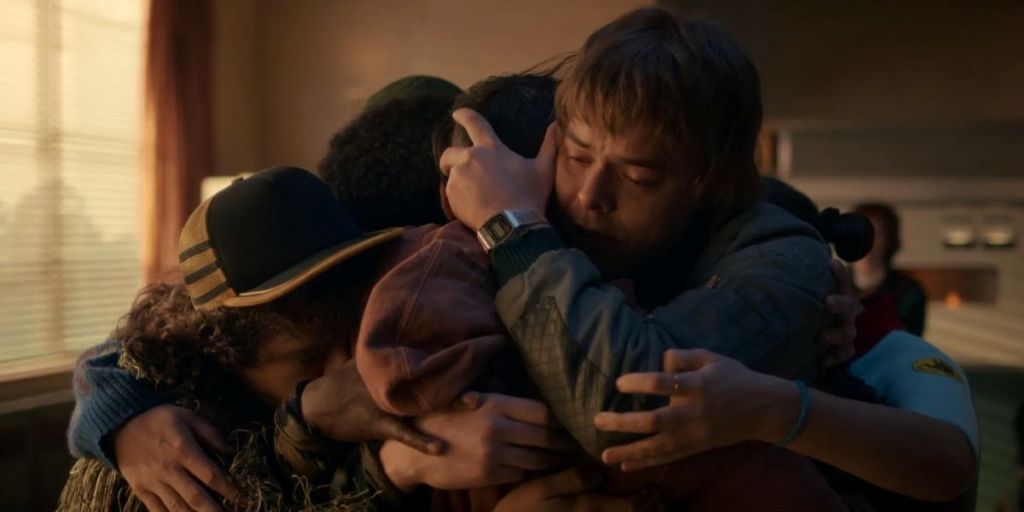
I watched Stranger Things from its very premiere. I was drawn in by its parallel to the era I grew up in—what many nostalgically call the “good old days.” While I cannot say I wholly subscribe to that framing, the emotional pull of the nostalgia was undeniable. There was a potency in its atmosphere, in its texture, and in its sonic and visual callbacks. It was not difficult to fall in love with the series—or with its characters.
Synergistic Potency
The cast operated in rare synergy. There was an energy present that could only be recognized when witnessed. It is uncommon—exceptionally so. The embodiment of these roles—children with the hearts of adventurers and the careless courage of invincibility—set against something sinister bleeding into their world created the architecture for something epic. The collision between innocence and encroaching darkness gave the series its pulse.
I remained committed to the show. Yet the final season, as advertised, felt denser than its predecessors. Each episode unfolded more like a feature-length film, demanding deeper investment. It took me longer to engage. But when I did, I was left stunned—mouth agape in astonishment. And I will say without hesitation: Stranger Things is arguably one of the most prolific series to grace television, and I am not entirely convinced the Duffer Brothers fully grasp the magnitude of what they created—how significant, resonant, and reflective this body of work truly is.
Building Up to Something Masterful
They surpassed themselves in the final season. The cinematic quality of the cinematography and the expansion of worlds—not only Hawkins, but also the Upside Down, the interdimensional bridge, and the abyss—were masterfully rendered. Each realm possessed its own signature, its own emotional register. The traversal between dimensions was visually stunning, yes, but more than that, it carried distinct emotional imprints that are nearly impossible to articulate.
Theoretical Ideologies and Creative Grounding
The theoretical scaffolding—Vecna’s (Henry’s) plan to merge worlds through a wormhole and the notion of Earth disintegrating into a vacuum should that bridge rupture—grounded the spectacle. It did not feel improvised or desperate for plausibility. Instead, it felt architected from the outset, growing increasingly coherent over time. What began as a mystery evolved into a revelation. The chaos gained a root, a face—though that face remained nearly imperceptible to the human eye, mind, and heart. That is soul revelation.
Even the rationale behind Vecna’s chosen victims and how their fractures empowered him was brilliant. Weaknesses have always attracted those who are manipulative and power-hungry. Mind control has long been the instrument of those who construct armies of unwilling participants seduced by promises of belonging or protection.
A Mirror With Perpetual Reflectiveness
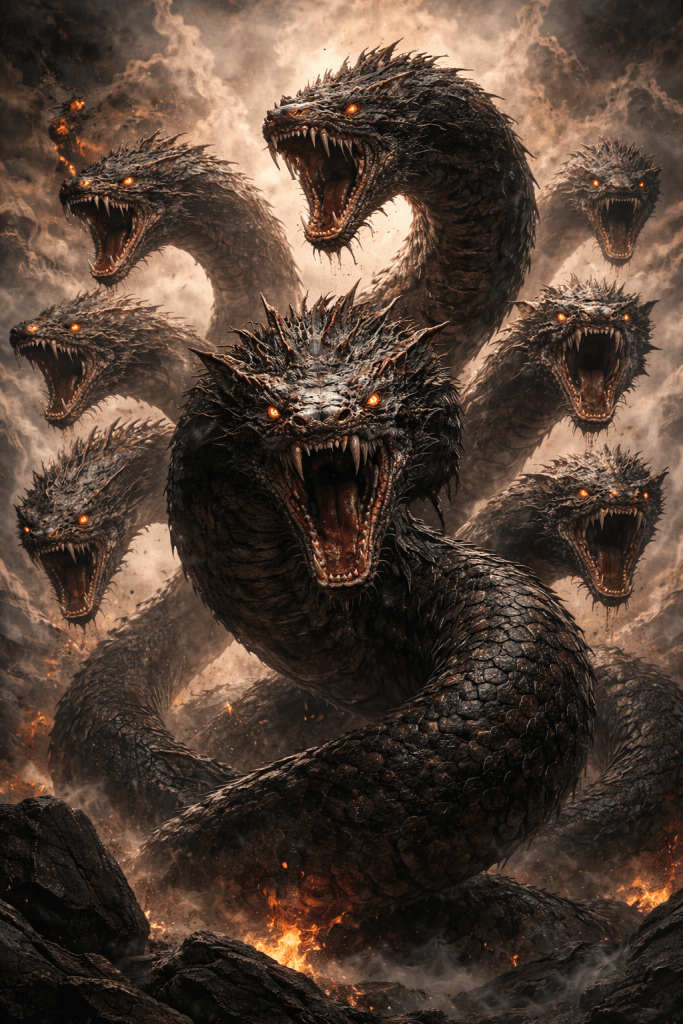
The series also earns distinction for acknowledging that evil may exist, but humanity often cultivates and sustains it. The exploitation of innocence to forge weapons against perceived threats is deeply embedded within the soil of corruption. Eliminating a symptom may bruise the disease, but it does not cure it. Vecna and Eleven were not isolated anomalies; they were byproducts of an ideology—misplaced, inhumane, and systemic. Cut off one head, and another rises. Hydra logic.
It is striking how reflective Stranger Things is of contemporary undercurrents within society. One need only scan current headlines to recognize the parallel. Removing a visible sore without dismantling the diseased body from which it emerges is futile—like chasing wind. As Papa was replaced, as El’s sister implied, the system persists. Even if Vecna—the rogue virus—is defeated, the ideology that produced him remains fertile ground for repetition.
The Soul of Stranger Things
Beyond its theoretical depth and psychological excavation, the series champions community. Acceptance. Vulnerability. The power of owning one’s weakness rather than allowing it to become a lever of manipulation. It speaks to collective sacrifice—the willingness to fight not for individual gain, but for those who will come after. To walk through fire. To traverse dimensions. To confront darkness whose roots burrow deep into unseen territory. That is the fertilizer of revolution. That is where ultimate victory germinates.
Among the vast catalog of television and streaming narratives, this series evolved into something formidable—a thesis on purpose, origin, and the foundational principles that undergird civilization itself. It delivered profound truths through entertainment, much like parables—truths visible only to those with eyes to see and hearts prepared to understand.
Inexplicable Greatness = Deeply Inspired
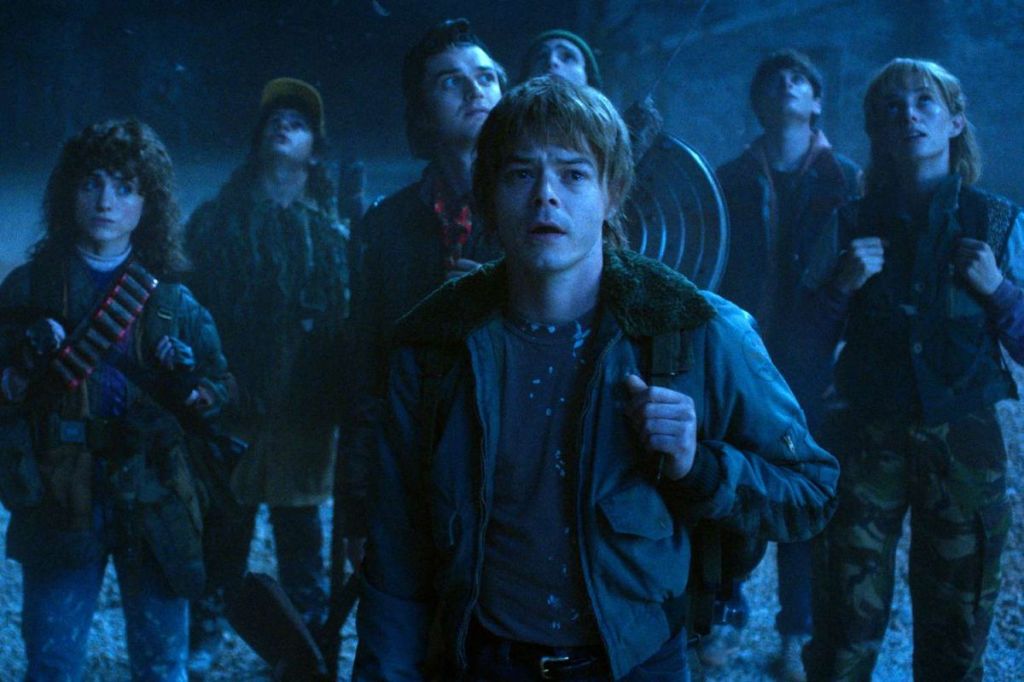
Truly, this series exists in a category of its own. Its emotional gravity, intellectual provocation, centering force, and creativity converge into a single descriptor: inspired. Work of this caliber does not merely assemble; it coalesces. It reflects something deeper because it draws from something deeper.
Perhaps the greatest takeaway is that those who receive the message will, in fact, be “Running Up That Hill” to do what is necessary—an undeniable nod to Running Up That Hill by Kate Bush.
“You don’t wanna hurt me (yeah, yeah, yo)
But see how deep the bullet lies (yeah, yeah, yo)
Unaware, I’m tearing you asunder (yeah, yeah, yo)
There is thunder in our hearts (yeah, yeah, yo)
Is there so much hate for the ones we love? (Yeah, yeah, yo
 Uncut Diamonds