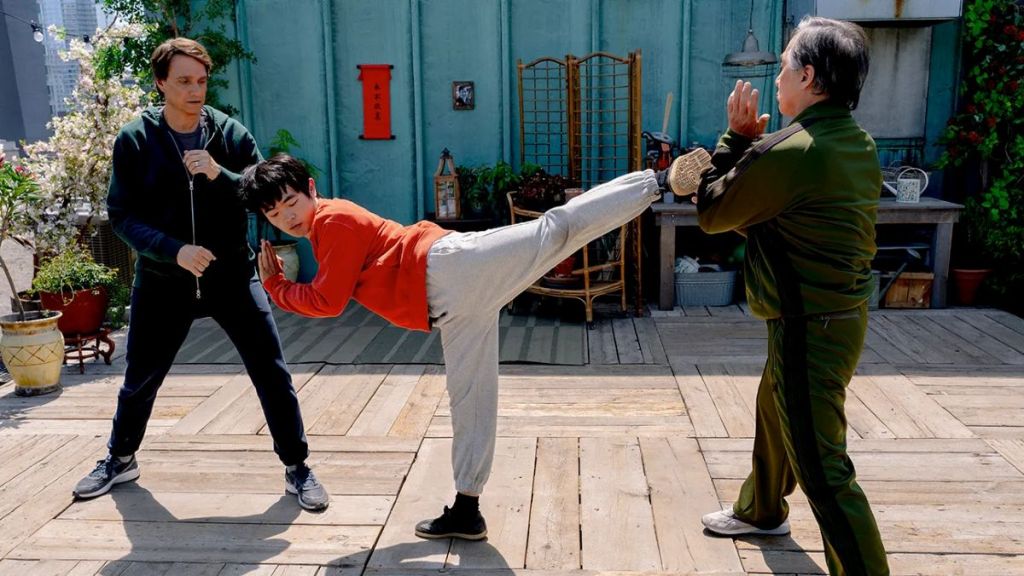
Every industry has its markers—eras that define not only innovation but impact. For cinema, the 1980s stand as the age of the blockbuster: a decade marked by creative risk, audience trust, and films whose resonance has endured for generations. As one devoted fan of the period aptly notes, there was something singular about those films:
“The decade allowed a substantial amount of creative freedom, due to how much audiences accepted and could tolerate. It was not as limited by budget and social conventions like previous decades. In turn, the kind of stories that were able to be told were much freer than in the years that followed. This led to modern classics and some of the most entertaining films still regularly watched today.”
One such film was “The Karate Kid,” a coming-of-age story that used martial arts not merely as spectacle but as a moral compass—guiding a young man toward maturity, balance, and self-respect. In 2025, that story continues with “Karate Kid: Legends,” a film that functions as both nostalgic homage and philosophical reminder: true cinematic resonance has far more to do with heart and soul than with scale alone.
A Familiar Legacy, An Unexpected Continuation
I approached this film unsure of what to expect. Following the surprisingly successful expansion of the franchise through “Cobra Kai,” the idea of returning to the original cinematic lineage felt both intriguing and unexpected—especially given that the franchise had already undergone a reboot. A direct continuation of the original narrative lineage produced an immediate “oh wow” response.
The introduction is genuinely beautiful. The film takes us back to the beginning, reconnecting us with one of the most beloved figures in the franchise, “Mr. Miyagi.” Seeing him once again in his element alongside “Daniel LaRusso” delivers a potent dose of nostalgia—one that immediately makes viewers feel at home. More importantly, it anchors the story. Rather than functioning as mere fan service, the opening grants us insight into the origins of Miyagi’s philosophy, grounding the narrative in spirit rather than surface reference.
The film reminds us repeatedly: “Two cultures in one—Miyagi and Han.” This is not the story of Daniel-san and Mr. Miyagi. It is a new story with new participants, reframing the same truths. What has sustained this franchise has never been character alone, but theme.
A New Protagonist, A Familiar Journey
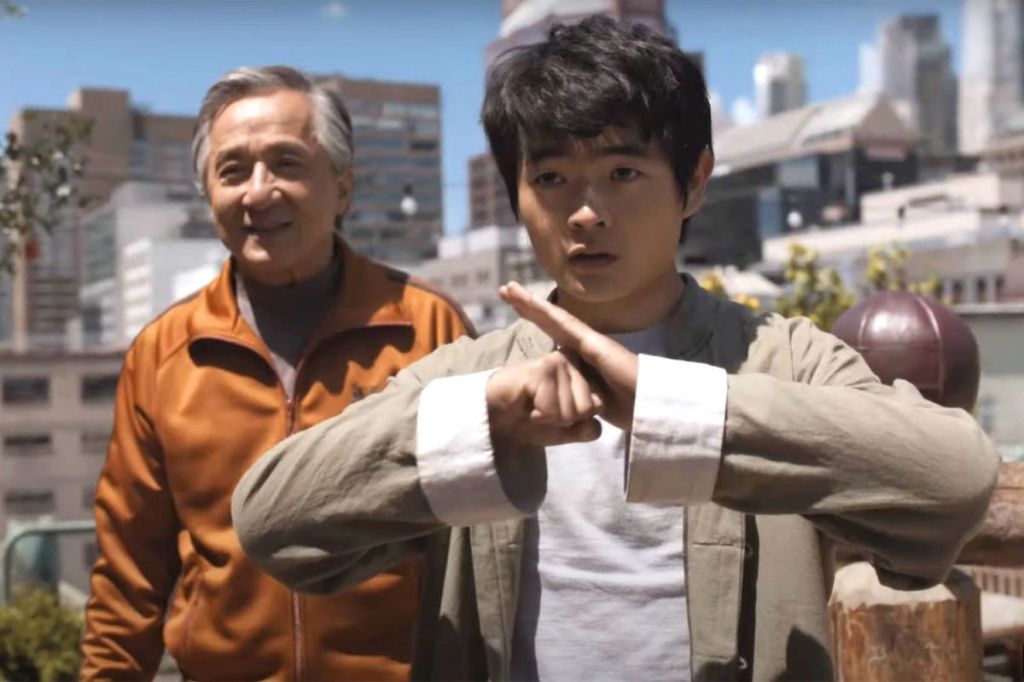
We are introduced to Li Fong, a young martial artist training under his sensei. Early on, the film establishes its central conflict: a fatalistic incident that fuels his mother’s fierce desire to protect him at all costs. Protection, in her mind, means leaving the past behind—including the martial arts training that has grounded her son.
In a brief but efficient narrative frame, we understand the emotional logic driving her decisions. She associates karate with loss. It is an erroneous but deeply human lesson—one that propels the characters’ objectives and sets the cinematic journey in motion.
Li’s relocation to New York City marks the beginning of the “new normal.” There, he meets a girl who becomes both his guide and companion in unfamiliar territory. Along with that connection comes trouble—trouble that defines his ultimate objective.
Into the Fire
The inciting incident arrives via a street altercation, forcing Li to confront the very thing his mother fears most. He must step into his own identity, even if it means activating the skills he has been taught. A confrontation with a bully—who harbors his own unwelcome fixation on Li’s new friend—becomes the first test.
A small defeat gives way to a much larger challenge, one that Li must consciously choose to accept. This sets up layered conflict: between Li and his antagonist, Li and his mother, and Li and himself.
Structural Strengths—and Stumbles
Before we can fully believe Li is capable of achieving his goal, the film must prove not only his physical skill but also his philosophical readiness. A street fight effectively demonstrates his technical ability, but the question remains: has he internalized the deeper lessons?
This leads to a secondary objective—teaching what he has learned—encouraged by his sensei (the B-story). Unfortunately, this is where the film falters. The training sequence feels overly prescriptive and predictable, lacking the organic quality necessary for emotional investment. While we are told the story of the pizza shop owner, we are never given sufficient reason to care. The B-story feels imposed rather than earned.
Why Did I Stick Around?
What keeps the viewer engaged is not this subplot but the lingering question at the heart of the narrative: what happened to Li’s brother?
The answer arrives at the midpoint—and while it provides clarity, it does so without the emotional depth the moment demands. The revelation feels rehearsed, almost perfunctory, and curiously devoid of the heart and soul that should define the film’s emotional core.
At this stage, the pacing begins to feel rushed. Major narrative turns feel forced, and performances are occasionally stiff.
Redemption Through Theme and Connection
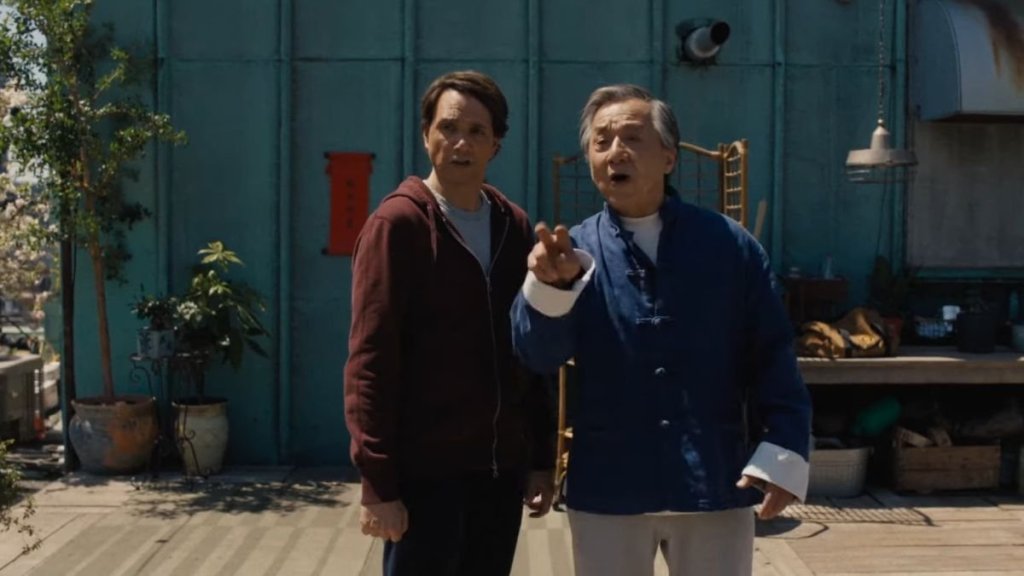
Yet this is a film that ultimately corrects its course. Rather than crashing into its own shortcomings, it finds redemption midstream. The turning point arrives when Han seeks out not the man Mr. Miyagi, but the spirit of his philosophy—now embodied in Daniel LaRusso.
From this moment forward, the film deepens thematically. The connective tissue strengthens. What audiences loved about the 1984 film reemerges—repackaged, but recognizable.
There will always be those who attempt to pervert the philosophy, just as there will always be those who restore balance. Martial arts—whether karate, kung fu, or taekwondo—are merely branches of the same tree. Han and Miyagi, Daniel LaRusso, and Johnny Lawrence—different styles, origins, and temperaments, yet fundamentally unified.
The broader takeaway—one that explains the endurance of this franchise—is articulated in a conversation between Han and Daniel. A teacher is only as good as their students. As Daniel reflects, every opportunity to pass on a piece of one’s legacy is never the wrong choice. This was the core of Mr. Miyagi’s philosophy.
Final Assessment
“Karate Kid: Legends” is ultimately a feel-good film that carries the banner of an iconic franchise. It is imperfect—marked by narrative missteps and uneven emotional execution—but its strengths balance its flaws. Much like martial arts itself, the film is about balance. In embodying that principle, it becomes a fitting continuation of a story that has always been about more than fighting—it has been about growth, legacy, and the quiet discipline of the soul.


 Uncut Diamonds