
What’s in a title? There is a lot indeed. A title holds tremendous significance, which is why screenwriters meticulously choose names for their creations. A compelling title grabs the audience’s attention and sets the tone for the story. It can convey the essence of the plot or themes, intriguing potential viewers and encouraging them to watch. Additionally, a memorable title can help the film stand out in a crowded market and aid in word-of-mouth promotion.
The title “Humane” struck me as odd, especially when paired with the promotional poster. However, the logline for this 2024 horror thriller piqued my interest.
A Dystopian Dilemma
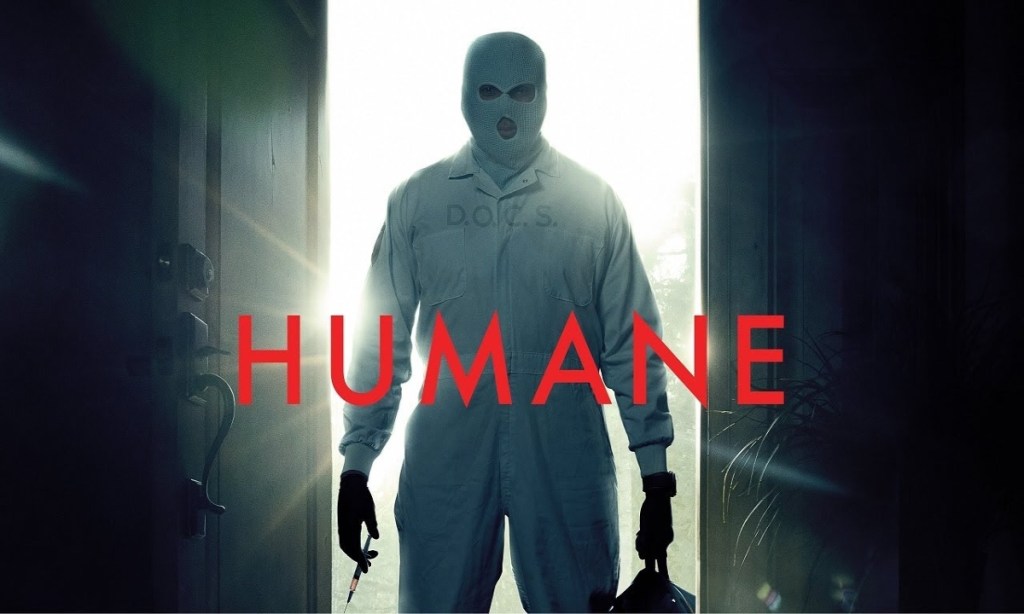
This film is set in a world where societal growth outpaces resources. Population growth is unsustainable. This, coupled with a disaster leading to ecological collapse, pushes the consensus that voluntary euthanasia is the most effective path to sustainability. The film opens with a report detailing these dire circumstances and the substantial sacrifices of a portion of the populace. Next, we encounter an older gentleman who exudes wealth and maintains a straightforward demeanor.
The Point of No Return
In the opening, the man makes a crucial decision that moves the story forward. He has decided to undergo this process and informs his family over dinner. However, his wife, who had cautiously agreed to join her husband, backs out of their agreement. Regardless, he discovers that postponing his fate is impossible, leaving his offspring in a precarious position with an extremely difficult decision to make.
Humane may not be an original idea, but it illuminates a pressing global problem: overcrowding. Whether this is in our world or some fictional account, the idea of unsustainability with overpopulation and an ecological disaster is horrifying enough.
Dystopian dreamscapes often depict societal imbalances. Suzanne Collins creatively tackled societal inequities with her work “The Hunger Games.” This writer approaches another societal inequity with euthanasia as the means of control. As she is cited in ScriptMag,
‘ I thought, the idea of running out of resources and how that would look and the idea that when we cull a herd of caribou, it’s considered the right thing to do. And the idea is, could we do that to ourselves, could you humanely sort of cull our own population of that’s what it was going to take for us to survive.”
The Dark Reality of Control

One could easily see how disturbing this concept may be. This work reveals that things never turn out as expected. What sounds good theoretically is not always practical. This film clearly portrays the inevitable corruption that occurs when death is used is used as a political tool or a solution to an issue. This is where the writer brings in the philosophical “Trolley Problem.”
Without a doubt, the concept creates intrigue. However, this movie is far from exceptional. It never gets past first gear. It consists mainly of an hour and thirty minutes of sibling rivalry, with no depth or development.
The climax is flat, making it no climax at all. The characters lack likability, making it difficult to root for them. The ending is predictable. However, as a matter of observation, I do believe that a slight twist the viewers were offered before the credits could have saved the film if explored from that angle.
Mediocre Misstep
Despite its genre designation, the film’s concept, title, and screenplay are mediocre. It is not disturbing enough to be considered a horror movie, and it lacks genuine scares or shock value. The story doesn’t have enough of an arc to compete with other thrillers. To its credit, “Humane” touches on real societal issues and brings a very important deontological question to light. But cumulatively it fails to deliver.
 Uncut Diamonds