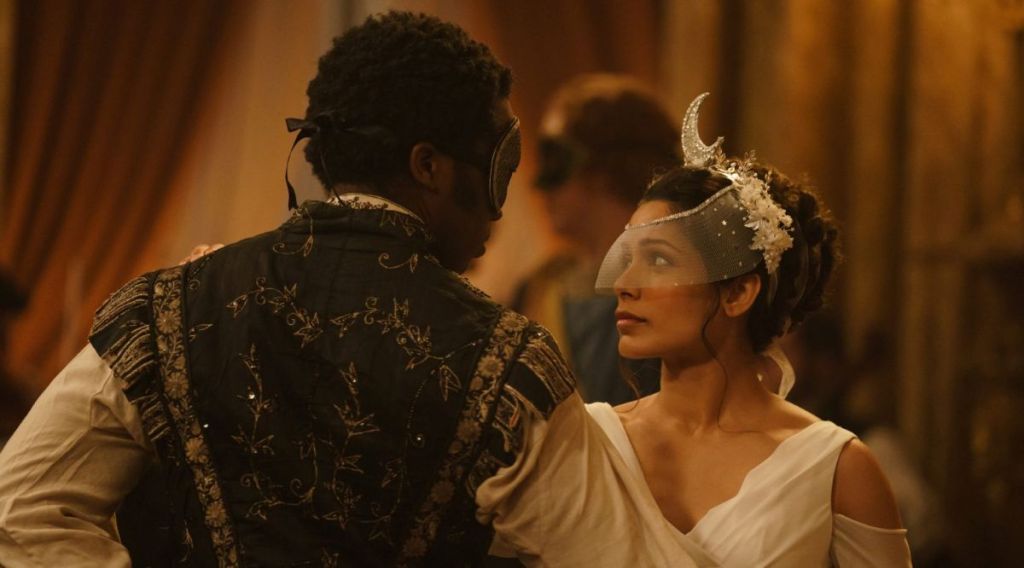
One particular genre I typically stay away from is romance—though even I can sometimes get pulled into a film or two. I admit Bridgerton was one I found quite delightful. For me, it was not the romanticizing of petticoats and social climbing that held my attention, but the unfolding drama—much of it delivered through the sharp narration of Lady Whistledown.
So, in scrolling, when I came across something that felt cut from a similar creative cloth, I decided to sit down and devote time to Mr. Malcolm’s List.
Mr. Malcom’s List
Mr. Malcolm’s List is, at its core, a story of two women. We first meet them as girls—Julia and Selina—bound by a youthful pledge and shared hopes. In the 1800s, where marriage was positioned as both destiny and admission into proper society, the two promise to help one another secure suitable matches. Julia assures Selina that once she has secured a husband of means and standing, she will in turn help her friend do the same. Selina, however, is not of the same social station.
A Woman’s Swan Song
With time, Julia sets her sights on a suitor of acceptable rank—Mr. Malcolm. She secures his attention long enough for a meeting, but not long enough to secure his heart. What follows is embarrassment and the sting of gossip suggesting perhaps she is not worthy after all. Incensed, she turns to her cousin for answers, only to learn that Mr. Malcolm operates by a list—an exacting set of criteria by which he measures a woman’s suitability as a companion and potential bride.
Strategy Over Common Sense
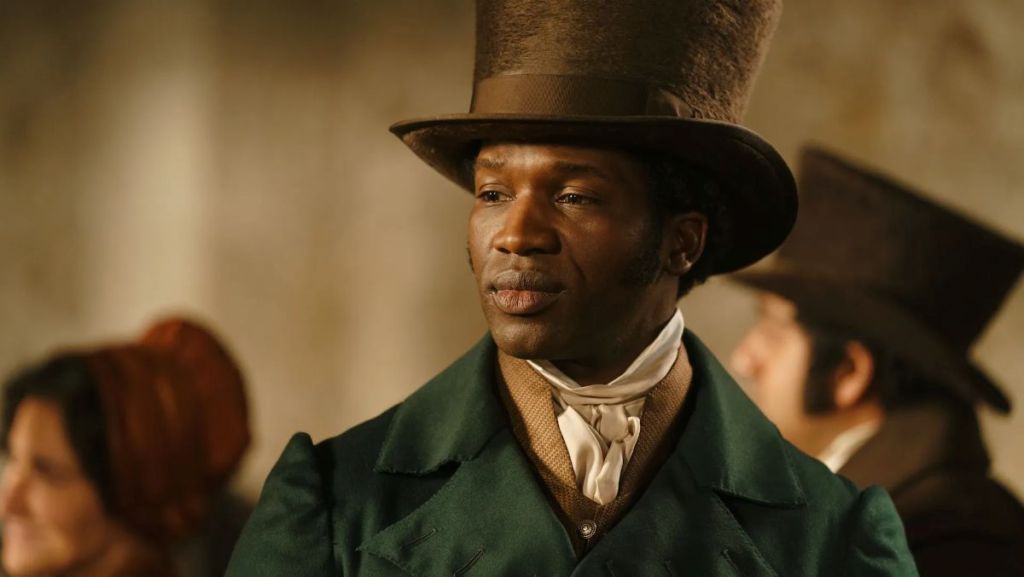
What unfolds next is retaliation masked as strategy. Julia enlists Selina in a calculated plan: Selina will present herself as the embodiment of Mr. Malcolm’s criteria, secure his affections, and then reject him—crushing him as Julia believes she has been crushed. Yet the irony reveals itself swiftly. Selina does not need performance or pretense to meet Mr. Malcolm’s standards. She does not have to manufacture what already exists—an effortless magnetism and sincerity that cannot be coached.
What lies underneath superficiality (the heart and Soul)
The film quietly interrogates the superficiality of social strata and the rigid codes of civility governing relationships. It shifts the paradigm in a meaningful way, positioning the most eligible bachelor—a man at the center of elite attention—as a man of deeper hue. From a representation standpoint, that choice is satisfying without being overstated.
At its heart, the film affirms an enduring truth: conspiratorial acts meant to deceive often return with consequence. Grace, civility, and authenticity carry further than manipulation ever could. The best-laid plans are often laid to rest. He who studies too long how to win may very well lose.
Some Lovely Gems to Admire
The casting is brilliant. The inclusivity never feels performative; instead, it directs focus to the actors’ skill, which shines. The setting complements the narrative, grounding the viewer in the period with believability. The costuming is precise—refined without distraction. The pacing may be described as languid, but it is smooth, reflective of the social station the writer centers.
Lovely work.

