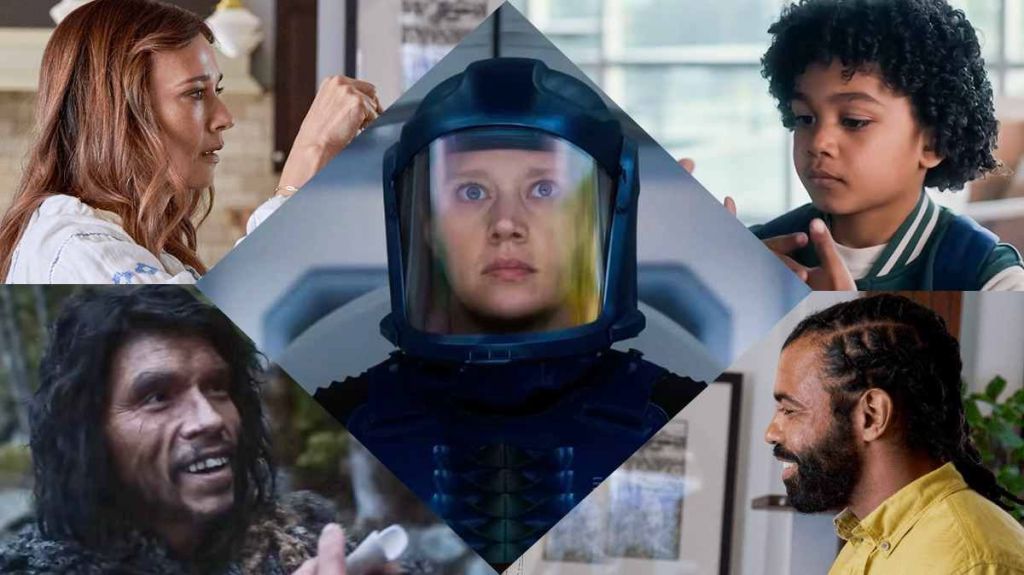
Melodramatic features run the gamut from exceptional to flat and posturing. Some drown in sentimentality while others barely skim the surface of genuine emotion. However, when a melodrama achieves excellence, it evokes a profound emotional response, awakening something profound within the depths of consciousness. The 2026 feature “In the Blink of an Eye” falls solidly within this framework, delivering an authentic emotional experience.
A Story That Spans Time
“In the Blink of an Eye” is a human story at its core—a story of connection that reaches across the vast expanse of time from early BC well into a future where the Earth as we know it no longer exists and humanity has found a way to transplant and start anew. It is an emotional journey that navigates the ebbs and flows of love, family, and hope with remarkable tenderness.
The connections are not explicit at first. The threads begin as fragile strands, almost imperceptible, but they gain tensile strength as the story progresses. This concept is one of the film’s greatest strengths, as it wholeheartedly meets the measure of its categorization. As No Film School defines melodrama, “The genre of melodrama is characterized by exaggerated emotions within the plots and characters. Thematically, these movies usually deal with things like love, loss, and morality. The goal of any melodrama is to evoke strong emotional responses from the audience.” This film nails that component with precision and grace.
Form as Metaphor

Another compelling component of this film is its parallel artistry in form. It can best be described as artistically metaphorical. The way the feature is filmed, the transitions through time occur rapidly—almost jarringly so. A simple turn of the head during conversation is enough to lose one’s place on the timeline within the narrative, often requiring a replay to catch what may have been missed.
From my perspective, this technique works in the film’s favor rather than against it. As the title suggests, it symbolizes both the story’s context and life itself. Many have acknowledged that life, as it seems to transpire, happens in the blink of an eye. The filmmaking mirrors these themes beautifully.
Critical Reception
However, not all critics have been kind to the film. Some have labeled it banal, useless, and destined to fade into oblivion. There have been far worse offerings when evaluating this film on its own merits or in comparison to others in the genre.
As an avid movie watcher and a fan of this particular fare, I tend to seek comparative material. If there were something comparable, the dramatic cross-generational offering “Here,” starring Tom Hanks, could serve as an apt comparison. I find that whether one film moves a viewer more than another depends on the viewer and their experience.
Does It Deliver?
Does “In the Blink of an Eye” have longstanding potential? Perhaps not. Is there a point to the film? Absolutely. Anyone who watches it will grasp the point the filmmaker attempts to make with the narrative. If the consensus of concept and outcome aligns, that serves as proper support for the argument that the film accomplishes exactly what it sets out to do.
A Whisper Worth Hearing
Not all films can be fireworks. Some present with bluff and brawn, demanding attention through spectacle and noise. Others simply whisper. “In the Blink of an Eye” belongs to the latter category—a gentle whisper in the ear reminding us to remember what is important. It is pure drama with no high-octane movements between frames. It simply plays on the emotionalism of humanity and the invisible threads that bind us to one another.
In a world saturated with noise, sometimes a whisper cuts deeper than a shout. If you have ever thought about how fleeting time is and how precious the connections we forge along the way are, this is the film for you. “In the Blink of an Eye” does not demand your attention. It earns it. And in doing so, it reminds us that the most profound truths often arrive not with fanfare but in the quiet spaces between heartbeats.
 Uncut Diamonds