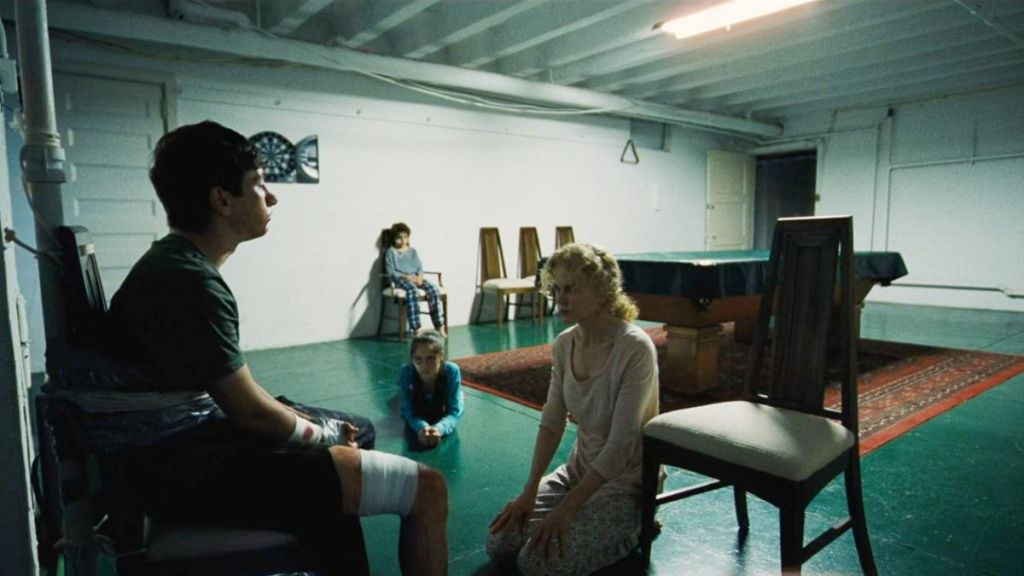
The tone from the opening frame screams, “Not for the squeamish.” It primes audiences to prepare for what lies ahead—something chilling and deeply unsettling. Beyond establishing atmosphere, this brief visual introduction acquaints us with the occupation of our primary character: a surgeon. The clinical precision of his world becomes our entry point into a narrative that refuses to offer comfort.
An Unlikely Alliance
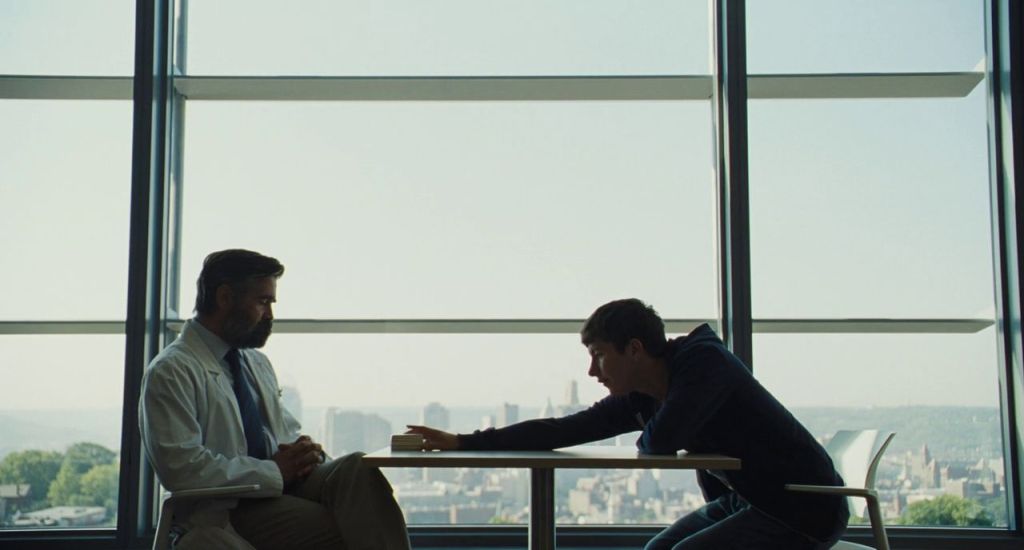
Following the cold open, we transition into the meeting of two: Dr. Stephen Murphy (Colin Farrell) and a boy named Martin (Barry Keoghan). Their coupling strikes an immediately odd chord. One appears to be at the behest of the other. However, their dynamic feels too alien to suggest family. It is an oddity waiting to be explored, and the film wisely lets that tension simmer.
Unraveling the Connection
We soon learn of their somewhat murky connection. But although an explanation surfaces, it remains deliberately unsatisfying, strange enough to keep us leaning in. By the quarter mark, new information is revealed through dialogue that raises the hair on our arms, upping the ante.
Their connection appears to rest on ties buried beneath layers of deceit. What does become clear is that our good doctor shares history not only with Martin but also with Martin’s mother—a relationship that requires further investment to comprehend. This careful withholding creates masterful buildup.
The Point of No Return
Like any well-constructed midpoint, the narrative arrives, bringing a narrative-driven point of decision—one carrying tremendous stakes. This is precisely what viewers crave: the pivotal moment, one where the odds are stacked, requiring a choice so crucial that it determines everything that follows. The film delivers on this; the result is a viewing audience locked in and willing to travel along to witness this unsettling trajectory.
Atmosphere as Character
The score deserves recognition as a star of the film. It underpins the eerie and uneasy undertone, making each subsequent plot point more unnerving. Equally effective is the mechanization of the character movements, interactions, and dialogue. The sterile, almost frigid atmosphere. There exists a roboticness throughout—cold, succinct, deliberately awkward—that amplifies the unsettling nature of every interaction.
Kidman at Her Finest
Nicole Kidman, portraying the wife and mother, delivers a performance at her absolute peak. Her mastery of this role comes as no surprise, given her well-documented aptitude for content that sits on the fringes of suspense—material that is mysteriously awkward with a distinct psychological bent. This performance serves as yet another testament to her unmatched talent for making such characterizations feel natural and realistic within the scope of human experience. Her capacity to inhabit discomfort with such ease proves a notable asset, grounding the film’s more surreal elements in something recognizably authentic.
Beautifully Weird or Brilliant Fluke?
While the combination of elements serves to successfully pull viewers deeper into the spiral, it simultaneously renders the story borderline unpalatable at times. Whether this constitutes a beautifully weird and carefully orchestrated masterpiece or a very strange fluke cannot be easily ascertained.
Portrait of a Psychopath
There is no doubt that The Killing of a Sacred Deer achieves next-level spine-tingling territory. This psychological thriller spirals relentlessly into dark and twisted depths. If any portrait could capture an individual possessing immense psychopathy with complete disregard for rationality beyond his own twisted logic, it is Martin. His presence is not only impactful but also disarming, and it stays with you.
Catch It While You Can
If you have not yet experienced The Killing of a Sacred Deer, it is currently streaming on Max. However, it will be departing the platform soon—catch it while you can. Just prepare yourself accordingly.

