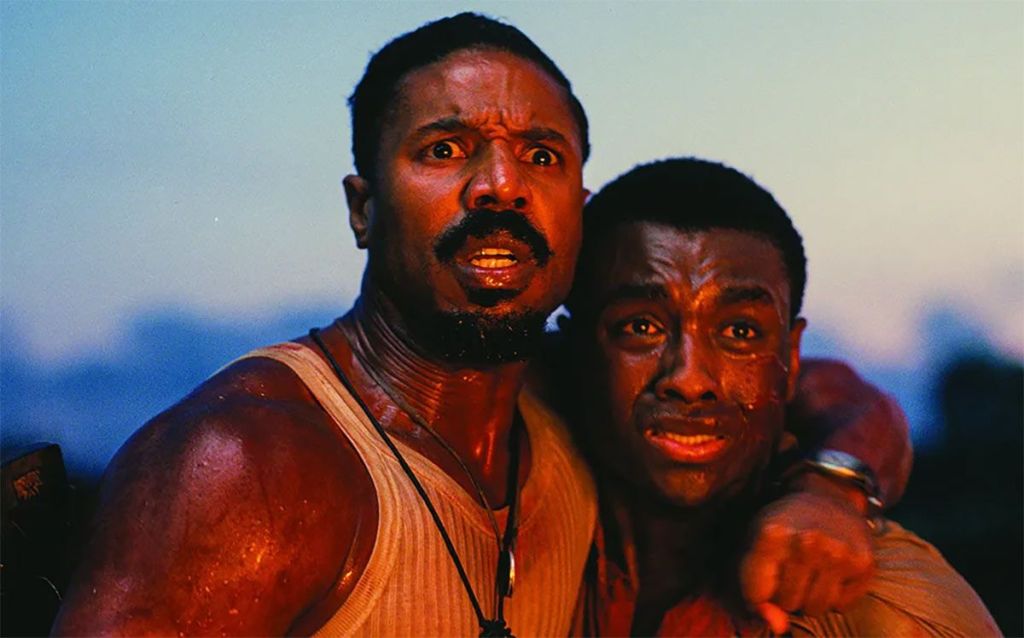
Sinners has lingered with me long after viewing. This has led me to several discussions regarding the screenplay’s subcontext and even questions of originality. That is a position that strikes a chord with me.
Critics often like to point to similarities with films like From Dusk Till Dawn and Crossroads, highlighting overlapping plot elements. While I haven’t seen From Dusk Till Dawn, vampire stories haven’t exactly changed much since my youth. The plot for most revolve around the same premise with a tweak here or there. Thus, it did not seem to bear on me that this was a suitable argument for lack of originality in Sinners.
It’s also not challenging to see why the parallels were drawn between Sinners and Crossroads. In Crossroads, a man’s quest to play the blues leads him to a fateful bargain with the devil, echoing blues mythology. The intertwining of blues music and the supernatural in Sinners draws these parallels; however, superficially, the resemblance ends there.
Beyond Bargains: Themes of the Soul and Liberty
Sinners delves deeper, exploring not just the cost of a soul but the very nature of liberty. What does it mean to be truly free? The film suggests that liberty and the soul are inseparable: where the soul is free, liberty exists; when the soul is bound, liberty is unattainable.
Setting: Mississippi’s Legacy of Unfreedom
Set in Mississippi, Sinners unfolds against the backdrop of the Jim Crow South—a hotbed of racism and residual slavery. The characters may not be slaves in the traditional sense, but they remain bound by systemic oppression. Sharecropping keeps them tethered to the land, paid not in real currency but in tokens only valid at local stores, robbing them of true autonomy. This gives them the semblance of freedom with no true liberty.
Sanctuaries: The Church and the Juke Joint
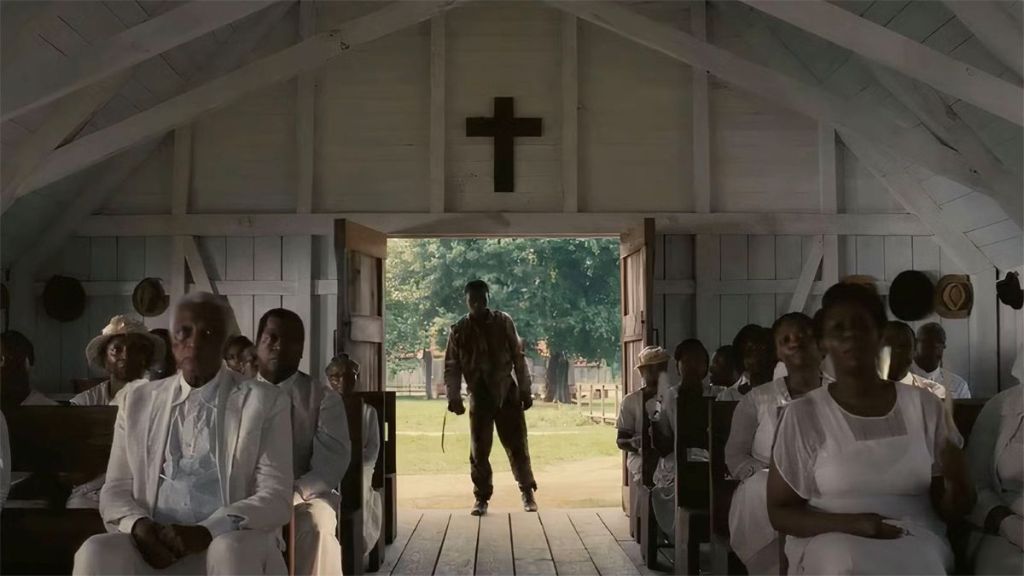
In this oppressive environment, the church serves as an oasis—a place to lay down burdens, commune, and hope for brighter days. In contrast, the juke joint represents the same, but burdens are drowned in lasciviousness rather than released through prayer. It’s a space for singing the blues, dancing, and indulging in activities that unfetter the human spirit, activities condemned as sinful. The Juke Joint, with its smoking, gambling, drinking, and promiscuity, is seen as the devil’s domain—a place Sammie’s father warns him to avoid.
The Power of Music: Sammie’s Gift
Sammie, the protagonist, possesses a rare and powerful musical gift. Music in Sinners isn’t just entertainment; it’s a force capable of bridging worlds and transcending time. Delta makes Sammie aware of this as they set up to receive guests for the Juke. He tells him about the significance of the blues and the responsibility of those who play it.
Both Sammie’s father and Remmick recognize the power that Sammie has. And Remmick makes his desire for Sammie’s gift explicit:
“I want your stories. I want your songs. And you will have mine…”
But way before their final confrontation, before Remmick and Sammie come face to face. Sammie begins to understand his power, the allure his music holds, and its dangers.
“It’s cuz of me. My daddy told me. Said the Devil was coming on account of my music. I been sinnin’ and God forsake me. It’s my fault.”
The Search for Freedom
Sammie’s longing for freedom is palpable. He wants off the plantation, just like his cousins Smoke and Stack. But he is warned that he doesn’t want the life that Smoke and Stack have lived. He is told not to pursue the path he’s chosen. Sammie rebels against this, adamant about doing whatever he can to get off the plantation. And blues is his ticket because freedom by any other means remains elusive.
Smoke and stack know the illusion of liberty. Their return to the plantation is a reflection of that illusion. Getting off the plantation did not offer them liberty. Thus, they returned in an effort to secure true freedom, making an attempt to escape debts and past mistakes, but their efforts only ensnare them further.
Bargains with the Devil: The True Cost
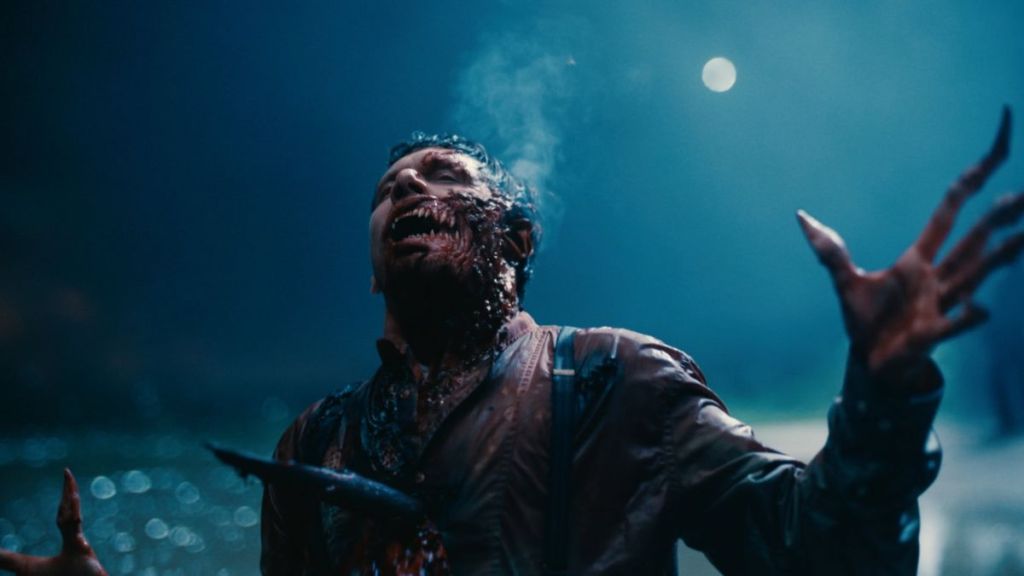
Remmick promises community and agency. Annie, however, had warned that no true liberty lies in a deal with the devil. Her insight is chilling:
“That’s cause vampires is different. Maybe the worst kind. The soul gets stuck in the body. Can’t rejoin the ancestors. Cursed to live here with all this hate. Can’t even see the sun (Son).”
Accepting the invitation would mean separation from any hope of true liberty, an unfettered soul.
Vampirism in the film is a metaphor for a deeper enslavement. The characters who take on immortality may feel powerful, yet they’re nothing more than puppets—enslaved by bloodlust and the will of their maker, doomed to eternal servitude.
The Illusion of Escape
In the end, only Sammie survives, the night, that is. When at a crossroads, he doesn’t choose the church—music and the blues run too deep in his veins. He knows that staying there, settling, he will never be free, at least not physically. So putting distance between himself and the Delta seemed like escape enough, a brief respite. However, a soul at unease, one that is captive to anything, is never at peace, no matter where the body is. And addiction became Sammie’s new master. He spends his remaining days under the grip of alcohol and music, dying slowly from cirrhosis.
The Final Offer: Immortality or Acceptance
Stack, now immortal, visits Sammie to offer him one last chance at eternal life—an eternity of blues and drink. But Sammie, having seen the cost, declines. Even Stack, despite his immortality, recognizes the hollowness of his and Mary’s so-called freedom.
Closing Dialogue: Sammie and Stack
Sammie speaks to Immortal Stack:
“But before the sun went down, I think it was the best day of my life. Was it like that for you?”
Stack to an old Sammie:
“No doubt about it. Last time I seen my brother… last time I seen the sun. And for a few hours, we was free.”
Reflection: The Universal Fetters
On all accounts, this is tragic. It’s a look at the fetters many of us carry just by means of being citizens of the world, cloaked in humanity. The fact is, there may never be total liberty while the soul travels in the flesh.
However, some things are worth keeping and holding on to. They are a gift. They are powerful beyond understanding, and in the wrong hands, they are destructive to the point of destroying souls. Once such an exchange is made, that is something one can’t come back from.
One Final Word
A work of art speaks to each person according to what they carry into it. The right note doesn’t plant something new — it finds what was already waiting. That’s the nature of resonance, and not every frequency is meant to reach every ear. Everything is not for everyone, and that isn’t a limitation. It’s a kind of sacred specificity.

