Word of mouth remains one of the most effective promotional tools in film. Whether positive or negative, conversation fuels curiosity, and curiosity drives viewership. That dynamic alone pushed me toward Lee Cronin’s The Mummy.
That said, my interest did not begin there. The creative team had already secured my attention. While I do not closely follow Cronin’s work, James Wan’s involvement is enough to make any project an automatic watch, and Jason Blum’s presence, though inconsistent in my experience, added another layer of intrigue.
What complicated that initial interest was the reaction. The responses were sharply divided, ranging from confusion to admiration. That kind of split reception does not deter me. If anything, it signals a film worth examining more closely.
Establishing Tone Through Disorientation
The film opens in a way that feels intentionally unmoored. The first fifteen minutes unfold without clear framing, leaving the viewer to assemble meaning in real time. Rather than offering immediate clarity, the film prioritizes tone and immersion.
This approach initially feels uneven, but it serves a purpose. By anchoring the story in Egypt and leaning into the cultural and historical weight of mummification, the film builds a sense of authenticity. The setting does more than provide backdrop. It subtly prepares the audience to accept what follows as something rooted in a known mythology rather than pure invention.
From Domestic Space to Horror
That foundation leads directly into the film’s central narrative. We are introduced to a mixed-heritage family living temporarily in Egypt. The father works in broadcast media, the mother is a nurse, and their growing family includes two children with another on the way.
Their distance from home and the demands of their work create small but meaningful gaps in attention. Those gaps allow an outsider to enter unnoticed. A woman befriends their daughter, quietly embedding herself within their lives. When the daughter disappears, the film shifts from atmospheric unease into active horror.
The story then advances eight years, a transition that could feel abrupt but instead reinforces the emotional weight of loss. The family has rebuilt itself into a new version of normal, now including the mother-in-law. That stability is fragile, and it is deliberately disrupted when the missing daughter suddenly returns. Her reappearance is not relief. It is the beginning of something far more disturbing.
Reframing the Mummy Myth
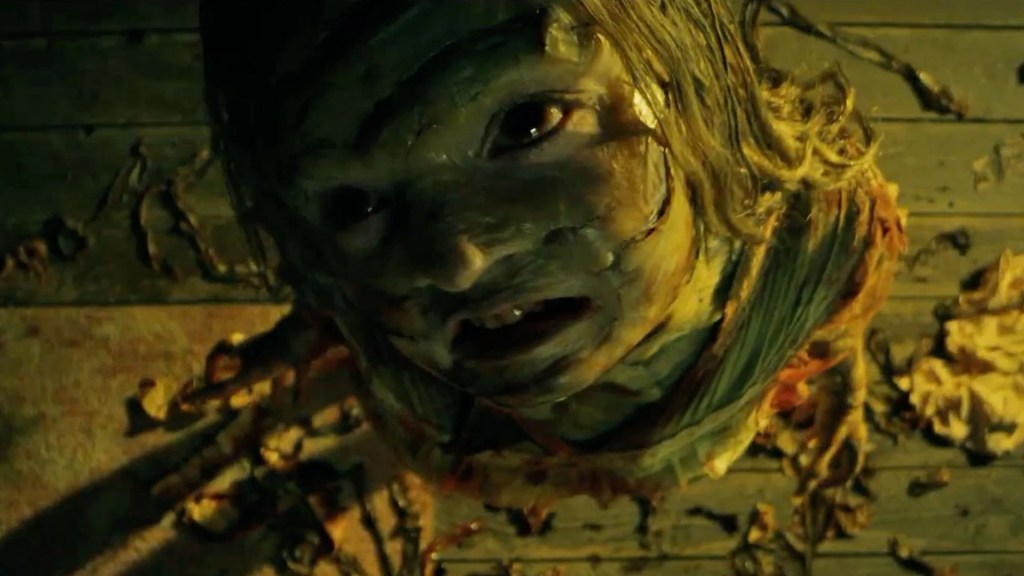
From that point forward, the film clarifies its intentions. This is not a traditional mummy narrative. Instead of centering on the familiar figure, it focuses on the ritual and implications of mummification itself, tying it to an ancient and malevolent force.
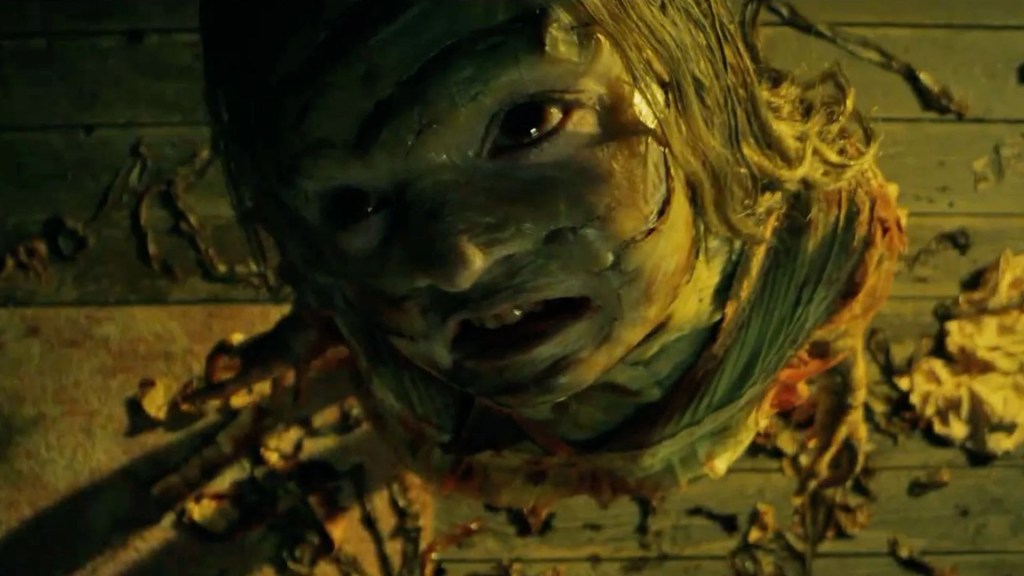
This reinterpretation is where the film both succeeds and risks alienating its audience. Viewers expecting a recognizable version of Lee Cronin’s The Mummy may struggle with the shift in focus. However, those willing to adjust will find a film that leans fully into body horror, with imagery that is at times deeply unsettling.
The performances support this direction. The actors remain grounded, avoiding exaggeration and allowing the horror to emerge from the situation rather than forced reactions.
Where the Film Falters
Even with its strong conceptual direction, the film is not without issues. Some character decisions feel overly convenient, leaning on narrative necessity rather than fully earned motivation. While the emotional context of grief and guilt explains some of this behavior, it does not completely excuse it.
The ending presents a similar imbalance. It delivers resolution, but the path to that resolution lacks sufficient development. Certain elements feel rushed or underexplored, leaving lingering questions that could have been addressed with more narrative space.
Final Assessment
Taken as a whole, Lee Cronin’s The Mummy is an engaging and often effective film. It draws the viewer in early and maintains that grip, even if its trajectory becomes more predictable as it progresses.
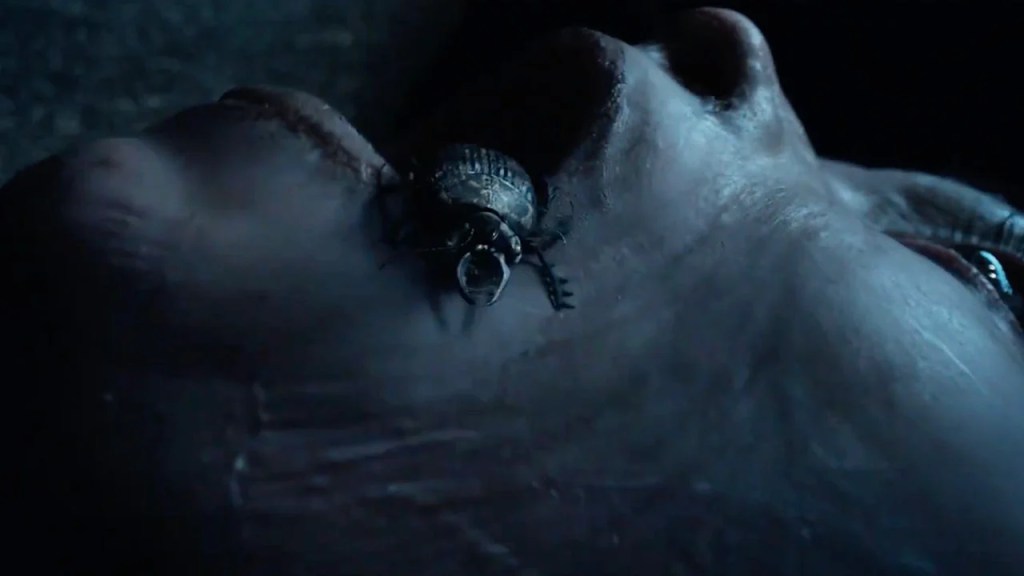
What ultimately defines the film is its hybrid identity. It operates less as a traditional mummy story and more as a fusion of mummification mythology and possession horror. The result feels closer to The Exorcist filtered through an Egyptian lens than anything audiences might initially expect.
Viewing Approach
For that reason, the best way to approach Lee Cronin’s The Mummy is without expectation. Allow the film to define itself rather than measuring it against established versions of the myth. It is not interested in tradition. It is attempting something different, and that difference will largely determine how it is received.

