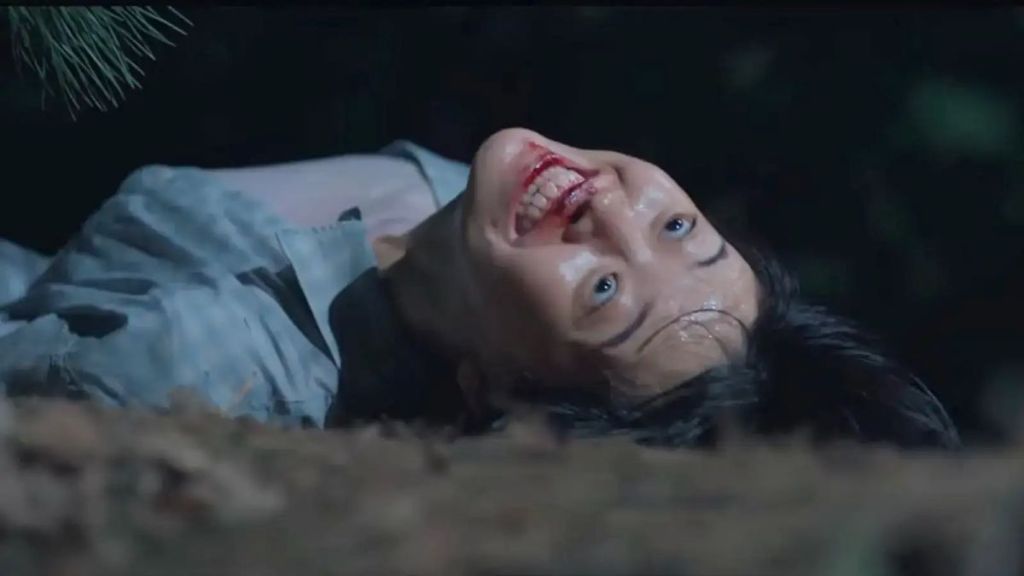
Excess rarely signals abundance; more often, it signals the beginning of the end. Too much of anything chips away at quality, and what could have been something remarkable quietly collapses under its own weight. That is precisely what happened to the South Korean horror thriller If Wishes Could Kill, a series with every ingredient for greatness that ultimately became a cautionary tale about knowing when to stop.
A Premise Built for the Moment
If Wishes Could Kill premiered on Netflix two weeks ago and arrived with an undeniable pull. At its core, the series explores what happens when unmitigated desire collides with dark forces, a fateful premise that taps into something both timely and deeply unsettling. Playing on the anxieties of modern technology and fast-forward culture, it found fertile ground in territory that has been visited before. The Gift, Countdown, and Thinner—each of these works circled the same truth from a different angle: surpassing normal means to obtain what is desired always carries a price. The greater the reach, the heavier the cost.
The Setup
The series places a tight-knit group of teenagers at the center of its unraveling. It is through one member of this group that the vector for evil is introduced, a discovery quiet at first, with the power to grant wishes. When one member tests it alone and the wish is fulfilled, he sees little reason to keep the secret. What follows is a macabre dance that, once set in motion, proves nearly impossible to stop.
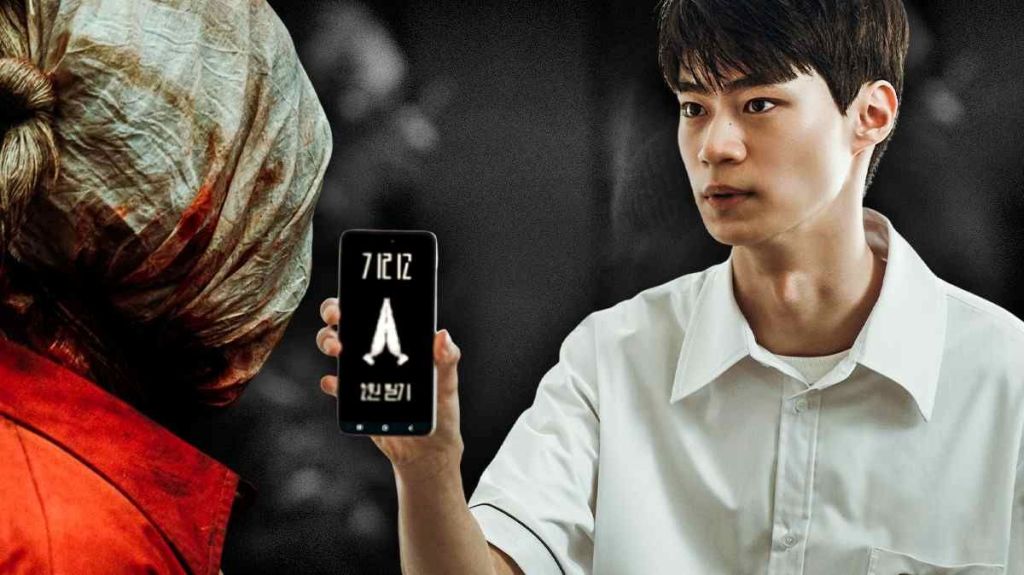
“When he aces the test, he happily tells friends Se-ah, Geon-woo, Na-ri, and Ha-joon about Girigo, sending them a link to what he thinks is a godsend. They don’t take the app seriously until Hyeon-wook cuts his own throat in front of their class, seemingly driven by an unseen force.”
From that point forward, the series is off and running, and so is the dread.
Where It Shines
The concept has nightmares baked right into its foundation. The visuals and special effects pull the audience in deep, and Korean horror once again demonstrates its particular mastery of blending those elements seamlessly into the fabric of its storytelling. In those moments, the series is exactly what it promises to be.
Where It Loses Its Way
The trouble begins when simplicity gives way to convolution. What starts as a focused and effective premise takes a sharp turn midway through, and from there the story becomes increasingly difficult to follow. The question of how to stop the curse is raised again and again, with each apparent resolution undone by yet another revelation.
The spiral grows deeper, wider, and more encompassing with every episode, until the weight of its own complexity begins to work against it. Confusion replaces tension, and the momentum the series built so carefully in its early episodes slowly bleeds out. It is no coincidence that a wave of articles has since been written attempting to decode what the ending actually means.
A Personal Reckoning
I came to this series through its creative lineage, drawn in by a genuine love for All of Us Are Dead, Sweet Home, Kingdom, and Hellbound, each of which not only pulled me in but also held me there. This series managed the first half of that equation well enough. It drew me in. But somewhere in the middle, it lost its grip, and despite circling back to find my footing, I found myself disengaged again, worn down by an ever-widening spiral that had long since outgrown its premise.
What Lies Ahead
There were hopes for a second season, but as of now, no confirmation has come. Given the mixed reception the series has received, that prospect appears increasingly uncertain.
The Bottom Line
All is not lost. If Wishes Could Kill delivers plenty of sensory-assaulting moments, the kind that make you jump, lean in, or reach for a pillow to hide behind. If that alone is what you are after, Netflix will not disappoint. Just don’t expect the story to hold itself together as well as it holds your attention.

