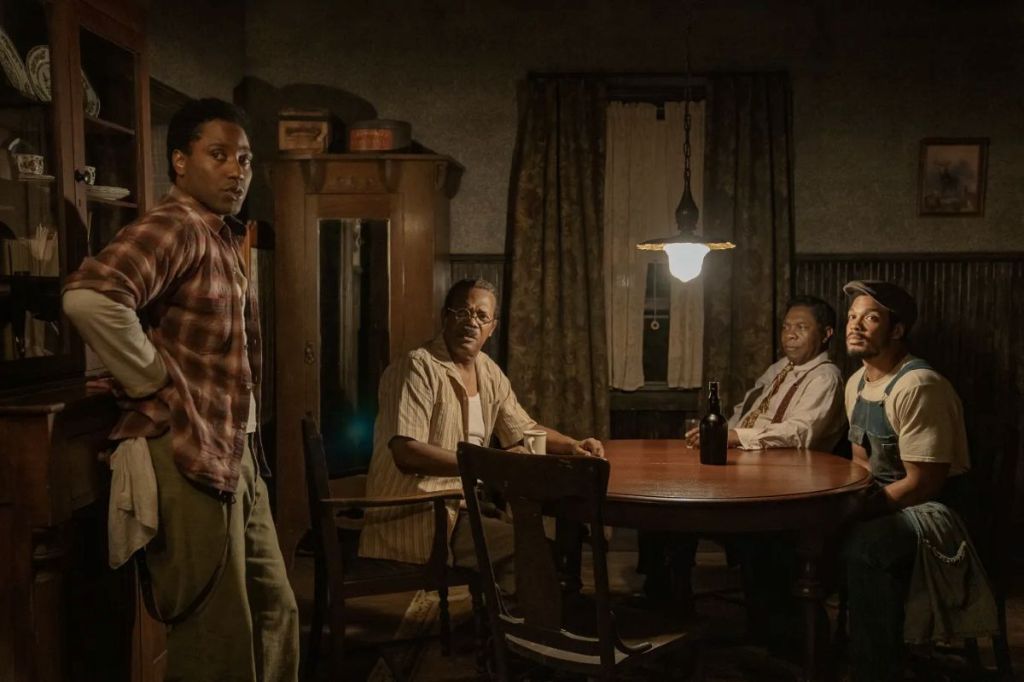
Some ideas stick to your brain matter like glue to the bottom of a shoe. Not the subject itself necessarily, but the compulsion to reckon with it, to sit down, examine it, and give voice to what it stirred. That is exactly what The Piano Lesson did to me. Not simply the watching of it, but the quiet, persistent nudging to critique it, to turn it over in my hands and look at what it is made of.
That nudge became a refrain I could no longer ignore. And so here I am, having finally answered it. A work that originated from the hands of a great American playwright, adapted to screen just two years ago, The Piano Lesson demanded two viewings from me, and I was not put off by settling in for the second. If anything, the second sitting only deepened the pull that had sent me to the page in the first place.
The Piano as Protagonist
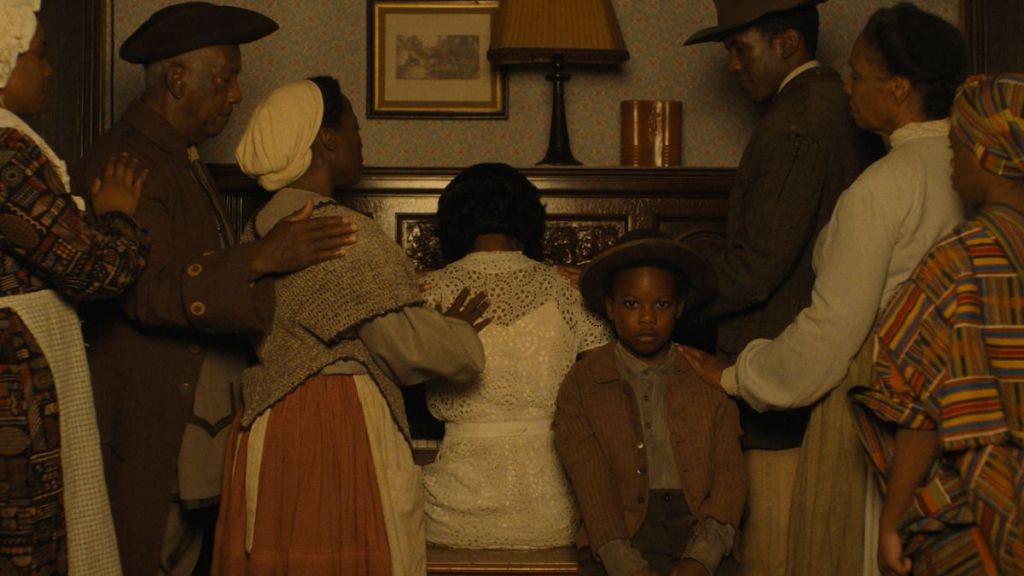
At the center of this story sits a piano. Not just any instrument — this one was carved by a man who poured his heart, soul, and agony into every inch of it. The faces etched across its surface serve as much as a history lesson or a genealogical map as anything written in a textbook does. It is a vessel of memory. It is also an object that bears the nasty, ill-tempered spirit of a former possessor, one who once possessed bodies and even in death refused to lift its hellish grip.
Two Visions of the Same Legacy
The film weaves together elements of drama and horror through two siblings who, from the very pole of the story, hold radically different ideas about what should be done with the piano. The brother moves forward with great pride, believing that selling it and using the money to purchase land is a worthy and lofty undertaking, the very thing his “Pa” would have wanted. His sister, however, is tethered to the instrument. A binding force keeps her from willingly freeing herself, as it possesses her just as completely as she possesses it.
As the United Performing Arts Fund notes of Wilson’s piece, “
The Charles household reaches a boiling point over a decision that will define them: sell the family’s cherished heirloom piano to secure their fortune or preserve it as a testament to their ancestors’ spirit and struggle. The ghosts of the past collide with the promise of the future in this Pulitzer Prize and Tony Award-winning masterpiece.”
Performances That Demand to Be Witnessed
The story is haunting; the terrors are both real, palpable, and buried. Danielle Deadwyler and John David Washington commit to moving performances in bringing the Charles siblings to life. Deadwyler, who plays Berniece Charles, has an aptitude for diving deep into the emotional core of her characters and making them loud, lively, and impossible to push aside. This is entirely consistent with her other body of work — Parallel, The Harder They Fall, and Woman in the Yard. As Tudum notes,
“Deadwyler gives herself over so completely, as if she’s been transported, spit out back on Earth from another realm.”
Washington’s cool and collected persona, intermixed with an equally strong dramatic core, makes his portrayal of Boy Willie — a man with designs to leverage the past into something more — land with real finesse. He wants a little bit more out of life, and he pursues it with conviction.
Legacy, Trauma, and the Weight of History
The narrative alone sold me. As Tudum observes,
“The Piano Lesson is a story of contrasts, about the different ways legacy is determined and about the ways in which we can leave our mark.”
Historical trauma and its direct implications are subjects in great need of exploration, and this story meets that need without flinching. Being a fan of supernatural horror only amplified the experience—the genre elements here do not exist for spectacle; they exist because some wounds are that deep.
Of all the elements that give the film its texture and strong underpinnings, the musical numbers occasionally disrupt the flow, though not so much as to inhibit the overall experience. They were interesting inclusions, if imperfect ones.
Samuel L. Jackson and the Weight of Devotion
It is always something of a jolt to see Samuel L. Jackson in a role like this, though that reaction says more about the shortsightedness of how we tend to view the breadth of his career than it does about him. There is no question that Jackson has long waded through dramatic currents. He took on August Wilson’s The Piano Lesson twice, filling the role of Boy Willie himself in the 1980s and coming off a Broadway run as Doaker Charles just before the film. In the film, he approaches the character with the care one reserves for something they have long esteemed as honorable. It shows in every frame.
Four Walls, an Infinite World
The majority of this film takes place within the parameters of four walls, and yet those walls do not contain its scope in the slightest. Within them, we experience the joy of communion and family; the reach of hope; the depths of despair; the expanse of horror from a demonic entity that makes its malevolence known in multiple ways; and the protective forces of the afterlife, bound by blood and at the ready. It all unfolds within the framework of one place, and that constraint somehow makes it feel boundless.
The Nudge, Finally Answered
Some compulsions will not quiet themselves until they are honored, and writing about The Piano Lesson was one of mine. Having finally turned it over, examined its layers, and given it the nudge it deserved, I can say with certainty that it earned every bit of that persistence.
The film does everything it needs to do to revitalize one of Wilson’s most powerful narratives, giving full voice to a people and a time that deserve to be heard. The refrain has been answered. And if you have not yet seen this work, let this be your nudge; it is currently streaming on Netflix.

