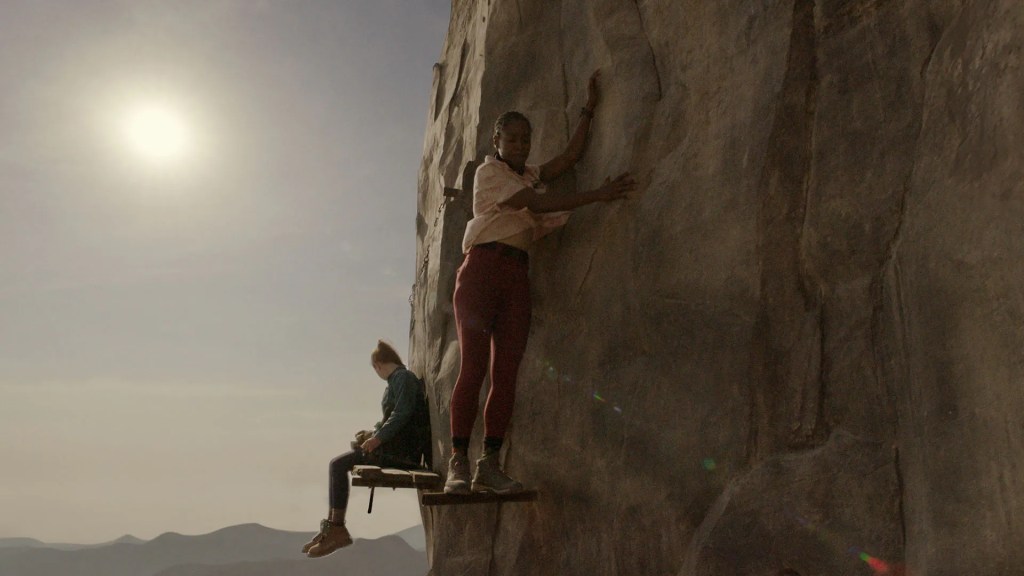
Sometimes, once a fall happens, there should be no getting back up.
The recent sequel, Fall 2, proves that the initial concept of certain films is enough on its own. A great premise, paired with one strong execution, can preserve the novelty of an idea far better than an attempt to repeat it. Not every successful film needs to become a franchise. Sometimes the most effective thing a story can do is leave audiences with the memory of how it made them feel the first time.
The Original Took Fear to Unthinkable Heights
Released in 2022, Fall took the survival-film formula to terrifying heights. Its premise was simple but emotionally grounded. After a tragedy leaves Becky consumed by grief and depression, her friend Hunter tries to pull her back from the edge. Back to living. Back to adventure. Back to herself.
Reluctantly, Becky agrees to climb an abandoned television tower rising more than 2,000 feet into the air. What begins as an effort to reignite her sense of purpose quickly becomes something much more dangerous. The tower does not feel like a symbol of healing for long. Instead, it looms over the women like a death wish.
From that point on, Murphy’s Law is in full effect. One disaster follows another, and the events that unfold are difficult to watch in the best possible way. Fall was an edge-of-your-seat nail-biter, but beneath its anxiety-inducing premise was a lesson with more depth than expected: do not ignore ominous warnings. Listen to your instincts. Sometimes the best decision is simply to say no.
A Surprise Success Created Sequel Expectations
Fall was an unassuming box-office success. According to Collider,
The film grossed $22 million worldwide against a reported $5 million budget. It later arrived on streaming platforms, debuting on Netflix in international markets and reaching the Top 10 in four territories during its first week.
By Hollywood logic, one success naturally invites another. If the first film worked, why not try to make it work twice?
Theoretically, that makes sense. Logically, it does not always work that way.
A sequel should begin by understanding what made the original successful in the first place. Timing often plays a larger role than filmmakers want to admit. A film’s reception can be shaped by the mood of moviegoers, the cultural atmosphere surrounding its release, the state of the genre at the time, and the emotional needs of an audience. Those variables cannot always be recreated. A movie can become successful because it meets viewers at exactly the right moment, and that moment may not come around twice.
New Characters Needed a Stronger Connection
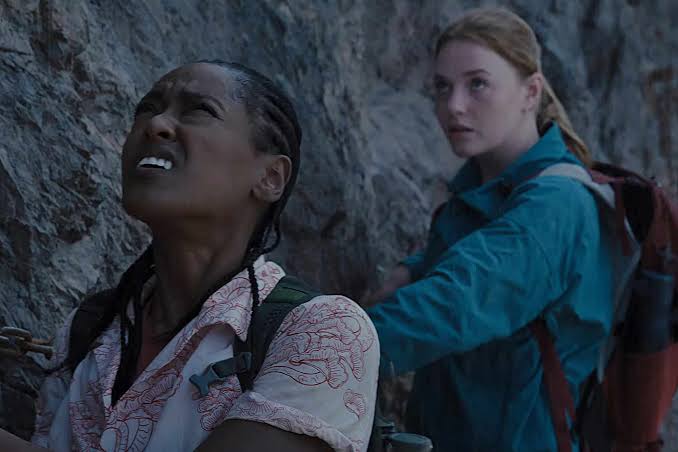
Because of the intensity of the first film, its gripping action, and the performances that carried its heartbreaking storyline, Fall 2 arrived with promise. Audiences would understandably be curious because of the way the original made them feel. It offered tension, dread, emotional loss, and a setting so frighteningly simple that it became unforgettable. However, one of the most important ingredients from the first film is missing in the sequel.
The story follows two new characters, which partially makes sense considering one member of the original pair did not survive. Still, bringing in new characters means the film has to convince viewers that this new duo possesses a similar emotional connection and sense of synergy. Unfortunately, that connection never develops with the same strength.
To the sequel’s credit, it attempts to tie the films together by making one of its central characters the sibling of someone from the first story. The connection is there, but it is not fully earned. For the premise to feel believable, there needed to be a stronger path leading these women toward the challenge they eventually face.
There Needed to be a Bridge
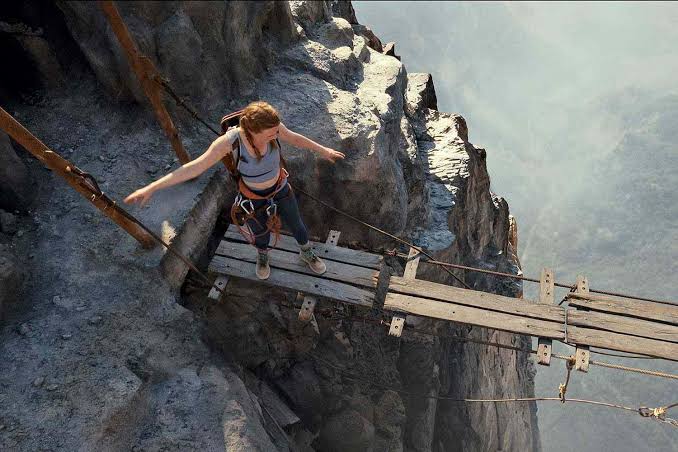
Instead, that bridge feels weak. The film does not provide enough justification for why either woman would find herself on a forbidden trail up a deadly mountain. Their choices increasingly require them to abandon common sense, not just once, but repeatedly, to move the plot toward its climax.
The Thrills Remain, but the Logic Falls Away
Despite its problems, Fall 2 remains a tense viewing experience. It generates enough anxiety to pull a reaction from its audience, and that engagement matters. The film has impressive visuals, an effective setting, and the kind of cinematic energy that can create a shared sense of dread both on screen and in the viewer watching from home.
There are moments when the sequel understands what made Fall effective. It knows how to frame danger. It knows how to make height, isolation, and uncertainty feel suffocating. It knows how to build toward a moment where the audience braces itself for the inevitable. Yet the characters’ decision-making continues to pull the viewer out of the story.
As the plot progresses, their actions become more unbelievable. The film asks the audience to keep accepting decisions that no reasonable person would make, even within the heightened logic of a survival thriller. Eventually, the tension begins to lose some of its force because the danger no longer feels rooted in circumstance. It feels manufactured.
The climax is clearly delineated, especially when the women finally meet the monster, but it goes beyond believability. Rather than delivering a conclusion that feels shocking and earned, it leaves something to be desired. Even the suggestion of another possible sequel feels overcontrived.
Let the Story Rest
Fall was good for what it was. It had a sharp concept, an emotionally effective core, and enough tension to make viewers feel physically uneasy as they watched. It did not need to be more than that. Fall 2 attempts to push the envelope, but it lacks the substance needed to make those risks land. The film still delivers moments of suspense, and its visual ambition deserves acknowledgment, but a sequel needs more than a familiar premise and bigger danger. It needs characters worth following, choices that make sense, and a reason for the audience to believe the story had to continue.
Fall 2 is a multiple-classification film with the designations of survival, drama, adventure, and thriller. The feature is directed by Michael and Peter Spierig, based on a screenplay written by Jonathan Frank and Scott Mann and starring Harriet Slater, Arsema Thomas, and Tom Brittney. It has a run time of an hour and 38 minutes and is currently playing in cinemas worldwide.
There is absolutely no need for Fall 3. The best course of action is to let it be.
 Uncut Diamonds