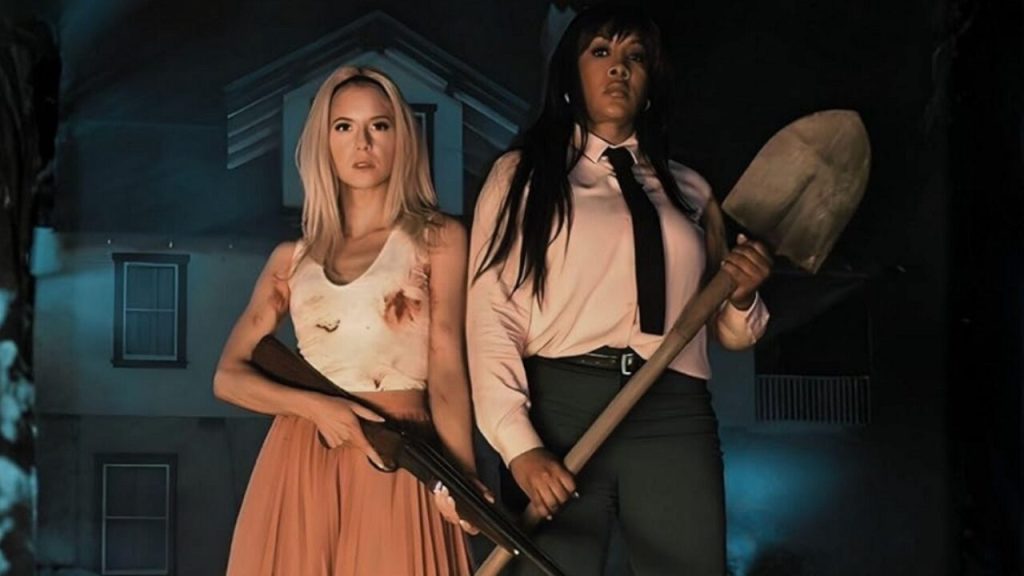
Night of the Living Dead has long earned its status as a horror classic. While there is always a desire to revisit beloved material, revisiting it is not always necessary. Still, necessity does not always outweigh artistic ambition, and that is likely why this horror favorite received a rebranding and retelling in 2026. Unfortunately, the new version proves that some works cannot be improved upon simply by adding new characters, reshaping familiar scenes, or altering the elements that made the original iconic.
To Be or Not to Be a Classic
Films become classics because they build an enduring audience over time, often because their themes continue to resonate across generations. Cult classics occupy a slightly different space. They may not have been embraced by the mainstream when first released, often considered strange, unconventional, or too far outside the norm. Yet they eventually find devoted audiences because there is something distinctive in their approach.
That distinction is a large part of what made George A. Romero’s Night of the Living Dead so important. The film did not simply establish a standard for zombie horror. It also used horror as a vehicle for social commentary, creating a prototype for the modern zombie while reflecting the racial and political unrest of late-1960s America. As the British Film Institute noted,
The film drew inspiration from the racial and political strife of its era and became “a vérité nightmare which overturned the conventions of fantastical horror.”
Romero built upon ideas that existed before him, but he crafted something wholly distinctive. He did not attempt to replicate another film frame by frame while changing only minor details. His work was not simply a revamped version of White Zombie. Instead, it introduced a new kind of terror, one rooted in social anxiety, isolation, distrust, and the terrifying realization that the greatest threat may not always come from the dead. The latest feature is far removed from that kind of creative direction.
Familiar Pieces, Different Purpose
The current release shares the name of its predecessor, but it is not a direct reinterpretation. Several recognizable elements remain intact, including the farmhouse where Barbara seeks refuge, the young couple, and the small family consisting of a mother, father, and daughter hiding in the basement. Those familiar pieces are meant to connect to Romero’s film, and for a moment, they do.
However, the story begins in a significantly different place. The audience is introduced to a character who takes on a role similar to Ben’s in the original film. Vivica A. Fox plays the character Ellie, whom viewers watch lose her brother before retreating to the farmhouse.
Fox attempts to portray a hard-as-nails, no-nonsense survivor, but the performance often feels forced. Acting is, of course, a vital part of filmmaking, but skill is often measured by an actor’s ability to make a performance feel fluid and believable. The strongest actors disappear into their characters until the audience no longer sees the performer. They become inseparable from the role. That immersion never fully happens here. Fox’s tendency toward overdramatization has a noticeable effect on how the film is received, making certain moments feel more performative than anything.
A Cast That Never Fully Connects
The remaining characters are intentionally kept close enough to the original versions to tether the film to Romero’s story. Their general arcs remain recognizable, as do many of their temperaments and conflicts. Yet familiarity alone does not create investment.
Much like Fox, the rest of the cast does not consistently rise to the level of the characters they have assumed. The emotional tension that made the original farmhouse setting so claustrophobic and unsettling is weakened because the performances do not always create the sense of desperation required. The result is a group of characters who may look familiar on paper but rarely feel as compelling as the people who inhabited Romero’s world.
Some Additives Not Needed
The addition of another storyline further diminishes the film’s quality. This version introduces a camera crew determined to capture the apocalypse on film. A motley gang of self-proclaimed zombie hunters is followed throughout the story, their exploits food for the waiting masses. But who watches footage during an apocalypse?
In Romero’s original, a similarly motley vigilante group does exist. However, they are not performing for cameras. They are portrayed as armed citizens attempting to reclaim their community from an unimaginable threat. That detail was significant. Romero used the group as an allusion to the collective mobs of the American South, groups fueled by fear of the unknown, fear of social change, and the belief that the only solution was to destroy the perceived threat with extreme prejudice. In this new version, the assembled group feels more like participants in a media circus than people seriously confronting a world ravaged by the undead. Their presence lacks the same underlying tension and social meaning. Instead of reinforcing the horror, it often distracts from it.
Romero’s Social Commentary Is Missing
The events of the film also appear deliberately placed out of order, though viewers will still recognize many moments from the original. Even the zombies have been altered in a way that undermines Romero’s formula. His zombies were ambling, slow-moving, almost snail-like creatures. They were frightening not because of speed or physical agility, but because of their relentless presence and the inevitable collapse of safety around them.
The zombies in this feature look comparatively fresh, move with more speed, and require a more concentrated effort to kill. While this may be intended to make them feel more threatening to a modern audience, it takes away from the particular dread Romero created. The original dead were not sleek, fast, or overly stylized. They were ordinary bodies made horrifying through persistence, decay, and sheer numbers.
No Soul Equals Zombie Remake
More importantly, the new film misses the significance and thoughtfulness embedded in Romero’s screenplay. The ending of the 1968 film remains one of horror cinema’s most haunting conclusions because Ben survives the undead only to be killed by a gun-toting white mob. The horror is not merely that he dies. It is how he dies, who kills him, and the historical imagery surrounding his death.
As one writer for The Michigan Daily observed in a 2020 article, Ben
“Made it all that way, and in the end he was still murdered. Not by the undead, but by a gun-toting mob of white men.”
The writer further connected the image of Ben’s body being handled by smiling white men to the historical photographs of lynched Black Americans, whose bodies were often displayed as trophies before crowds.
That final image was not accidental. It elevated Night of the Living Dead beyond a simple story of people trapped in a farmhouse during a zombie uprising. Romero created a film that spoke to American violence, racism, fear, and the false promise of survival. The horror was not limited to the creatures outside. It existed within the people who claimed to be restoring order.
A Weak Reimagining
The 2026 Night of the Living Dead is a weak representation of what George A. Romero introduced to the world. It runs for 128 minutes, and much of that time is difficult to sit through. Directed by Christopher Ray and written by Jared Cohn, the film attempts to revive an iconic horror title but does not seem to understand the weight of the material it is borrowing from.
There is nothing wrong with reimagining a classic when there is a clear vision behind it. New interpretations can uncover fresh meaning, explore a different cultural moment, or offer a new generation a doorway into an older story. However, a rebrand must bring more than familiar names, recognizable scenes, and surface-level additions.
Romero’s Night of the Living Dead did not become a classic because it had zombies, a farmhouse, or a group of strangers fighting to survive. It became a classic because it understood the world around it and transformed that world into horror. This new version remembers the pieces, but it fails to capture the purpose.
 Uncut Diamonds