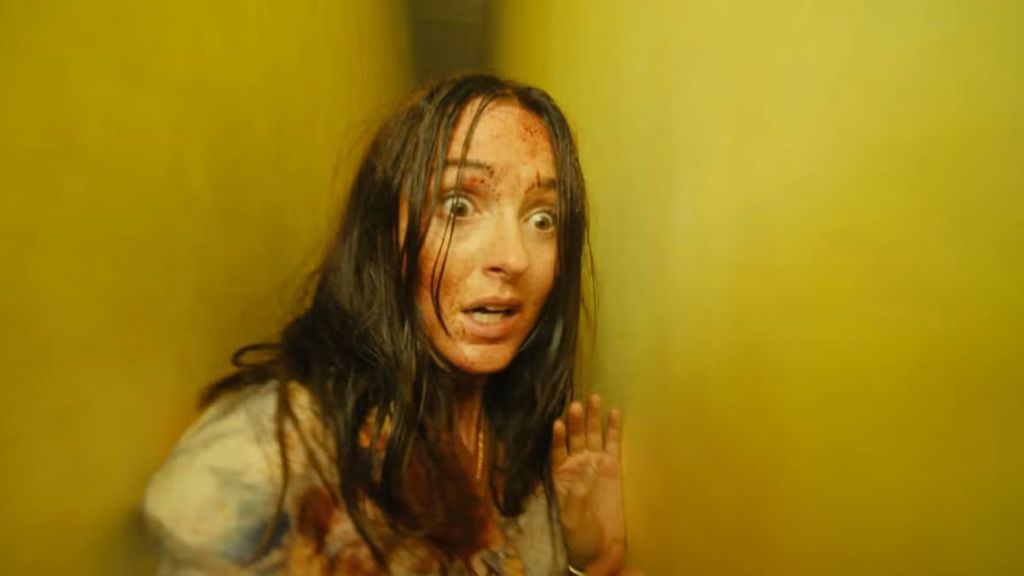
When I started watching Backrooms, I anticipated a horror experience that was physical, tangible, and blatant. I expected architectural abnormalities, eerie expanses, and the unsettling disorientation associated with liminal spaces. What I encountered was something considerably deeper, darker, and perhaps even tragic. The film presented a nightmare far more disturbing than the prospect of becoming lost in an endless maze: the possibility of becoming irretrievably lost within oneself.
The Horror of Existing Between What Was and What Is
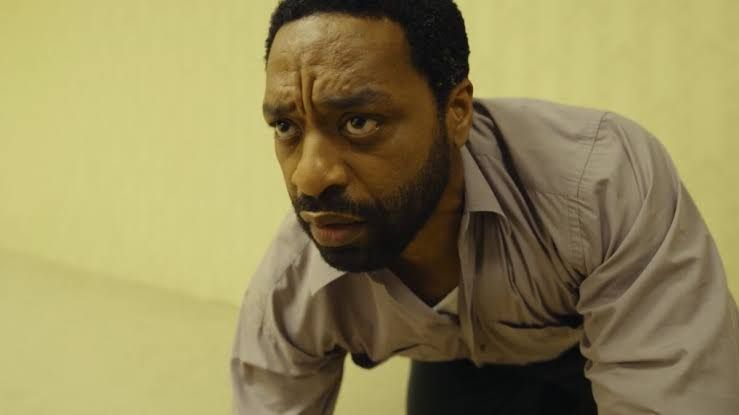
Backrooms, a 2026 horror, thriller, and science-fiction offering starring Chiwetel Ejiofor, centers on a man in crisis. He is struggling under the weight of disappointment, unrealized expectations, and the consequences of his own emotional volatility.
Following a particularly contentious confrontation with his wife, he finds himself taking up residence in the store where he works. His circumstances reflect a much larger predicament. He occupies an uncomfortable space not only physically but mentally and psychologically. His life has become an in-between existence, one from which he desperately seeks an escape.
Therapy offers an opportunity to confront the frustrations and explosive anger that have contributed to his circumstances. Yet understanding the origins of one’s struggles and finding a way beyond them are two entirely different undertakings.
Being stuck, directionless, isolated, and desperately searching for an open door is a nightmare in itself.
Manifesting into Reality
The film literalizes that experience through the discovery of liminal spaces that stretch into increasingly disorienting and nightmarish expanses. Each passage leads to another, creating an environment where conventional logic offers little assistance. Eventually, our protagonist reaches a point where finding his way back becomes increasingly improbable. More disturbingly, there comes a moment when he appears to no longer want to.
Perhaps he is destined to remain trapped in the in-between, suspended within an infinite loop where existence requires neither ambition nor resolution.
Here, people become distorted replicas of themselves, grotesque and ghoulish, yet seemingly relieved of the burdens that once defined them. They simply exist. There are no expectations to meet, no greater purpose to fulfill, and perhaps no reason to become anything more. Their existence may even amount to little beyond providing sustenance for something else, something willing to consume them without regard for what they have become. There is something profoundly tragic about that possibility.
When the Darkness Becomes a Place of Comfort
As the film progressed, a more disturbing interpretation began taking shape in my mind. What if our protagonist ultimately succumbed to his own monstrosity?
What if the moment he accepted that it was okay not to be okay was also the moment he surrendered to the darkness consuming him? What if exhaustion had eroded his resistance so thoroughly that surrender began to resemble relief? Perhaps that explains why he did not run.
What if the monstrous presence was not merely an external threat but a manifestation of his psychological deterioration? What if the film’s bizarre environments and disturbing inhabitants represented the architecture of a mind spiraling into itself, its internal chaos given physical form?
Suddenly, the horror was no longer confined to those endless corridors. It was rooted in the possibility that a person could become so overwhelmed by his circumstances that even his own destruction might begin to feel like sanctuary.
There have been numerous interpretations of the film’s narrative and subtext. Whether every implication was deliberately constructed is another matter. Sometimes a work develops meanings beyond those its creators consciously intended. Its imagery, performances, and narrative choices invite interpretations that become deeply personal to the viewer. For me, Backrooms became one of those experiences.
The Most Terrifying Place May Be Within
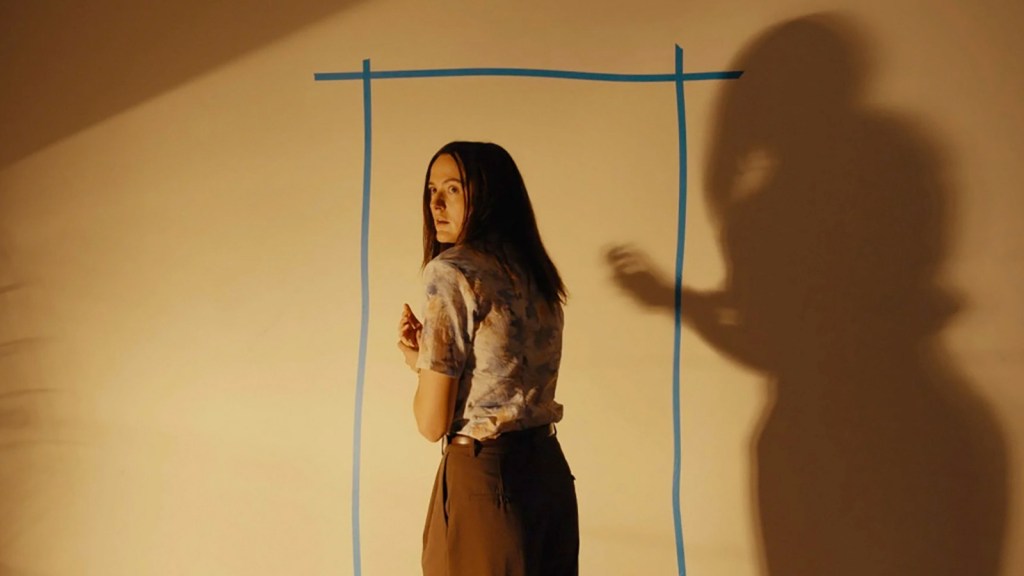
I did not ultimately find the greatest terror in the prospect of wandering through endless, meaningless spaces devoid of direction, logic, or recognizable order. Certainly, such an environment could drive a person toward madness through the sheer impossibility of making sense of it. But another question troubled me far more.
What does resolution look like inside a mind that has become its own prison?
What happens when our pursuit of answers becomes so consuming that we lose the capacity for acceptance? When we descend further into ourselves, determined to understand every disappointment, every failure, and every wound, is it possible to reach a place from which we can no longer emerge?
Perhaps the liminal spaces are not simply locations. Perhaps they represent the psychological distance between what was, what is, and what we had desperately hoped life would become.
And what happens when exhaustion takes hold, extending its tendrils into every remaining possibility until we become inseparable from the very despair we hoped to escape?
The film’s closing imagery, in my interpretation, offers a chilling representation of that condition. A person continues to exist, but not as they should. Outwardly, there remains a recognizable replica, a figure capable of moving through the world. Yet something essential has been lost. What remains is a soulless wanderer, while the authentic self has become trapped somewhere within, so thoroughly enmeshed in its own darkness that separation may no longer be possible. It is a horrifying proposition, not because of what might emerge from the shadows, but because of what might never emerge from within.
An Artistic Exercise in Psychological Horror
I credit the filmmakers for constructing a remarkably cerebral experience, one that asks viewers to lean into its uncertainty rather than demand immediate explanations.
Backrooms does not require its audience to arrive with complete understanding, nor does it guarantee that everyone will leave with the same conclusions. Its effectiveness rests partly in that ambiguity.
The cinematography is particularly noteworthy. The use of stillness, silence, and unsettling spatial compositions creates an atmosphere that feels simultaneously expansive and suffocating. The dialogue, deceptively simple at times, carries psychological complexities that become more apparent through reflection.
Nothing feels entirely incidental. The environments, the pauses, the unsettling encounters, and the peculiar progression of events all contribute to a larger narrative without relying on overt explanations.
Is this conventional horror? Certainly not.
Is it among the more interesting horror offerings of the season? I would argue that it is.
That distinction matters. Interesting does not necessarily mean the most beloved, the most entertaining, or even the most terrifying. In this instance, it speaks to the artistic ambition of a film that distinguishes itself through its willingness to challenge the viewer’s expectations.
Final Verdict: Horror That Demands More Than a Reaction
For audiences who appreciate contemplative cinema, Backrooms offers considerable material for examination. Its unsettling imagery is only one component of an experience that invites viewers to consider the psychological implications of what unfolds.
Those who believe horror should prioritize immediate scares, recognizable threats, and straightforward resolutions may find the experience frustrating. Without an appetite for its more abstract dimensions, the film could easily register as little more than a succession of empty rooms in varying states of disorder, prolonged confusion, and occasional grotesque encounters.
But for those willing to consider what those spaces might represent, the film offers something considerably more provocative.
I should note that I have not watched the original short film upon which this feature is based. My assessment is informed exclusively by this viewing, without the benefit or influence of that earlier work.
Perhaps that absence of foreknowledge contributed to the experience. I entered expecting the horror of being unable to find my way out of a physical space. I left contemplating something infinitely more unsettling: the possibility of becoming so lost within ourselves that we eventually stop looking for the exit.

