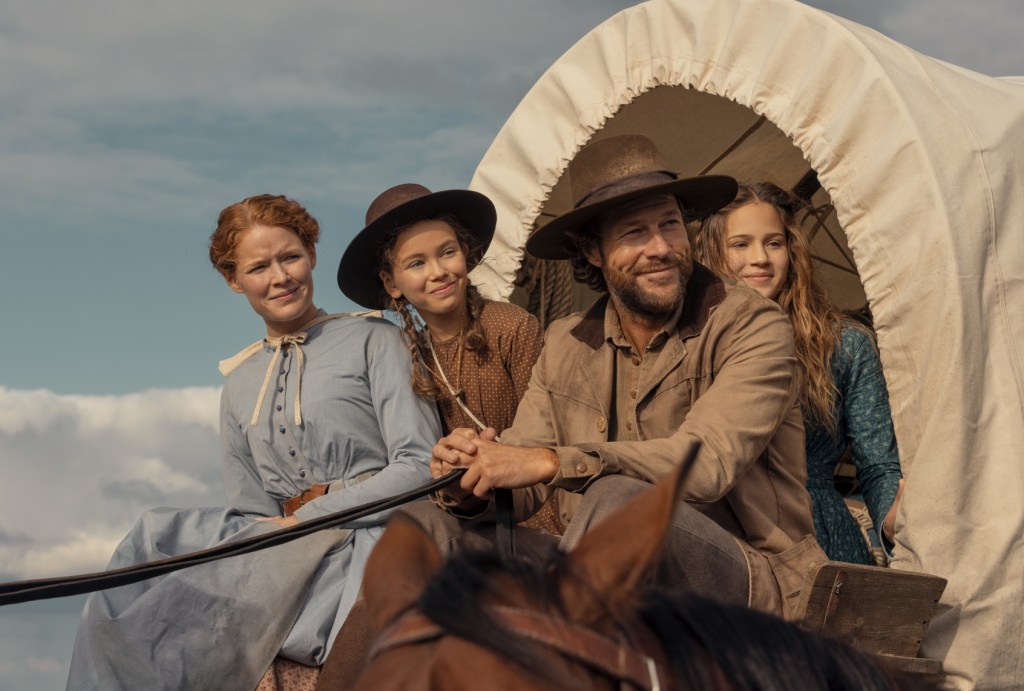
There is something especially powerful when a revival becomes a point of instruction or re-education. While entertainment is not always created with that purpose in mind, that does not mean it cannot function as a vehicle for deeper thought, understanding, and discussion. That was my central takeaway from the recently rebooted Little House on the Prairie.
Coming to It Without Nostalgia
As a young Black girl growing up in a small town in the Upper South, Little House on the Prairie was never part of my regular viewing. That absence was later confirmed in a conversation with my mother; when I asked if she had seen the reboot, she replied simply, “I didn’t watch the original.” My own exposure was limited to a few scattered late-night moments where the series played more as background noise than something I actively engaged with. As it stands, I have not yet watched the original series in any meaningful or intentional way, which positions me to approach this reboot with fresh eyes, unburdened by nostalgia or direct comparison.
The Noise Around Inclusion
What announced itself before I ever pressed play were the ongoing debates surrounding the inclusion of characters of color—arguments framed in a way that suggested these choices diluted the authenticity of the story or strayed too far from its origins. On the surface, it presented as familiar cultural noise, the kind that hums in the background and risks shaping perception if left unexamined.
But beneath that, there was something more ominous in how the conversation functioned. It was not simply critique; it carried the weight of quiet discouragement, as if the presence of certain people within the narrative was enough to render it suspect or unworthy before it could even be experienced. It attempted to set the terms of engagement in advance, to narrow the lens through which the series could be seen.
That distinction mattered. What stood out was the repetition of the argument—but what felt ominous was its intent.
And yet, it did not work on me.
If anything, it clarified my decision to watch. I have never been one to rely solely on inherited opinion, especially when those opinions orbit around questions of inclusion and whose stories are allowed to exist within a historical frame. Rather than deterring, it sharpened my curiosity. I wanted to see what was actually present on screen, not what had already been decided for me.
A Story That Expands Its Frame
From the very first frame, I was drawn in. What could have remained a straightforward period drama instead unfolds as a layered exploration of American history. The series moves beyond dramatization for its own sake, instead engaging with the nuances of human interaction, ideology, and survival during a time of expansion. It invites consideration of what these lived experiences may have truly felt like.
Through its portrayal of the Osage, nomadic pioneers in search of opportunity, and those caught in between, the series builds a textured narrative of coexistence and conflict. It highlights the dualities embedded in human endeavor—how one person’s progress can mark the beginning of another’s suffering. Gain and loss exist simultaneously, dependent on perspective. What emerges most clearly is the sobering truth that self-interest—more precisely, selfishness—often serves as both motivator and blindfold in decision-making.
Independence and Its Ironies
While I have not yet revisited the original series for comparison, this reboot stands firmly on its own. It challenges viewers to reconsider commonly romanticized ideas such as expansionism, innovation, and industrial progress. These were not clean or benevolent pursuits; they were shaped by greed, misdirection, brutality, arrogance, and a striking degree of callousness. The development of the railroad, often framed as a triumph, is recontextualized as both a symbol of advancement and a vehicle of displacement.
There is a particular irony in the town of Independence—its name evokes freedom while, for many, it represents constraint and loss. For those who already inhabited the land, the so-called promise of expansion offered little more than the illusion of choice.
A More Complete Frontier
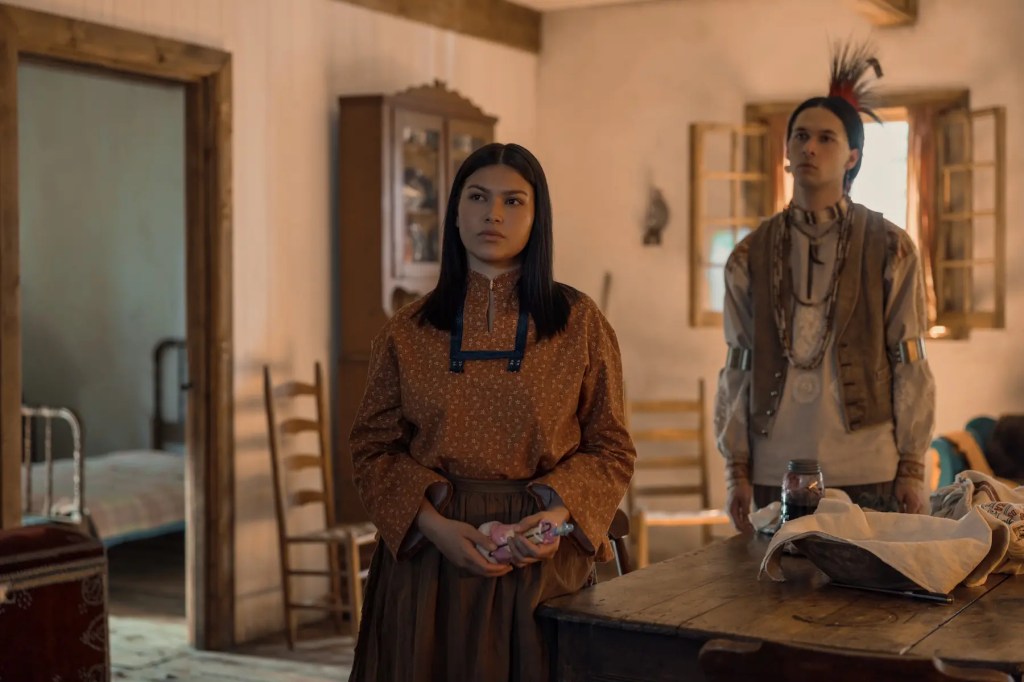
Across its eight episodes, the series embraces inclusivity not as a superficial update but as a means of reflecting the complex stratification of a burgeoning society. This is not a world defined solely in black-and-white terms but one shaped by intersections—cultural, racial, and ideological. Importantly, it achieves this without erasing the narratives of those who historically occupied these spaces, allowing multiple perspectives to coexist within the story of a nation struggling to define itself.
Who This Story Is For
This series may not appeal to everyone. Viewers seeking purely passive entertainment may find it emotionally engaging but intellectually demanding. However, for those willing to approach it as both a narrative and an invitation—to reflect, to question, and to explore histories often simplified or overlooked—it is well worth the investment. It encourages not only engagement with the story on screen but also independent inquiry into the Osage, frontier expansion, and the broader implications of America’s development.
Little House on the Prairie (2026), created by Rebecca Sonnenshine, stars Luke Bracey, Crosby Fitzgerald, Alice Halsey, and Skywalker Hughes as the Ingalls family. For those interested in a more contemplative and historically resonant viewing experience, the series is currently available on Netflix.

