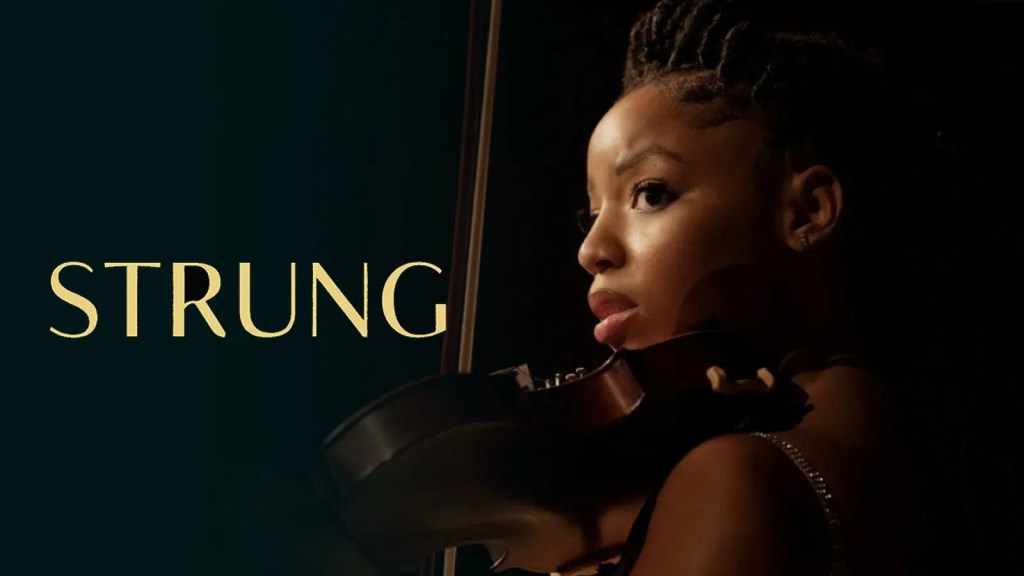
Strung is a 2026 feature, just under the two-hour mark, directed by Malcolm D. Lee, positioned as a thriller and released directly to streaming on Peacock. While it had no theatrical rollout, pre-streaming promotion created enough curiosity to drive viewership. The question remained. Did Strung have what it took to live up to its promise?
A Cast Designed for Visibility
A large part of the curiosity surrounding Strung can be said to be rooted in the film’s casting. Strung leans heavily on recognizable talent, pairing that strategy with an intriguing premise to secure audience attention. Lynn Whitfield, Chloe Bailey, Anna Diop, and Coco Jones each bring an established following, giving the film a built-in audience before a single frame unfolds.
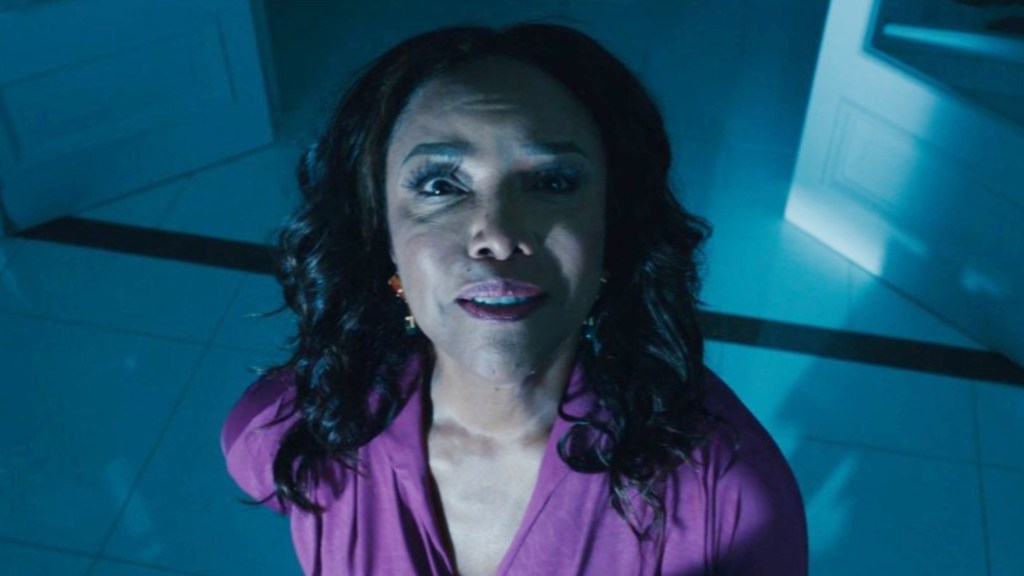
Whitfield remains a commanding presence, known for portraying matriarchs who balance refinement with something more unsettling beneath the surface. Bailey’s expanding work across television and film keeps her in steady rotation, while Diop’s consistent and credible career adds stability to the ensemble. Jones, with her crossover between music and acting, rounds out the group, suggesting a range that should elevate the material.
A Premise That Signals Tension
With that level of talent in place, the premise becomes an equally strong point of entry. As described on IMDb,
The story follows a gifted violinist who accepts a tutoring position with an elite family, only to find herself pulled into something far more dangerous as her past begins to intersect with theirs.
It signals psychological tension, layered conflict, and a gradual descent into instability.
The film’s marketing reinforces that expectation. The trailer leans into controlled unease, using restrained expressions, ominous imagery, and a tense score to suggest something far more complex beneath the surface. At that point, the remaining requirement is execution: a grounded narrative, a compelling central character, and a throughline that builds tension with intention.
That is where the film begins to lose its footing.
Where the Character Falters
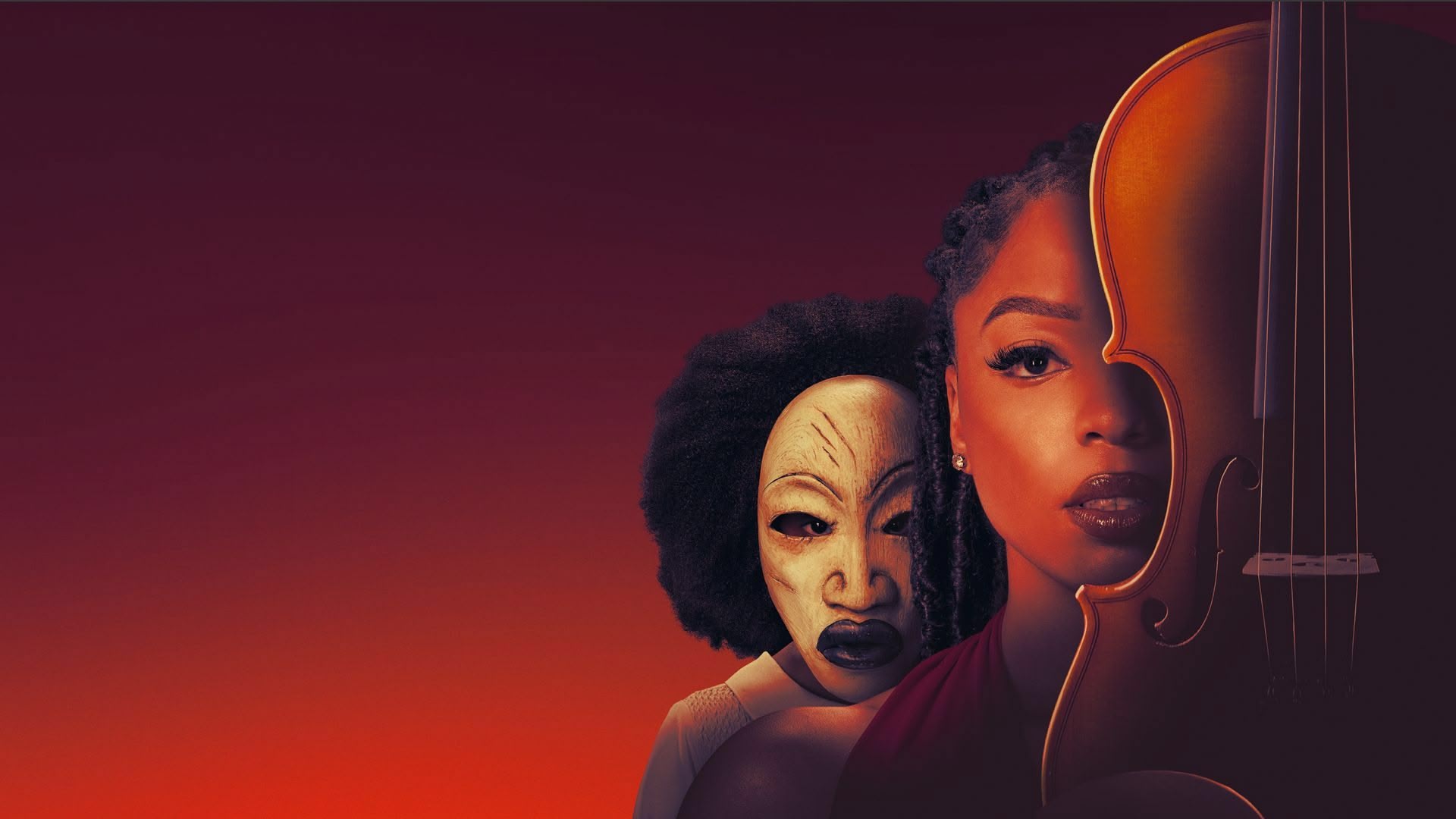
The narrative centers on Laila Calloway, whose objective is clearly defined from the outset. She is a talented violinist with aspirations to join a prestigious philharmonic orchestra. Her ambition is credible, and her skill supports it. After a failed audition, the tutoring position appears to offer a strategic alternative, especially given the influence of the matriarch who recognizes her talent and presents the opportunity as a pathway forward.
However, once Laila enters the household, the logic that anchors her character begins to erode. The role shifts quickly from a professional arrangement to something far more exploitative. She is disrespected, overextended, and placed in situations that exceed the boundaries of her position. The film acknowledges this shift, but her response does not evolve with it.
She stays.
That decision becomes the fracture point of the story. It is too easily accepted and too weakly justified. Her bond with the child introduces an emotional layer, but it is not strong enough to support her continued submission to increasingly hostile conditions. The film relies on that connection to carry the weight of her choices, but it never fully earns that reliance.
Disengagement Replaces Suspense
That gap in motivation extends outward, affecting the film’s ability to sustain tension. What should feel like escalation instead creates distance. Laila does not adapt to her circumstances or attempt to regain control. Instead, she moves deeper into a situation she recognizes as dangerous, without strategy or resistance.
This is where the film shifts from tension to detachment. The issue is not that the character faces difficult choices. It is that those choices do not feel credible. Without that internal logic, the audience is no longer aligned with her perspective. Engagement weakens, and the stakes lose their impact.
A Narrative That Cannot Regain Balance
Once that disconnect is established, the film struggles to recover. Supporting characters are present but underdeveloped, offering just enough detail to suggest complexity without fully realizing it. They function more as extensions of the plot than as individuals with weight.
The climax attempts to reintroduce intensity, but it arrives on unstable ground. The escalation feels disproportionate to what has been built, and the resolution fails to bring clarity. What remains are loose threads that read less as intentional ambiguity and more as a lack of narrative cohesion.
Final Assessment
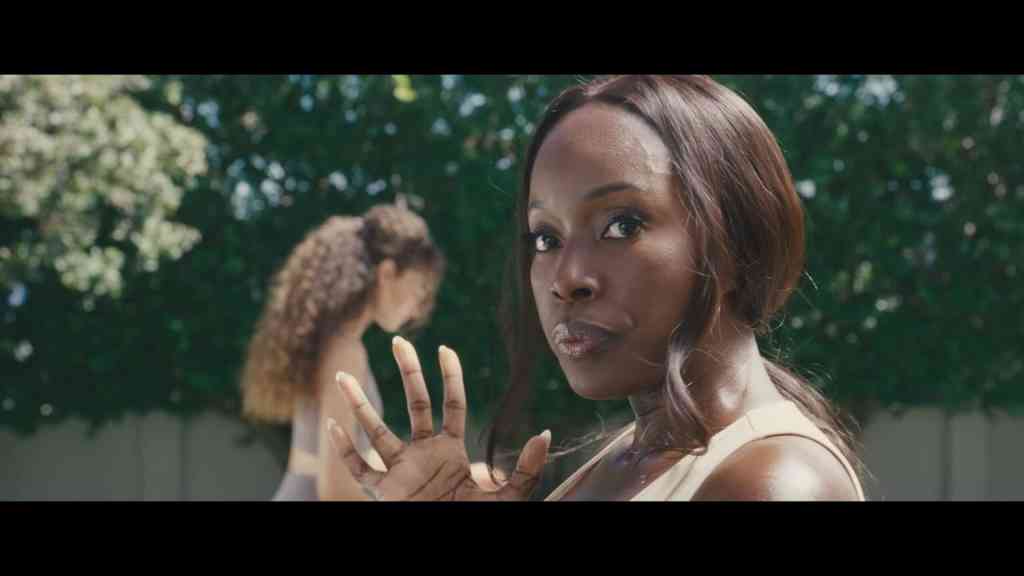
Strung is not limited by its cast or its atmosphere. It is limited by its inability to maintain logical and consistent character movement within its story. The film understands the structure of a thriller but does not effectively execute it. Performances can only extend so far when the narrative itself does not hold.
The film had the necessary components to succeed. What it lacked was the discipline to align those components into a coherent and compelling whole. Without that, the promise it presents never fully materializes. Strung is currently streaming on Peacock for those who want to form their own assessment.

