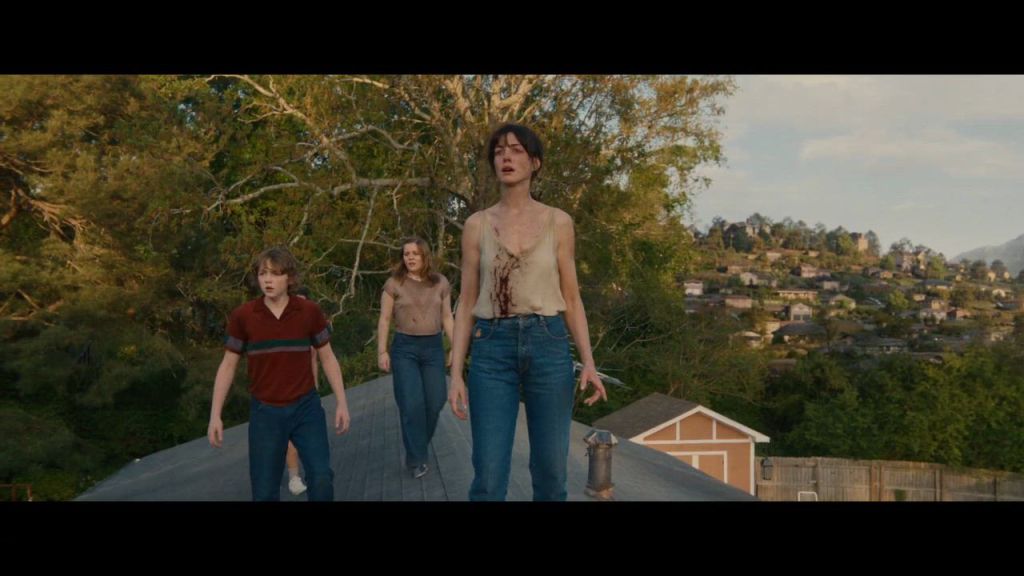
Just when we thought the world was safe from dinosaurs, interdimensional traversal, and wormholes, along comes The End of Oak Street, changing the way one looks at time loops, the security of everyday life, and keeping first things first.
The End of Oak Street opened with a bit of fanfare, but it was the glowing reviews that preceded my viewing that directed my attention toward the film. My interest was piqued by the comparisons to Jurassic Park, and the suggestion that this could perhaps capture the impact of the original or even, in some ways, provide the shot of adrenaline the Jurassic Park franchise needed.
A Call to View
Mass raves are like blood in the water. They draw the attention of film analysts, critics, and those of similar ilk. I must admit, expectations were forming before I ever sat down to watch. Comparison can often be a damper on objectivity. When one walks into a film with a specific comparison or expectation, the tendency can be to identify whether the film lives up to that standard rather than simply experiencing the film and critiquing what is actually presented.
That distinction became important here.
The film was entertaining and action-packed. You wanted dinosaurs? There were plenty of dinosaurs. But this was not a feature focused on the dinosaurs, and that is a significant difference between Jurassic Park and The End of Oak Street.
It Is Not Really About the Dinosaurs
As the title of the original suggests, Jurassic Park found its narrative center in the idea of an amusement park where dinosaurs were the attraction. These were not simply dinosaurs wandering around in the wild. They were genetic replications, created specifically to populate a very ambitious theme park.
As the synopsis reads,
“An industrialist invites some experts to visit his theme park of cloned dinosaurs. After a power failure, the creatures run loose, putting everyone’s lives, including his grandchildren’s, in danger.”
The End of Oak Street is quite different in scope. This feature centers on a family, the Platt family. They are who we are following and, ultimately, who we are rooting for. We may or may not want them to succeed when we first meet them, but their primary objective becomes survival after a cosmic event transports their suburban neighborhood someplace unknown.
The plot delineates it this way:
“The Platt family bands together to navigate their new surroundings after a cosmic event transports their suburban neighborhood to someplace unknown.”
From the introduction, the family dynamics are clear. It is a strained situation. They are not exactly on the same page when a phenomenon occurs that somehow opens a portal between the present and the past. There is a type of merging, and suddenly the dinosaurs end up on Oak Street, or perhaps Oak Street becomes a prehistoric landscape. Either way, this phenomenon is what puts us into the adventure. It is the starting point of the journey.
From there, with the threat escalating, the film becomes what is, at its core, a survival story. A family confronted with inexplicable circumstances must pull together whatever resources they have, figure out what has happened, and somehow find a way to make it through. And that is where the film’s real development begins.
The Family Has to Find Its Way Back to Each Other
The point of growth audiences witness is the development of the family dynamic. What begins as a group already struggling to communicate gradually becomes a family learning the value of unification.
As the story moves toward the falling action, we see a noticeable change. There is an understanding that working as a team can help overcome even the most adverse circumstances. The family has to learn that survival is not simply about escaping what is chasing you. Sometimes it is about figuring out how to move together.
By the end, we get something of a do-over. Somehow, changing the relational dynamics changes the outcomes. It does not hurt that they now have a solid bit of foreknowledge to work with, at least most of them.
The dinosaurs certainly make things more dangerous, but they are essentially an added device. They up the ante and increase the level of threat the characters have to overcome. From that perspective, almost anything could have substituted for the dinosaurs and produced a similar result. That is not necessarily a negative. It simply tells us what kind of movie The End of Oak Street is.
Jurassic Park Was Doing Something Different
To place the film beside Jurassic Park, however, it is worth remembering what made the original so distinctive in the first place. For the time Jurassic Park was released, the idea of cloning, genetic manipulation, creating a theme park populated by dinosaurs, and then dropping the human element right into the middle of it was novel. The science and the spectacle were part of the attraction. It was not necessarily the idea of humans being dropped into an environment where they had to deal with prehistoric creatures that was entirely new.
Land of the Lost, a series that originally aired in the mid-1970s, had a premise involving a group of people trapped in a time vortex and forced to contend with a prehistoric threat. Per the plot details,
A space-time vortex sucks scientist Rick Marshall, his assistant Holly, and a survivalist Will into a world populated by dinosaurs and painfully slow creatures called Sleestaks.”
So the novelty of Jurassic Park was more closely connected to what it did with the dinosaurs. They were not simply part of the environment. They were the attraction, the experiment, and eventually the source of terror. In The End of Oak Street, they are more of an additive. They are another obstacle placed in front of characters who are already dealing with a much larger problem.
That throughline is not necessarily unfamiliar either. Earlier this year, The Last House offered a streaming feature with a comparable survival structure. The circumstances are different, but the underlying idea remains recognizable: ordinary people are placed in extraordinary circumstances and must find a way through. The dinosaurs simply make this particular version considerably more prehistoric.
The Star Power Helps Carry It
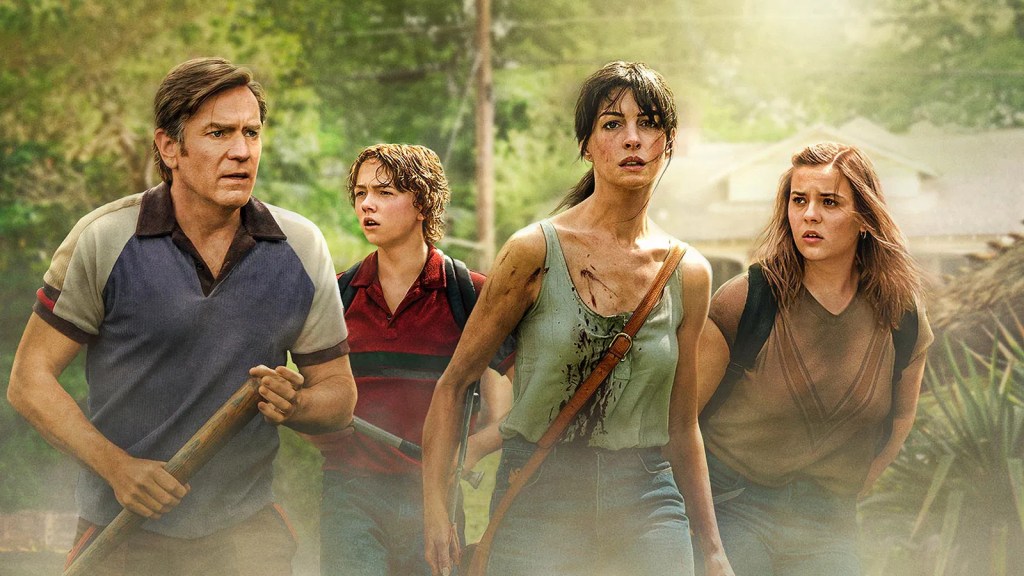
One of the first noticeable things about the film was, indeed, the star power. Anne Hathaway assumes the role of the mother, while Ewan McGregor takes on the paternal figure. These are bankable performers, and viewers are already aware of what they are likely to bring to a role.
Hathaway has earned tremendous recognition for her emotional performances, and she brings that same level of intensity here. There is a weight to her performance that helps ground the increasingly bizarre circumstances surrounding the family. McGregor provides his own established presence, and together the two give the family dynamic enough substance to keep us invested in what happens to them. That matters because the film’s strongest investment is not necessarily in whether the next dinosaur appears. It is in whether this family can figure out how to function as one and most importantly, survive.
It Is a Good Watch, But It Is No Jurassic Park
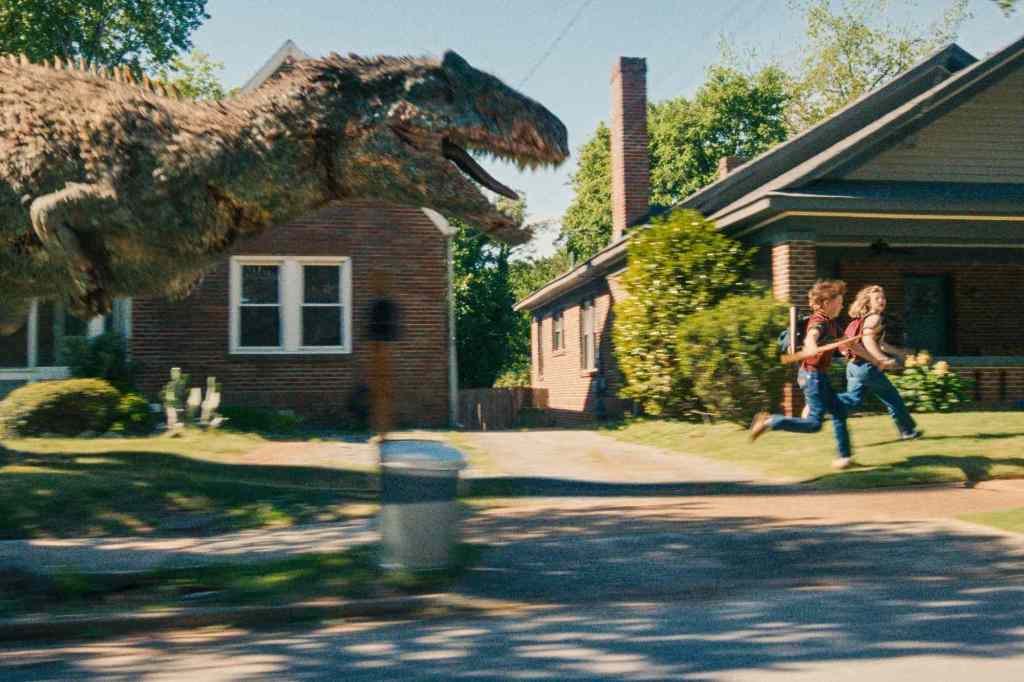
I enjoyed the film. It has a high engagement factor, and I had a few visceral reactions along the way, including yelling at characters through the screen, which is usually a good indication that I am invested enough to care about what happens next. But if the question is whether The End of Oak Street surpasses the concept of Jurassic Park, that is debatable.
The two films are simply doing different things.
Jurassic Park was built around the extraordinary idea of recreating dinosaurs and turning them into the centerpiece of an amusement park. The End of Oak Street uses dinosaurs as part of a larger story about a family caught in an inexplicable situation and forced to confront not only the world around them but also the fractures within their own family.
Examining the Idea of Substitution
As for whether this concept would have fared better as Jurassic World: Rebirth, that feels a little like comparing apples to oranges. The franchise has already explored the merging of worlds and the consequences of dinosaurs existing beyond the confines of their original environment. It is unlikely that substituting this particular concept into an established franchise would have produced the same result. Perhaps it works because it stand on its own.
The End of Oak Street does not need to be Jurassic Park. It has its own lane, even if that lane happens to contain dinosaurs, wormholes, time loops, and a suburban street that suddenly becomes anything but ordinary. The bigger takeaway. When everything familiar changes, survival is not always about outrunning the thing with the biggest teeth. Sometimes, it is about recognizing what matters, who matters, and who you need beside you when the world you knew no longer exists.
 Uncut Diamonds