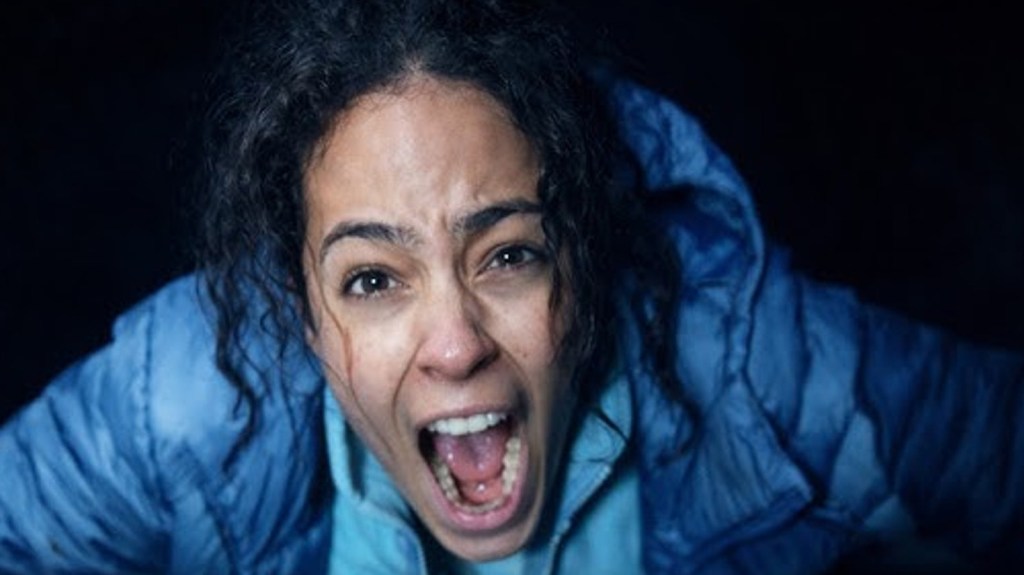
There is something about horror and the open road that continues to pull audiences in. Perhaps it is the isolation. Perhaps it is the vulnerability that comes with knowing that once the pavement stretches far enough behind you, help can feel like a distant possibility. Or perhaps it is simply the fear of discovering that the person you stopped to help is the very person you should have been running from.
That familiarity is part of what drew me to the 2026 feature film The Passenger, directed by André Øvredal and written by Zachary Donohue and T.W. Burgess. In a landscape overflowing with content, word of mouth can still be one of the most effective ways to bring a film to an audience. When enough people begin talking about a horror film, curiosity naturally follows. For me, that curiosity led to The Passenger. Unfortunately, what I found was a film that travels a road horror has taken many times before.
The Open Road Has Always Had a Dark Side
There is certainly nothing new about placing horror on a deserted highway or within the isolated stretches of rural America. The idea has become part of our collective storytelling language. Urban legends, folklore, creepypasta, and cinematic horror have repeatedly explored the dangers lurking along lonely roads and the unfortunate travelers who cross paths with them.
We have seen variations of these stories in Creepshow, Urban Legend, creepypasta tales, and numerous other works. The ingredients are already familiar: an isolated location, a stranger in distress, a decision to help, and the slow realization that something is very wrong. The Passenger follows that well-worn road.
The film centers on a couple who set out on an adventure built around the open road and a more nomadic, free-spirited lifestyle. Their plans quickly change when they encounter a serious accident. Doing what most of us would hope someone would do in an emergency, they stop to help. Unfortunately for them, that good deed comes with a grave price.
A Hitchhiker Who Has No Intention of Leaving
From there, The Passenger settles into a familiar cat-and-mouse story. A ghostly traveler enters their world, hitches a ride, and refuses to leave until he has gotten what he wants. The concept has potential. There is something inherently unsettling about being trapped in a moving vehicle with a threat you cannot simply walk away from. The confined space should create a natural sense of claustrophobia, while the empty road should make escape feel even more impossible. The film does manage to establish some of those stakes.
Viewers are given enough background to understand that the threat is not simply a random apparition. There is a history behind what is happening, and the film reveals just enough of it to create some curiosity without immediately giving everything away. That withholding is one of the better choices the film makes because it allows the unknown to do some of the heavy lifting. Unfortunately, the narrative eventually becomes predictable enough that the mystery loses some of its power.
Reasonable Performances, Limited Material
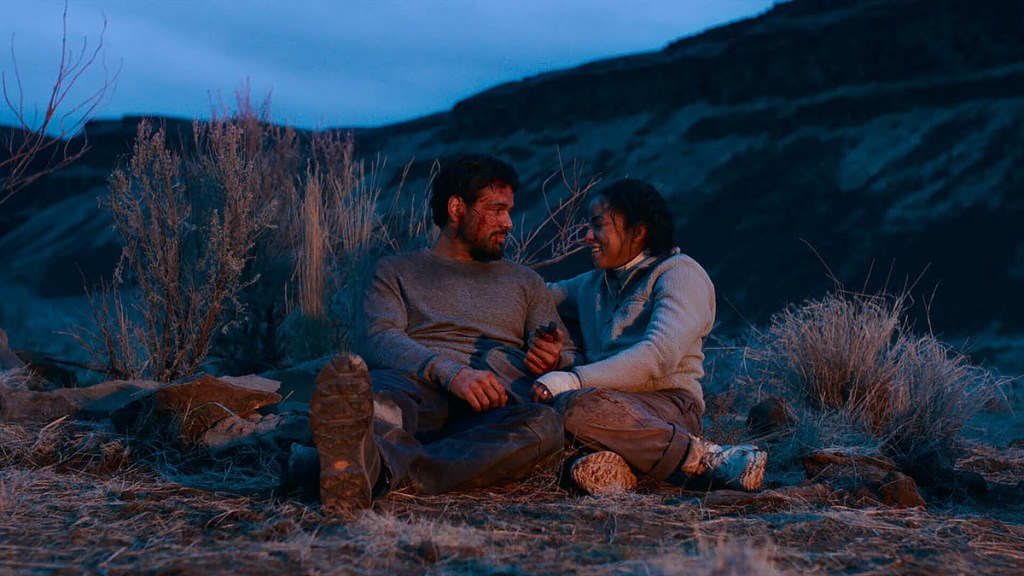
Jacob Scipio and Lou Llobell carry the film with reasonable performances. They give the couple enough emotional presence to make their predicament matter, even though the basic formula does not provide them with an especially expansive canvas. Their performances are not the problem. The larger issue is that the story itself does not give them enough unexpected territory to explore. That becomes increasingly apparent as the film progresses. Once the central threat is established, much of the narrative depends on waiting for the next encounter, the next scare, or the next revelation. The structure works, but it rarely surprises.
Enough Fright to Qualify, Not Enough to Haunt
There are jump scares, but I would describe the overall fright level as tempered. The Passenger is not the type of horror film that left me particularly unsettled after the credits rolled. Instead, it relies on atmosphere, the ghostly presence that can seemingly appear and disappear, the uncertainty surrounding the threat, and the heightened fear that comes from being unable to trust what is happening around you. Those elements give the film some atmosphere, but they do not always translate into genuine terror. For me, that distinction matters.
Horror does not have to be drenched in blood or built around relentless jump scares to be effective. Some of the most memorable horror comes from the feeling that something is wrong long before the audience understands exactly what that something is. It is the lingering sense of dread that stays with you after the scene has ended. The Passenger occasionally reaches toward that feeling, but it does not fully grasp it.
A Familiar Ride That Never Quite Finds Its Own Road
Ultimately, The Passenger lands somewhere in the middle for me. It gives enough to earn its place within the horror genre. There is a recognizable threat, an isolated setting, a handful of jump scares, and enough mystery to keep the story moving. The 97-minute runtime also makes it an easy commitment for viewers simply looking for another horror title to add to the list. What it does not provide is much that feels genuinely distinctive. That is where the film loses me.
There is nothing inherently wrong with telling a familiar horror story. Familiarity can actually be comforting within the genre, particularly when a filmmaker finds a fresh way to approach well-established fears. But when the familiar elements are not accompanied by something that gives them a new identity, the result can feel more like a retelling than a reinvention. The Passenger is watchable. It has its moments. It understands the basic mechanics of a horror story and gives viewers enough suspense and supernatural intrigue to carry them through.
But if you are looking for something that will genuinely get under your skin, I would keep expectations modest. Sometimes the road is frightening because you have no idea where it is taking you. With The Passenger, I knew the road a little too well.

